Variations of Emergence Residency, Malta Society of Arts, 2025
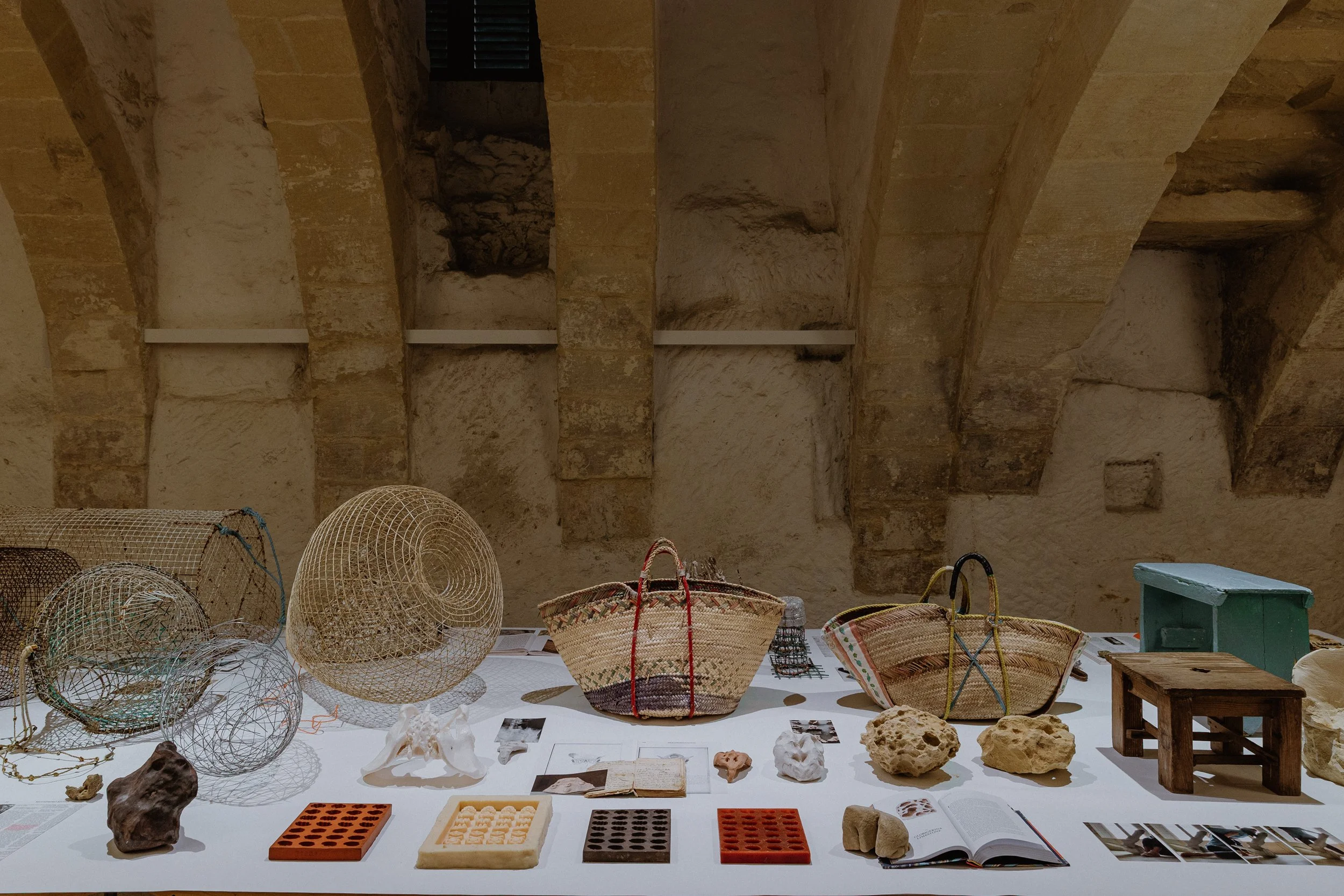
Curated collection shown at the Malta Society of Arts for the end of residency sharing event in December 2025.
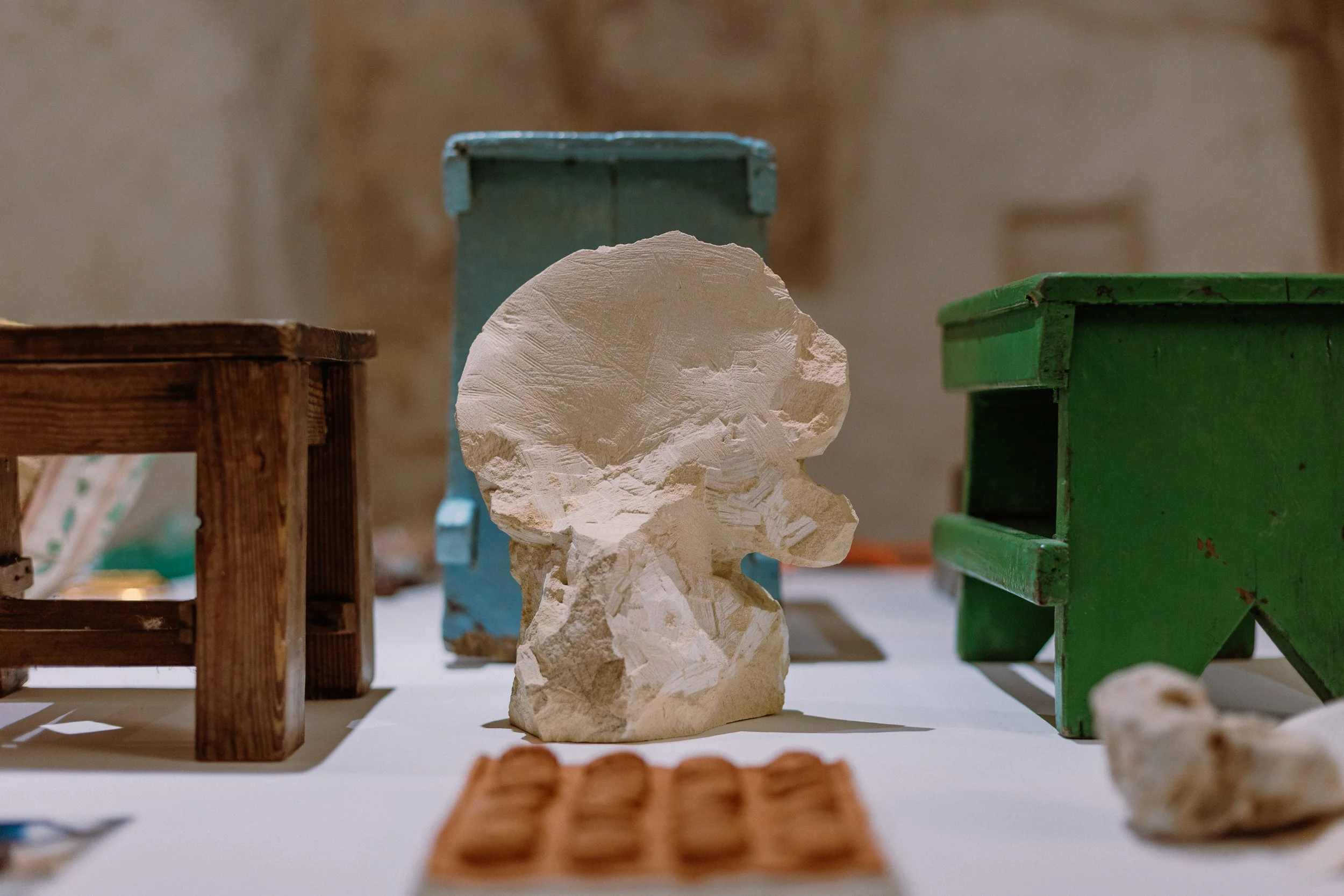
Carved limestone hip bone, borrowed stools, found rocks, moulded clay.
Over the course of my residency at the Malta Society of Arts I collected objects.
Objects I found, bought, borrowed, salvaged and made. The residency tagline of ‘no pressure to produce’ gave me the freedom to experiment, it led me to question what kind of artist I want to be;
what if I collect things?
what if I work with other makers?
what if I use other materials?
what if I work with scientists?
what if I commission others to source stuff for me?
what if I walk the entire coast of the islands?
what if all if Malta is my research base?
what id all my time is my practise?
what if I curate?
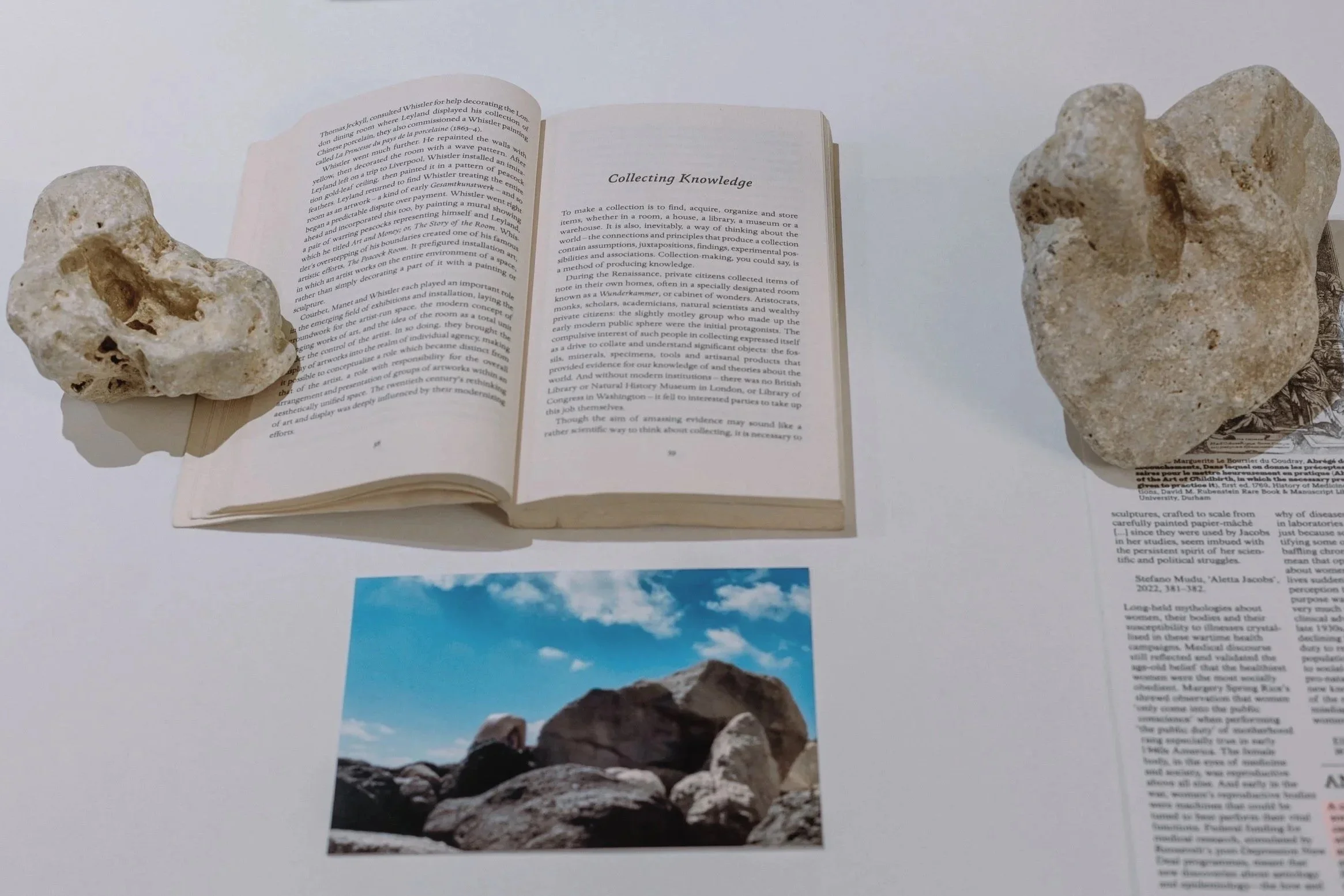
A text on collecting knowledge from ‘Ways of Curating’ by Hans Ulrich Obrist.
I have been in transition.
I left Malta 22 years ago, aged 19, before Malta joined the EU.
I’ve just come back, I might not stay.
A such there has been an urgency to my research. I’ve been squirrelling things away, hoarding. I’ve been trying to walk the coast of the islands, collecting memories, collecting a community, collecting inspiration, materials, objects.
Hoarding is a way of dealing or not dealing with loss.
In my case the loss of Malta of the 80s and 90s,
the loss of grandparents,
the loss of wildness,
sealife,
my body,
my youth,
the loss of time…
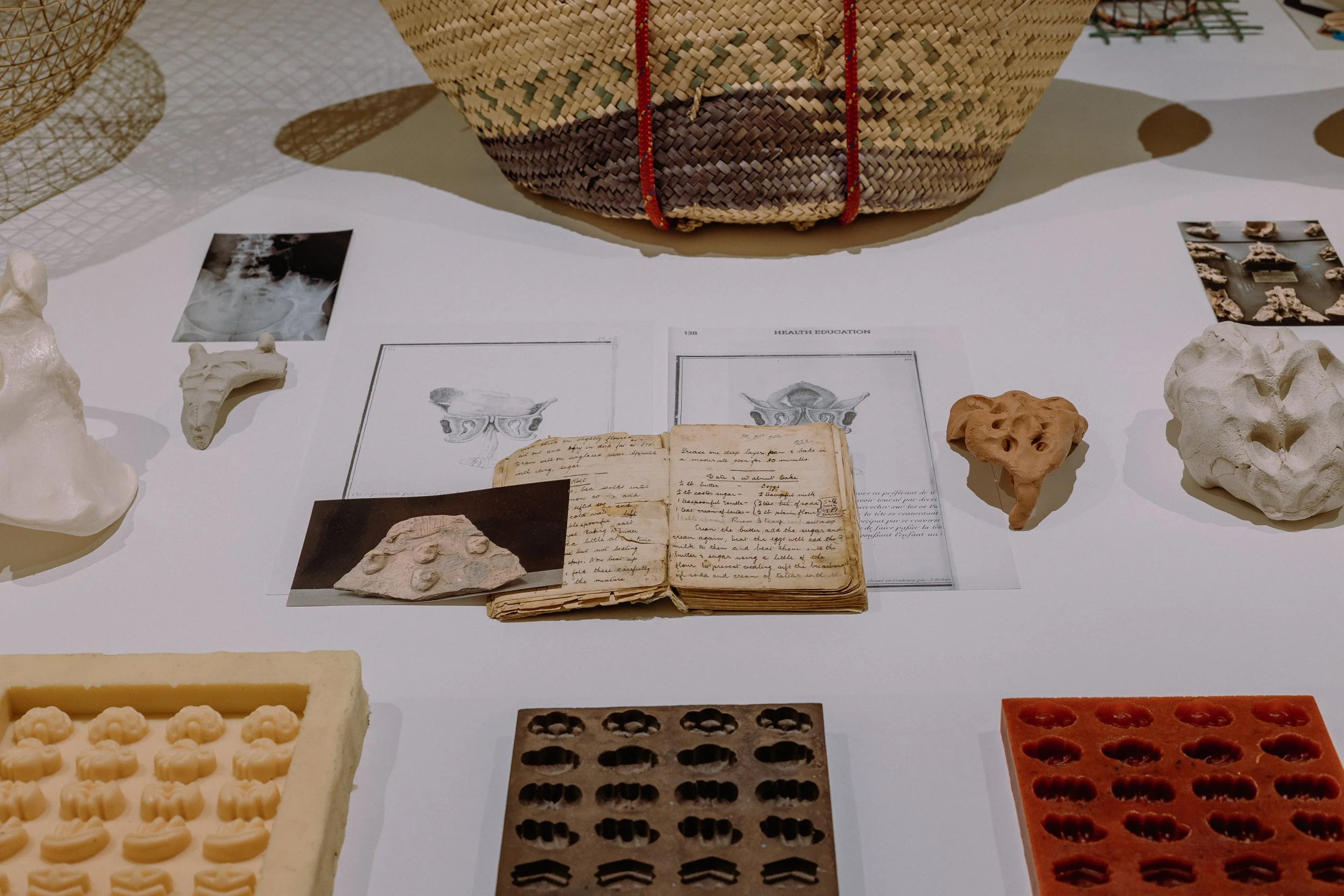
Associations, memories, recipes. My grandmother’s recipe book, clay bones, x-rays, moulds for making marzipan sweets, moulds of moulds.
These objects can be seen as a group of random objects that are beautiful in their own right, interestingly made and materially inspiring. However there are connecting themes:
Things that lift us up, support us.
Things we carry.
Things that speak of containment: entrapment, enclosure, shelter.
Handmade things
Things that have been mended
Things that hold time, take time.
Things that are forgotten, weathered, worn, mended, fixed, painted, re-painted.
Moulds, recipe books, lists.
Care.
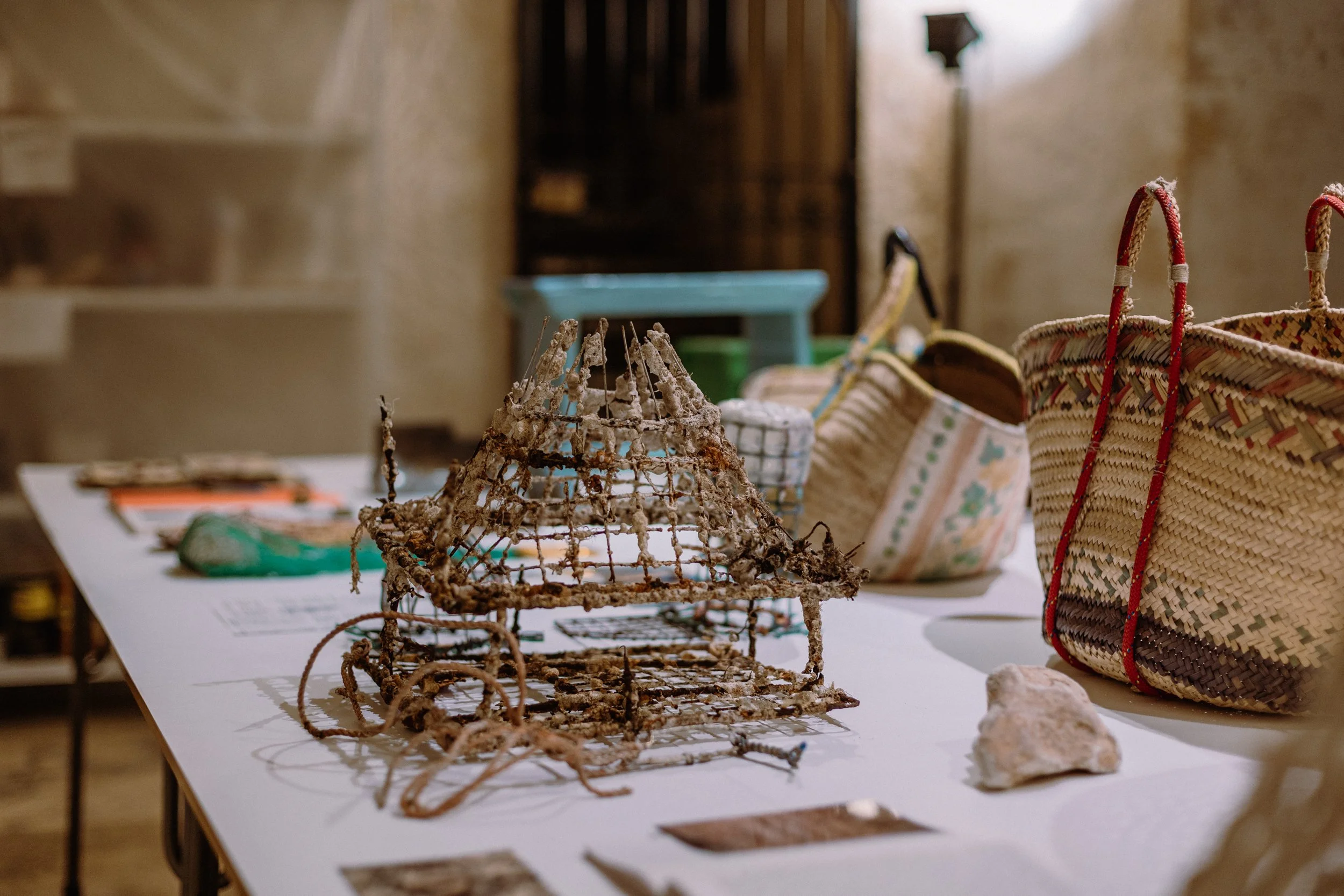
A fishing trap that was lost at sea and cleared by local charity ‘zibel’. Now patinated by time, broken and weathered, holding traces of marine life that grew on it.
Most of the objects in some way contain embodied knowledge - our inner knowing - intuition and sensory knowing.
Crafts are a great example of this. Many objects here are handmade, e.g. the traps, the gewlaq. Or are recipes, tools for making e.g. the recipe books, the moulds. They symbolise bodily knowledge, a knowledge that is passed on through repetition and time, that can only be learnt by doing.
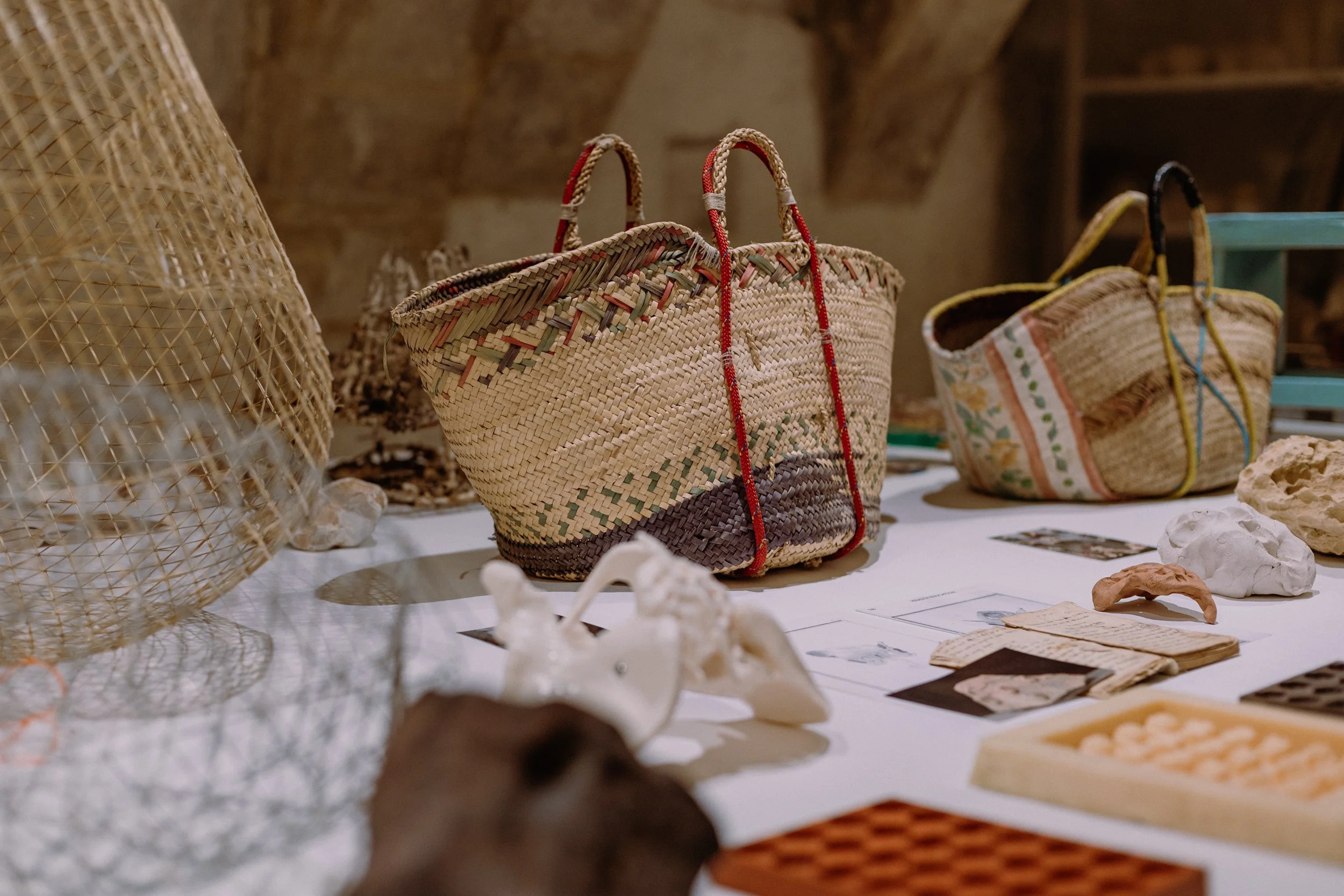
My grandmother’s gewlaq; bought in Tunisia by my father, mended by my grandfather. Traces of many hands. An object that holds. What did my grandmother carry for me so that I do not have to carry it?
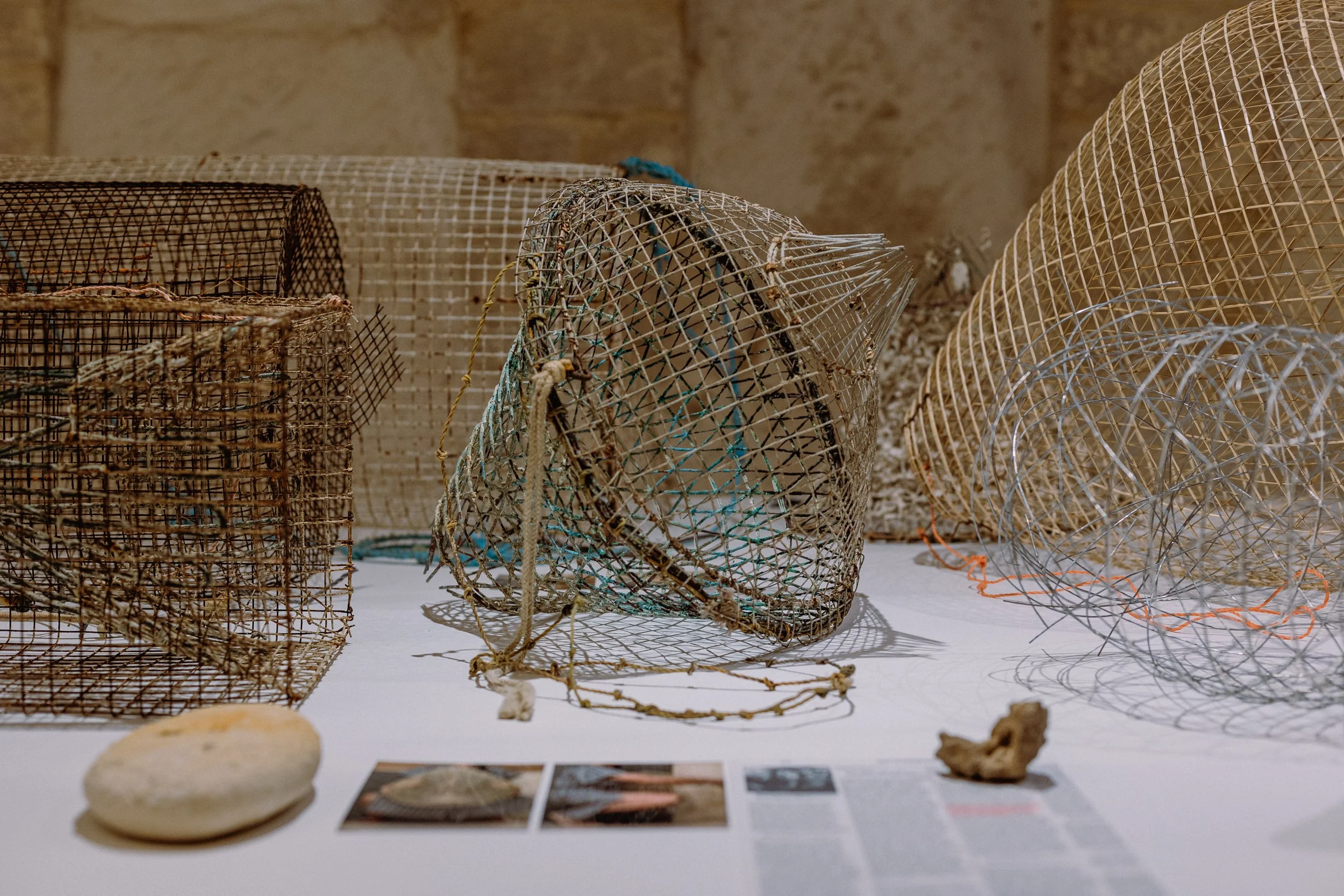
Beautifully, frugally, handmade fishing traps. Objects that trap, contain, yet are permeable. Some resemble cocoons, when lost at sea they become homes, providing shelter.
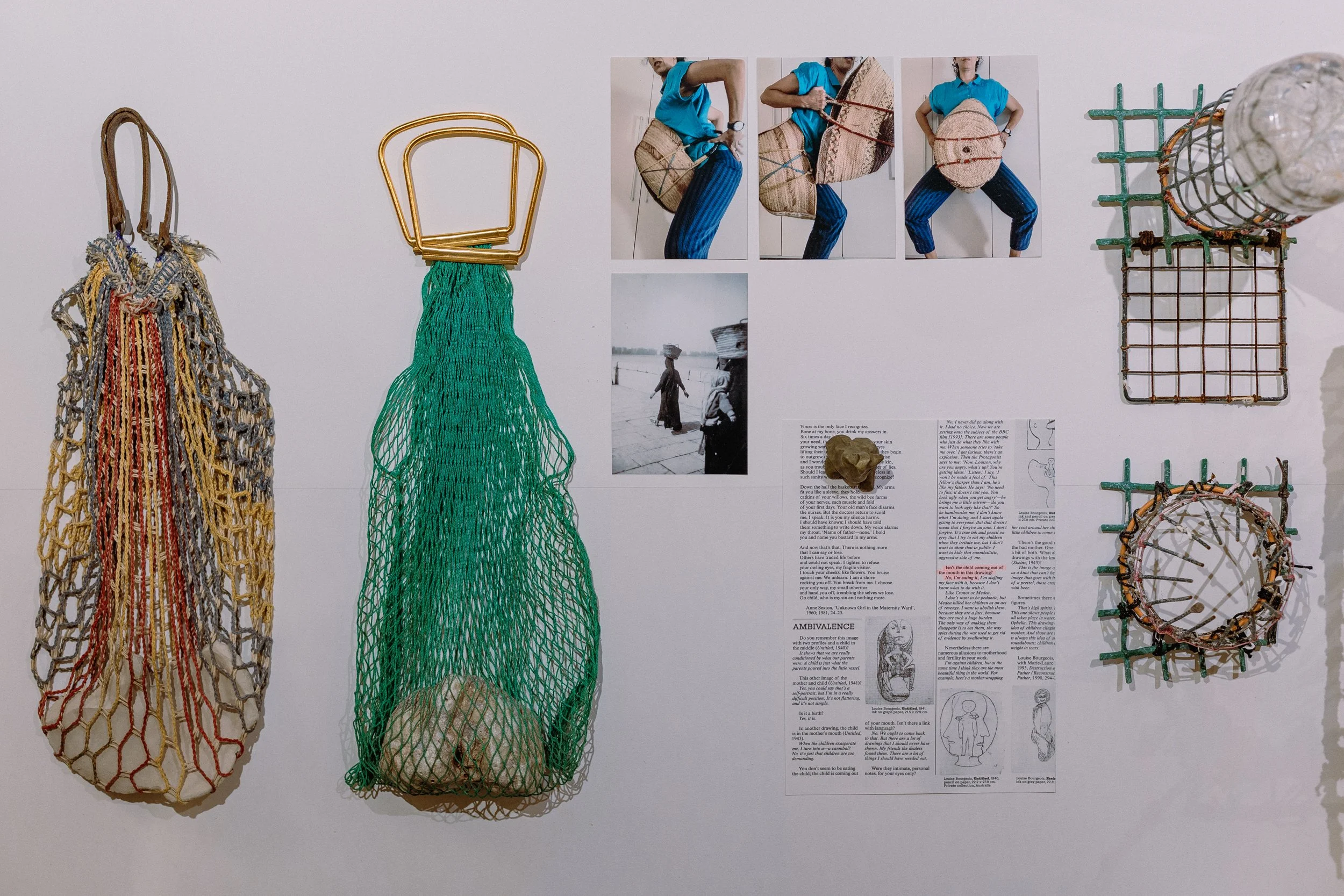
My grandmother’s handbags that resemble nets, carrying rocks and bones.
Self portraits with my grandmother’s gewlaq.
My other grandmother’s wartime photo of women carrying gewlaq in Egypt.
Fragments of fishing traps.
Text about feeling trapped in motherhood.
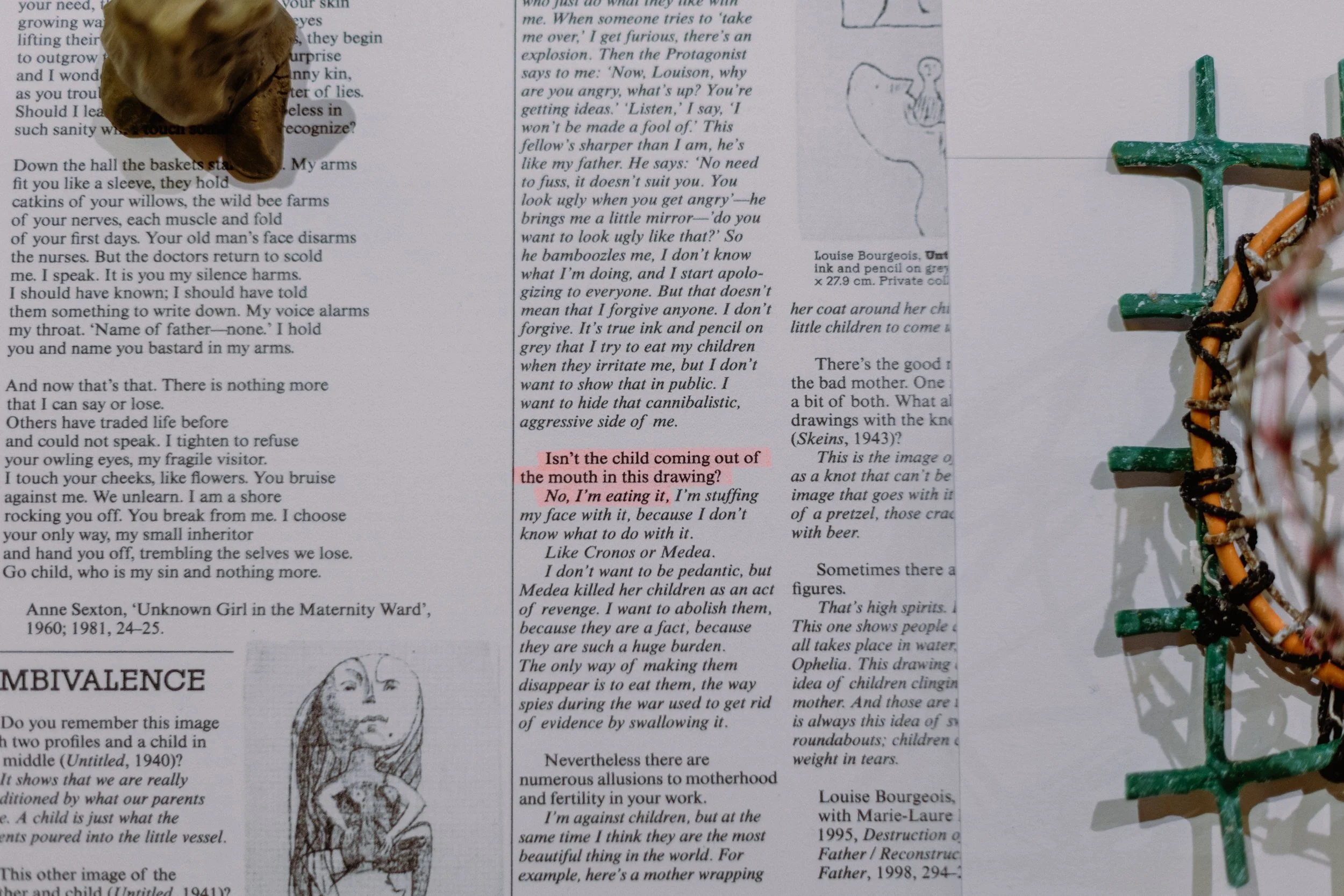
Text from ‘Mothering Myths – An ABC of Art, Birth and Care’ edited by Heske ten Cate and Laurie Cluitmans.
The rocks too are an example of our collective embodied knowledge - the dust of globigerina, the slime in wet salt pans, the pain of walking barefoot on zonqor. I am trying to give value to these things.
to our hands,
to our crafts,
to our ability to mend,
to our deep understanding of the islands,
to our ancestral knoweldge.
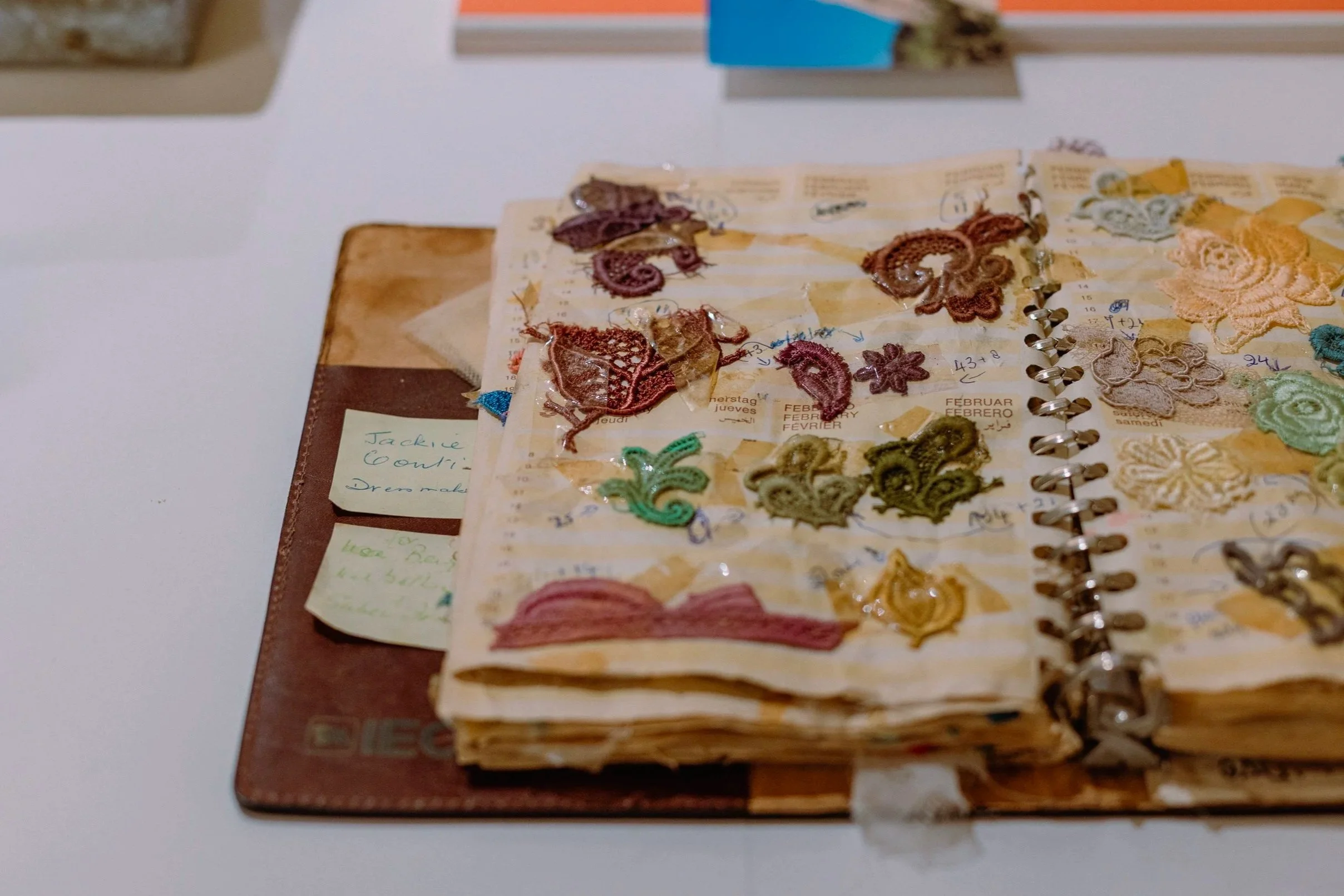
My grandmother’s book of dye recipes.
There is also a search for a material language that is of this place, Malta. Something that sits outside our colonial history; geological time, thrifty, vernacular, mended.
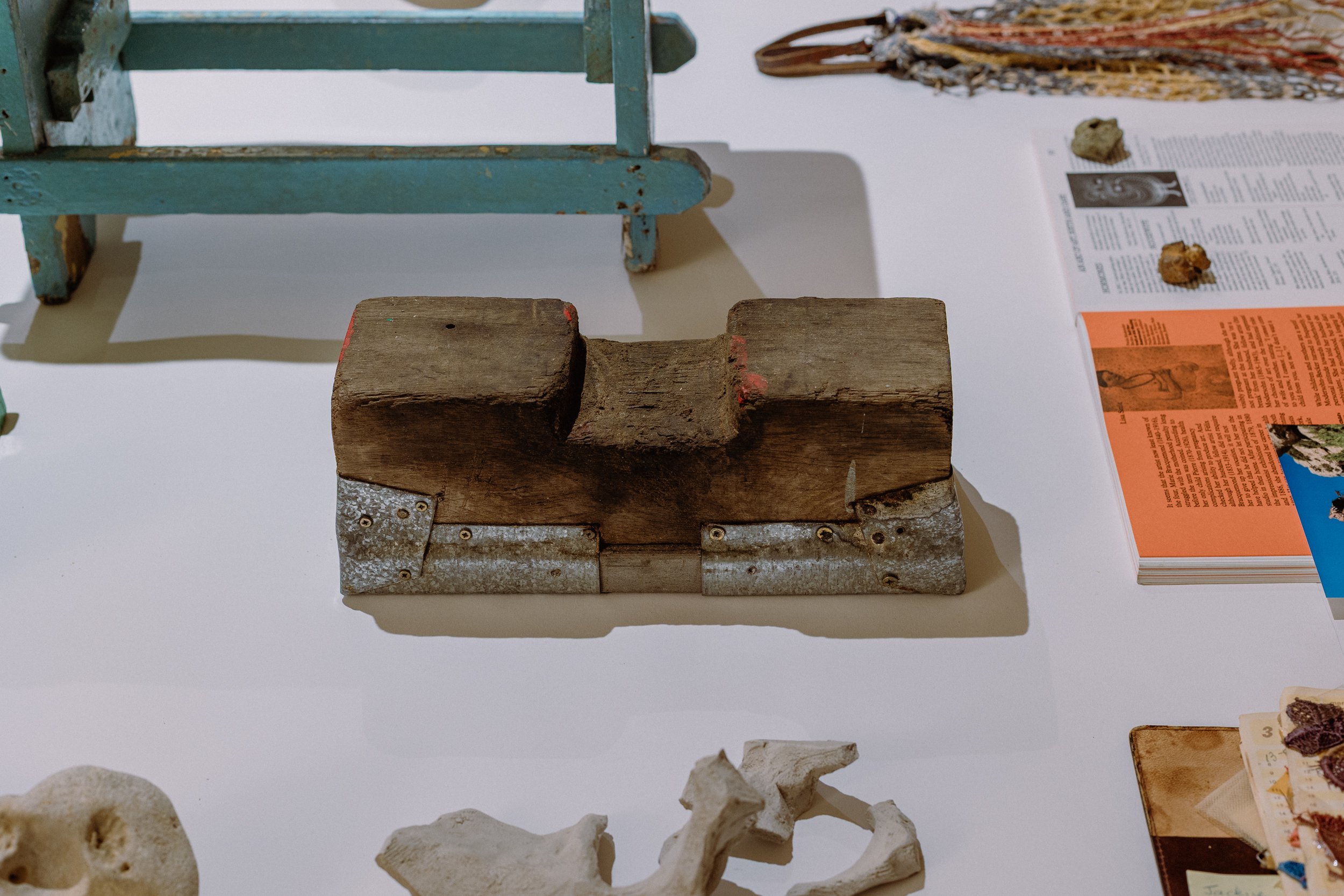
A boat support, a stool, fragments of bones.
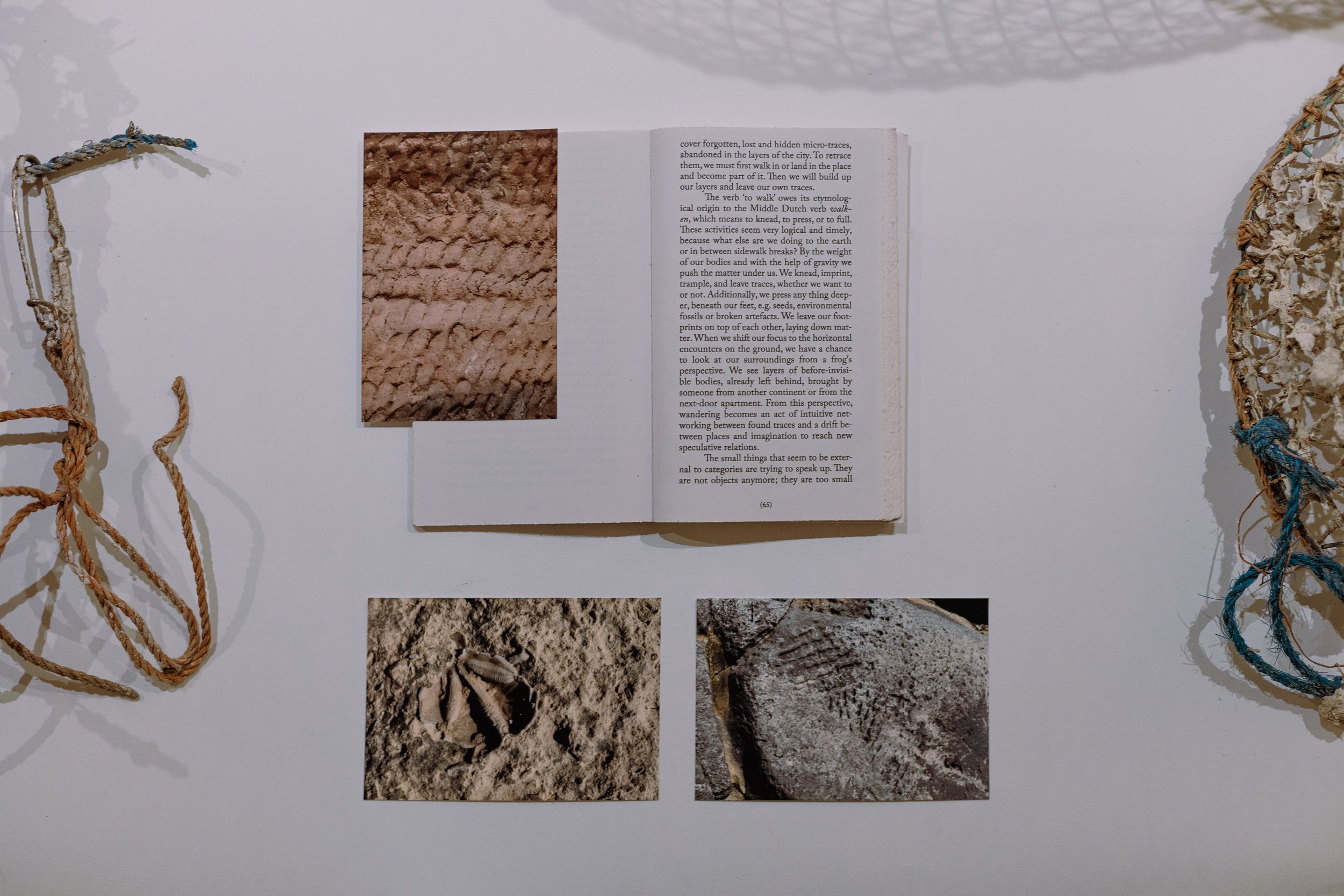
About walking and traces. From ‘Walking as Research Practice’.
All photos by Lisa Attard