Through Her Eyes: Redefining the Self with the Female Gaze. Talk at Valletta Design Cluster.
‘Through Her Eyes: Redefining the Self with the Female Gaze’ was a talk given at The Valletta Design Cluster, together with artist Anna Calleja.
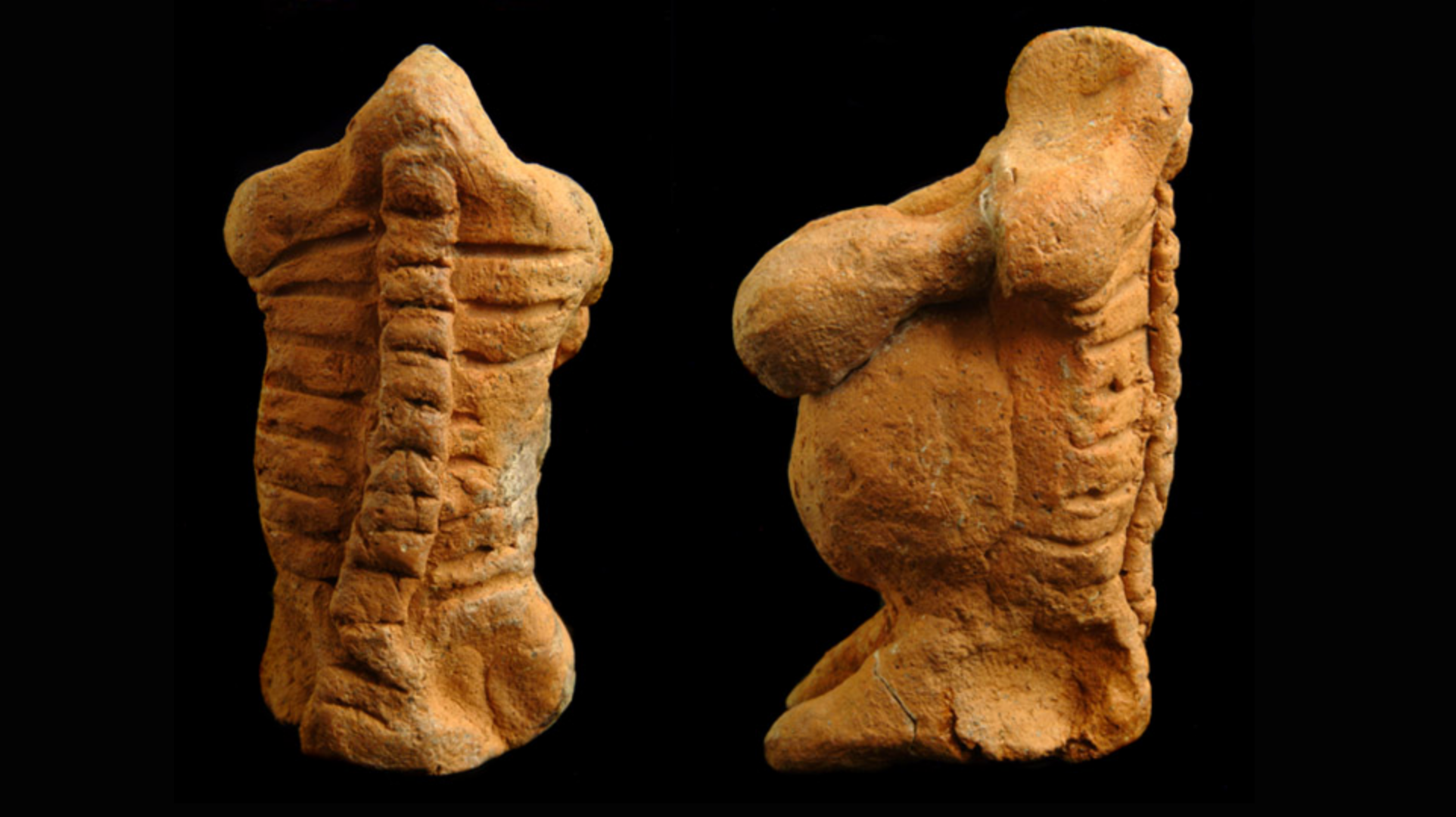
Mnajdra Goddess, circa 3000 - 2500BC, National Museum of Archaeology Malta.
Soon after becoming a mother, I encountered the Mnajdra Goddess at the National Museum of Archaeology. I remember feeling awe — and a profound sense of connection. This small prehistoric figure seemed to embody the shapes I had so recently inhabited in late pregnancy: the swollen breasts, the expectant belly, the fullness of a body preparing for birth.
I was deeply moved by the idea that I could connect, experientially and physically, to a tiny statue made over 5,000 years ago. I was drawn to the theory that the lines carved into her back might represent nine months of pregnancy. At the same time, the pronounced spine spoke to me of strength, endurance, scarring, and pain. I began to wonder: Who made this figurine? And why?
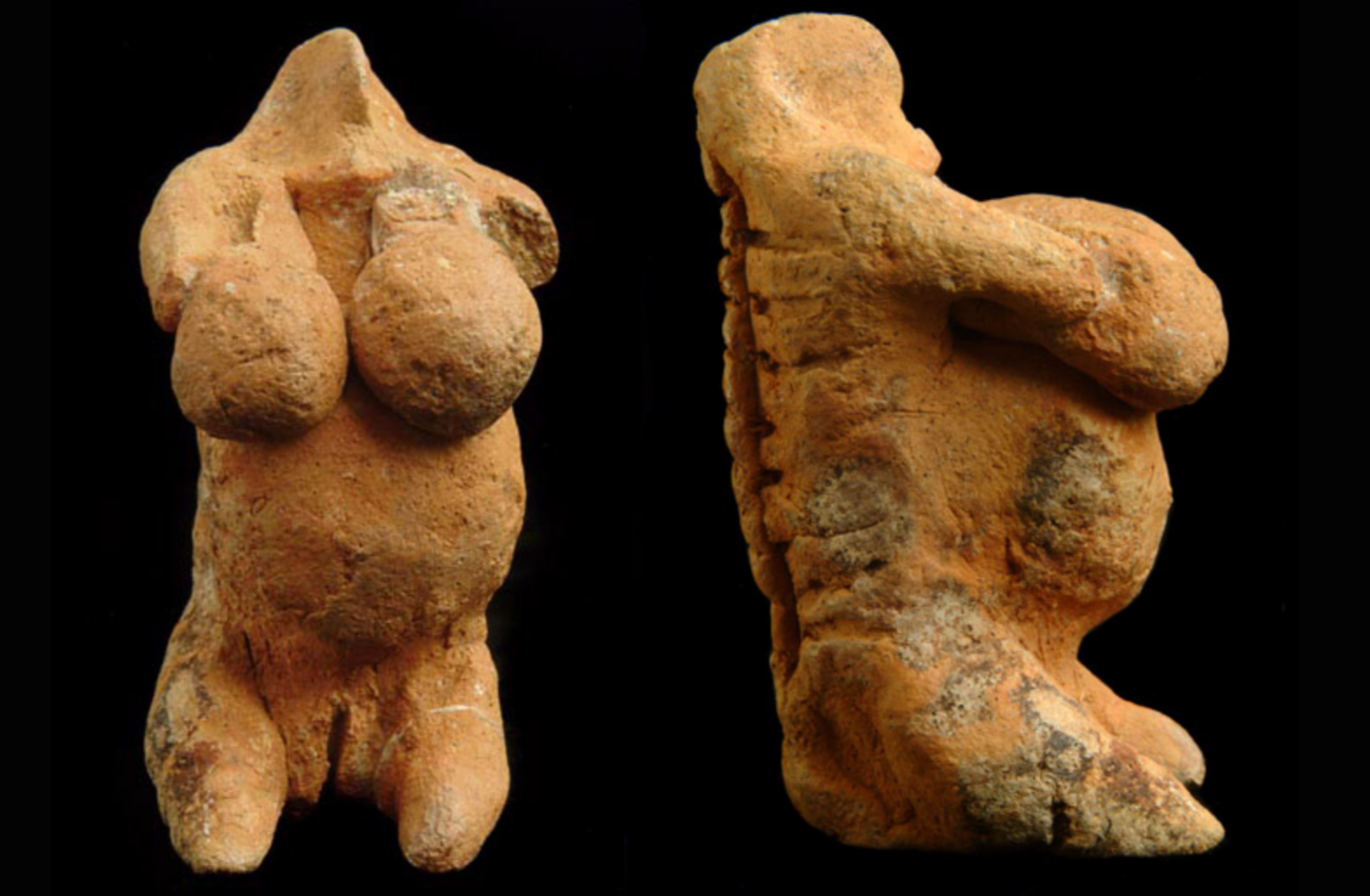
Mnajdra Goddess, circa 3000 - 2500BC, National Museum of Archaeology Malta.
I was angered to discover that she had been described in textbooks as “fat” and “grotesque.” This raises questions about interpretation — about who is permitted to discover, define, and assign value. Many of Malta’s prehistoric statues were excavated by predominantly male, British-led archaeological teams in the 1950s and 60s. They interpreted these figures through their own cultural frameworks, shaped by conservative ideas about women’s bodies and gendered experience. Terms such as “grotesque” and “fat lady” reveal more about the interpreters than the object itself. What authority did they have to define a body they had never inhabited?
*
This experience stayed with me. Soon afterwards, in my North London studio, I made 100 small goddesses from a single bag of terracotta clay. It took three days. I worked quickly and intuitively.
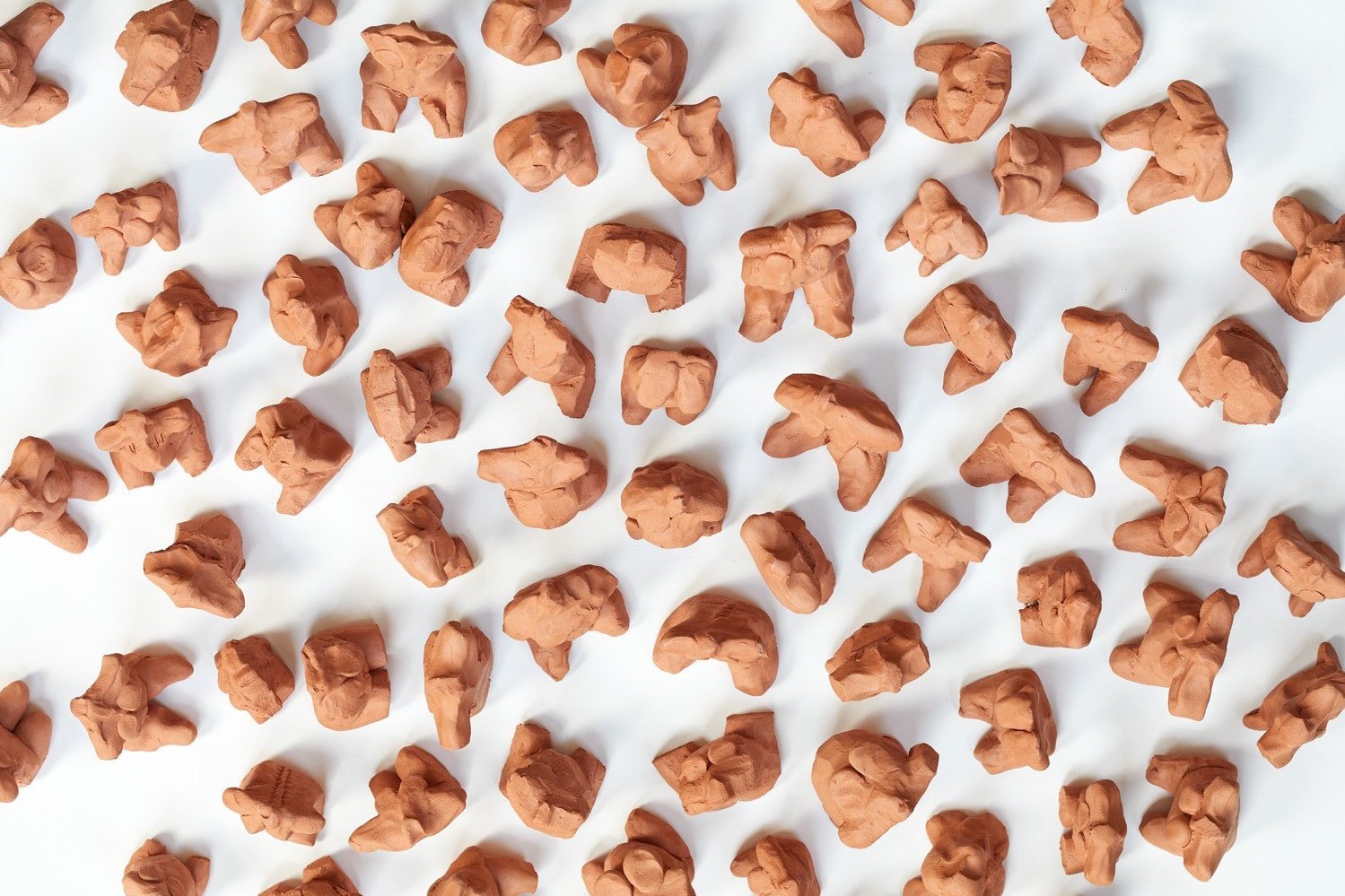
100 Goddesses, 2018
The series began as a biography of my own body; self-portraits of myself at different moments in my life. As I reflected on my own physical history, I found myself extending into the stories of other women’s bodies — and imagining my future body as it ages.
The project became an amalgamation of remembered, lived, and imagined forms. It moved beyond the individual and into something collective.
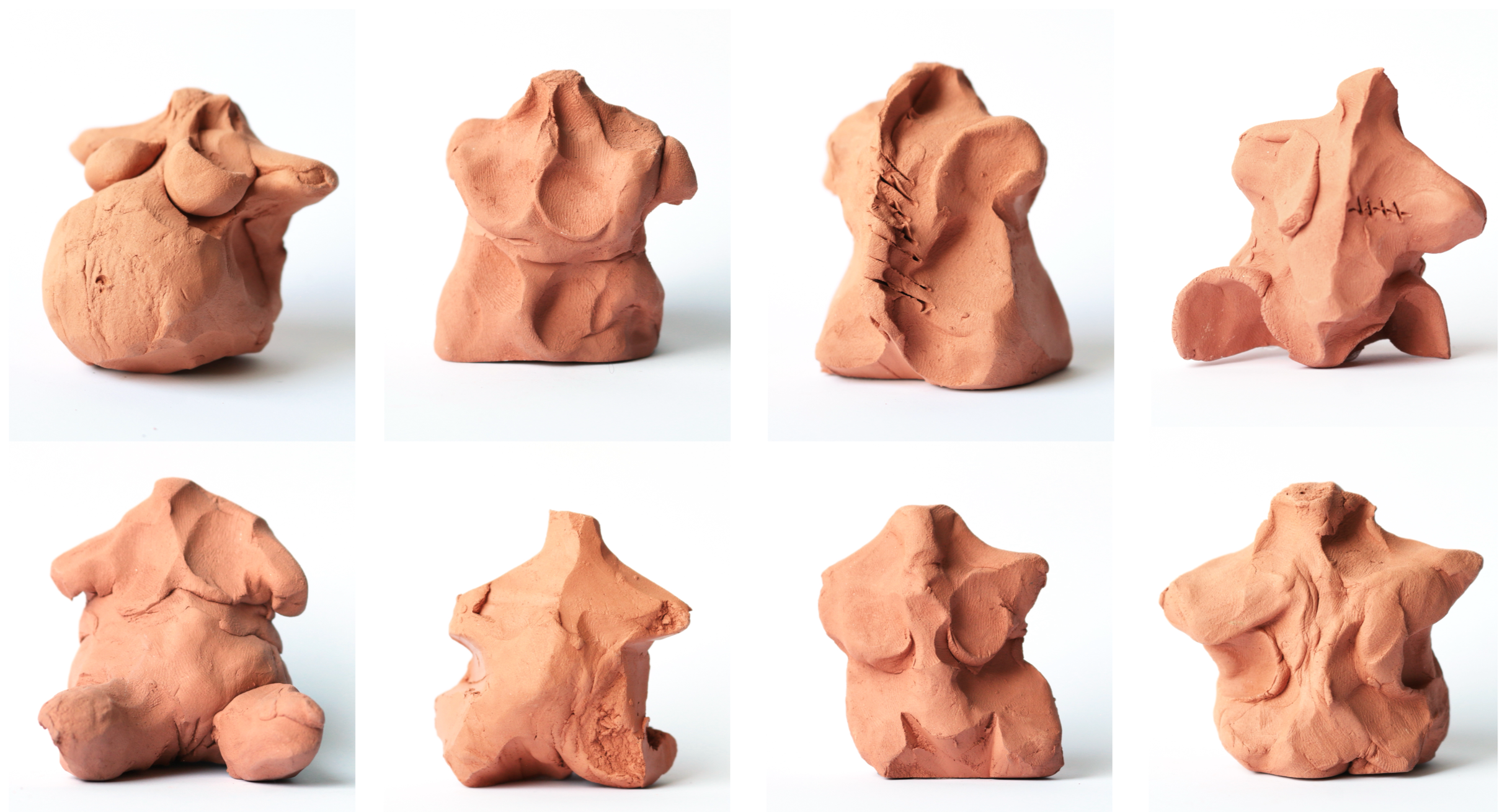
Close up photographs of the Goddess statuettes
I was not interested in beauty. I was interested in strength, power, scarring, and ageing. This was both a response to the historical misreadings of prehistoric figures and to contemporary representations of female bodies as thin, fragile, hairless, and delicate.
*
There is a theory that many prehistoric goddesses may have been self-portraits. Photographic studies show how a woman’s body appears when she looks down at herself — the torso foreshortened, the head often unseen.
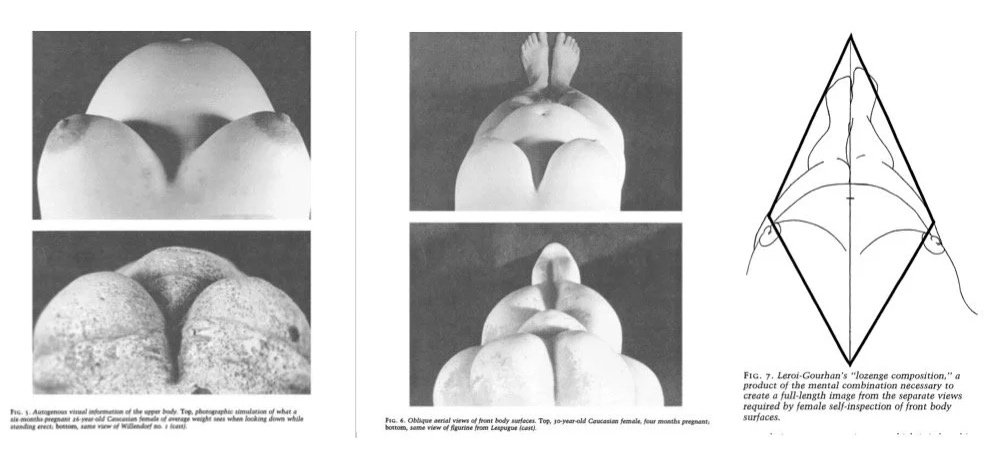
Extract from ‘Self Representation in Upper Palaeolithic Female Figurines’ by LeRoy McDermott
This perspective shifts the narrative, from woman as object of the male gaze, to woman as author. In societies where childbirth was often fatal, these self-representations may have captured a liminal moment — poised between life and death.
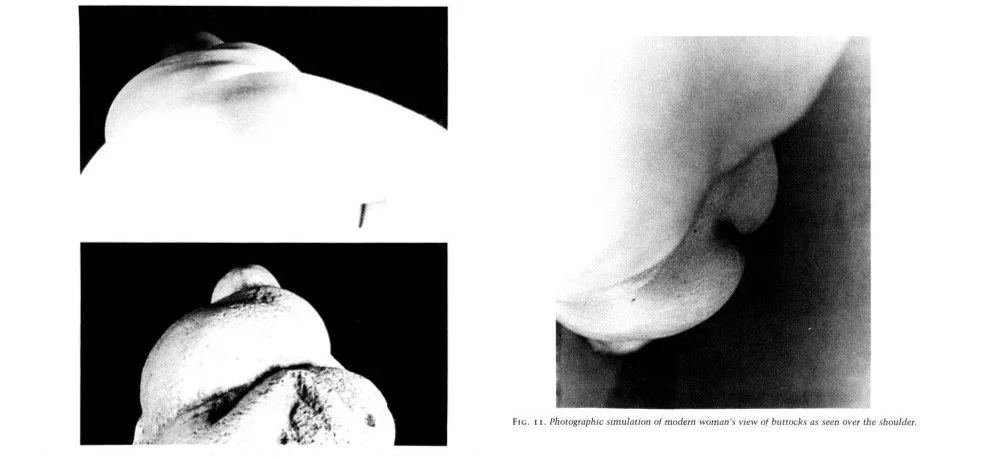
Extract from ‘Self Representation in Upper Palaeolithic Female Figurines’ by LeRoy McDermott
*
When I removed the goddesses from the kiln in my London studio, something unexpected happened. The women who shared the studio began gathering around them. They touched them. They told stories — of childbirth, miscarriage, trauma, resilience.
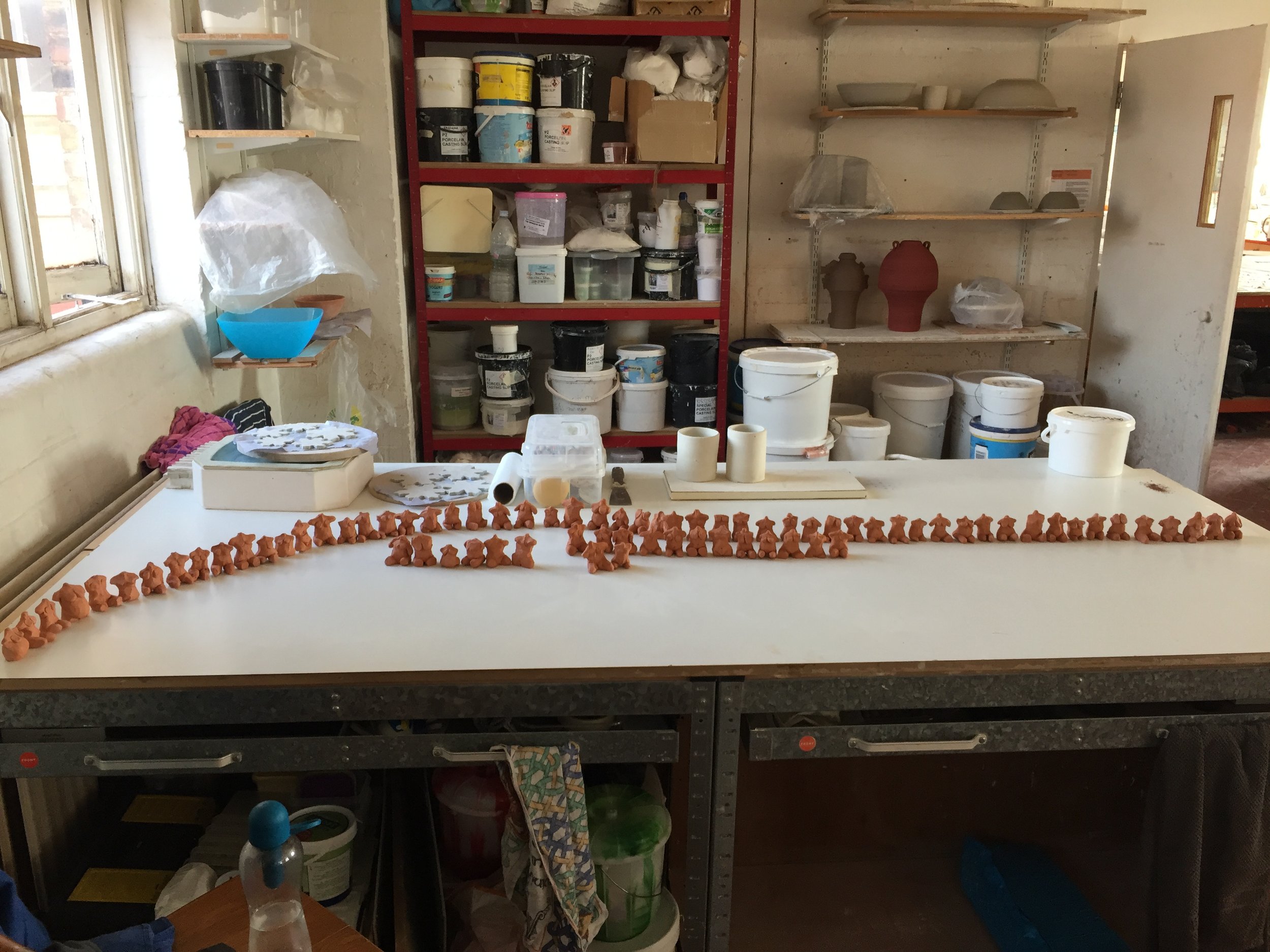
100 Goddesses in Nina’s studio in North London
I realised then that the work extended beyond my own catharsis. The goddesses were creating a space for others.
I began bringing them into women’s homes, allowing conversations to unfold organically. The isolated “I” slowly transformed into a collective “we.”
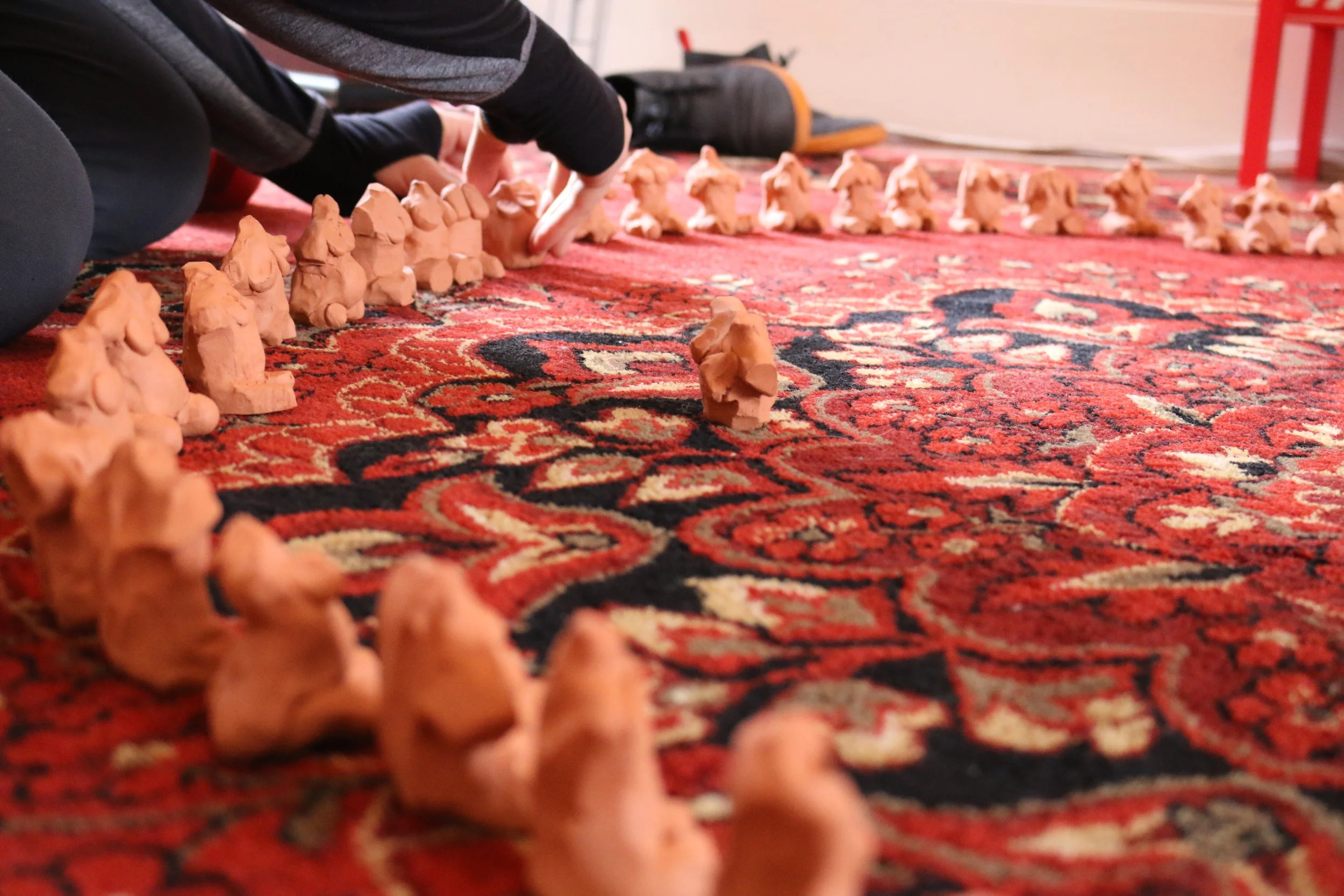
A friend rearranges the goddesses during one of the goddess conversations.
In domestic spaces, the figures felt especially resonant — echoing handmade objects, family life, and generational continuity.
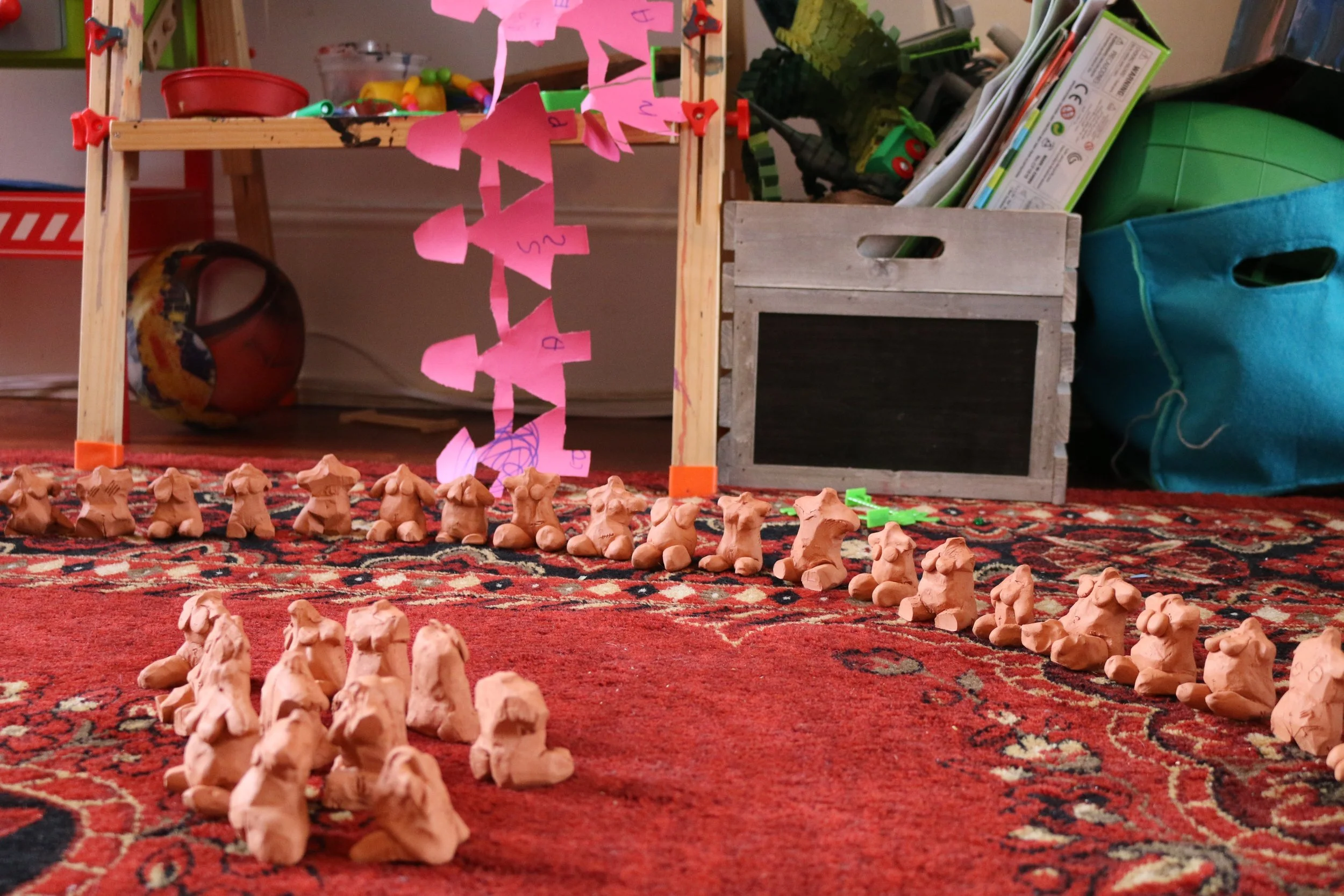
I would bring the goddesses to people’s houses to play with them, and talk.
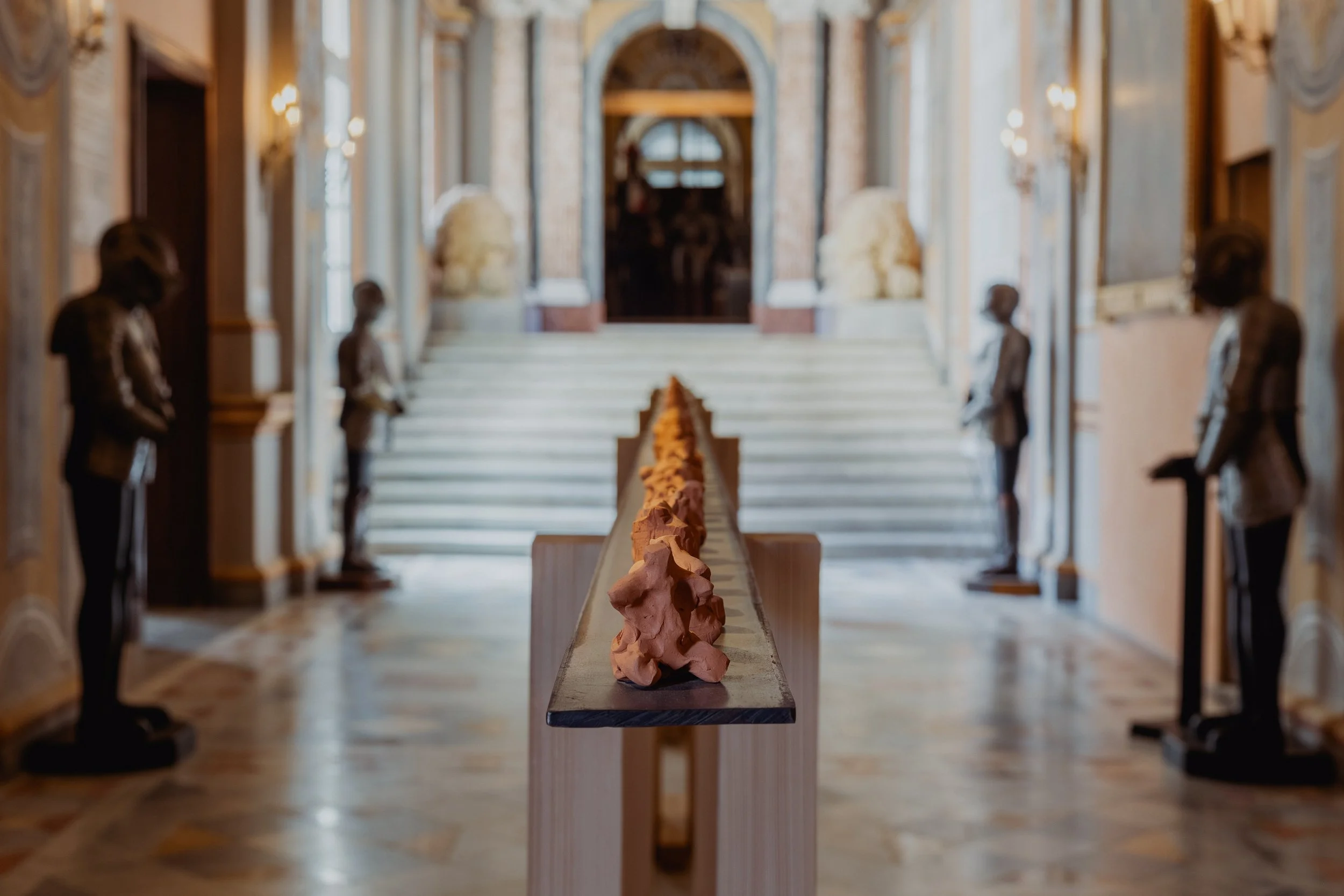
The Goddesses shown in the Grandmaster’s Palace, Valletta as part of the Malta Art Biennale 2024.
For the Malta Art Biennale, we installed the goddesses in a long line through the imposing hallway of the Grandmaster’s Palace in Valletta. The gesture was intentional: to contrast these intimate embodiments of female experience with a monumental space historically associated with male political power. Lined up together, the figures evoked a lineage — generations of women stretching back to the original Mnajdra Goddess.
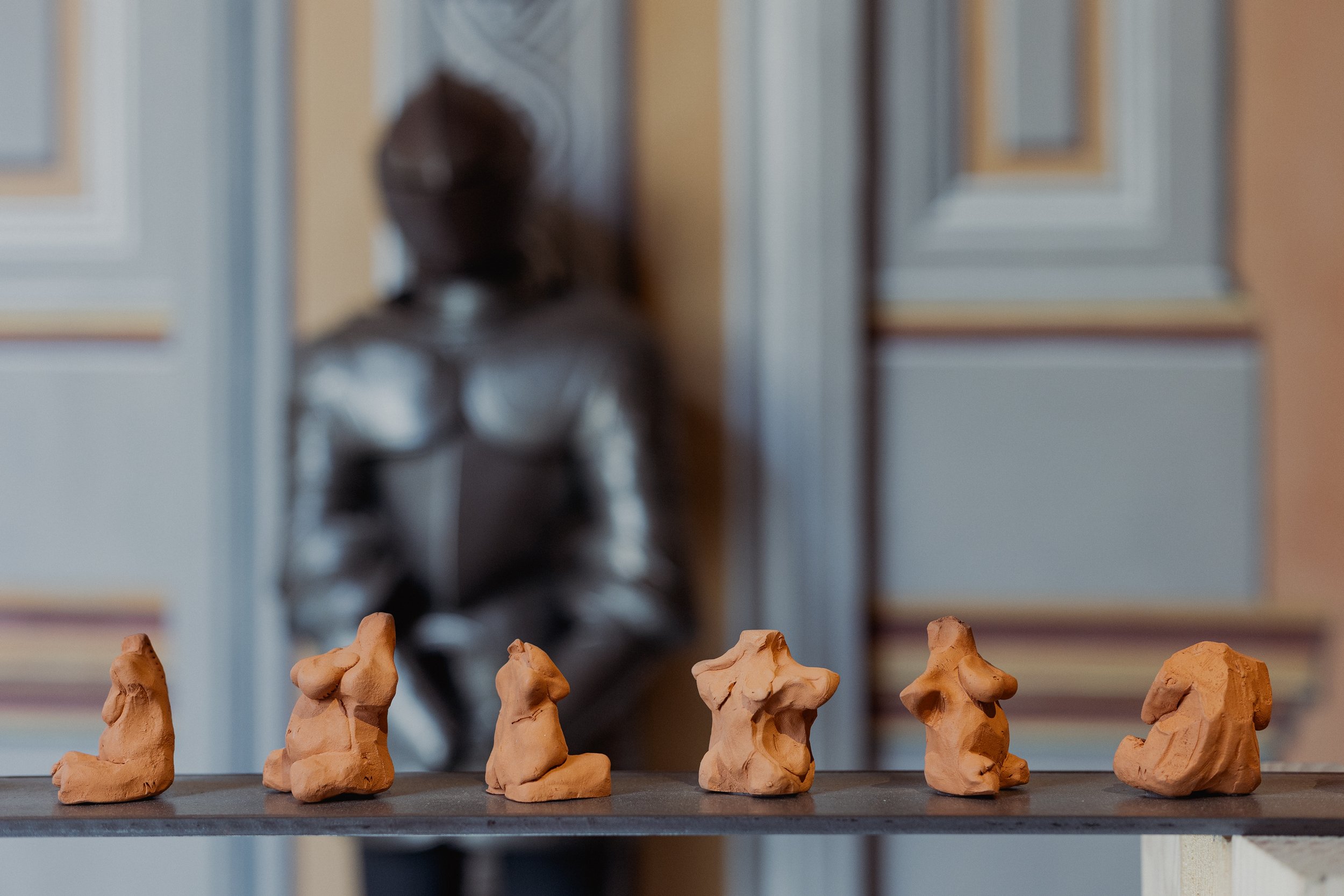
The Goddesses shown in the Grandmaster’s Palace, Valletta as part of the Malta Art Biennale 2024.
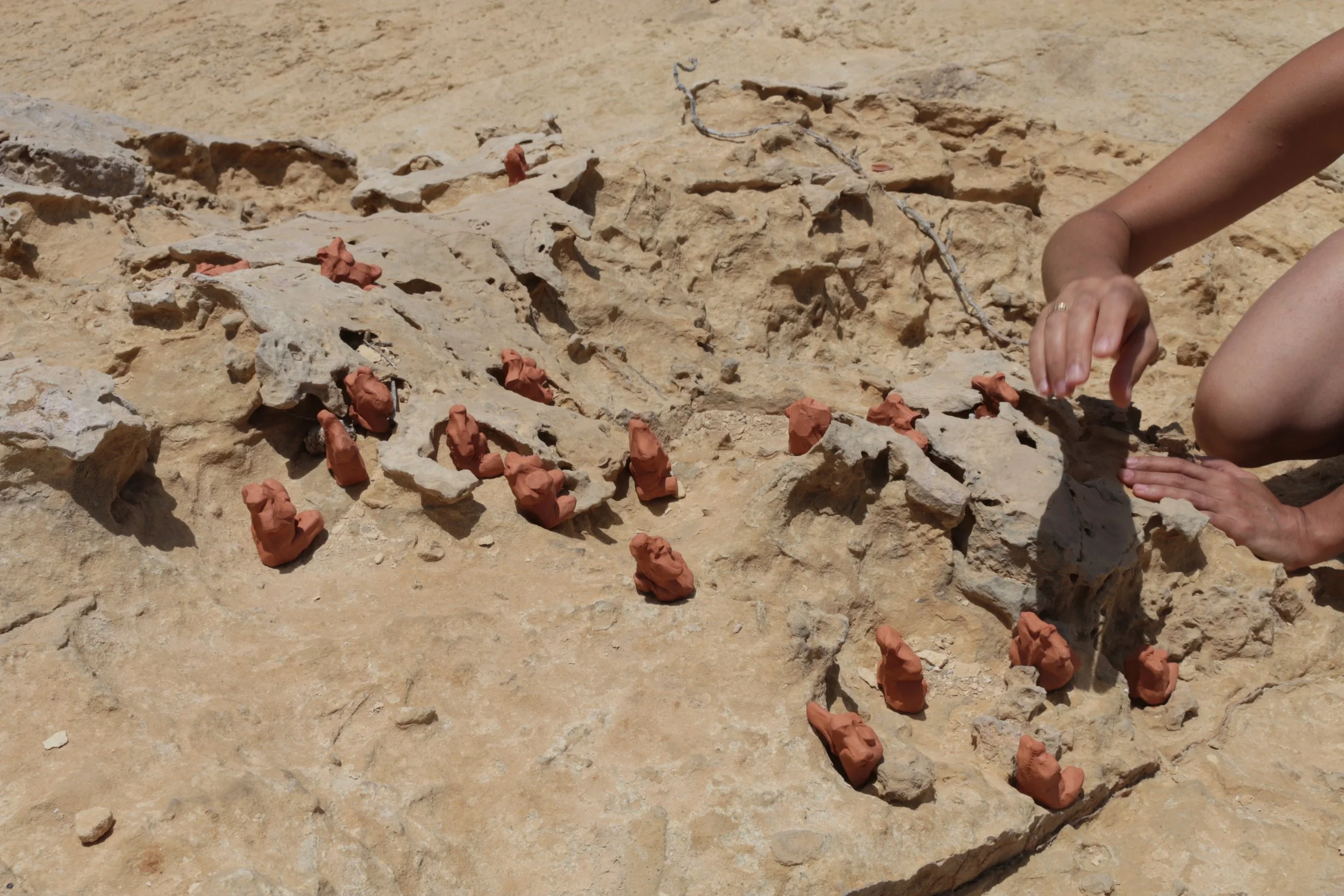
Nina playing with placing the Goddesses amongst the rocks in Malta.
As both a mother and a migrant raising young children in the UK during Brexit and Covid, I began to feel deeply homesick. I was inspired by Ana Mendieta, the Cuban artist exiled to America as a child. Her Silueta series explored connection to land through the body — addressing exile, displacement, and belonging.
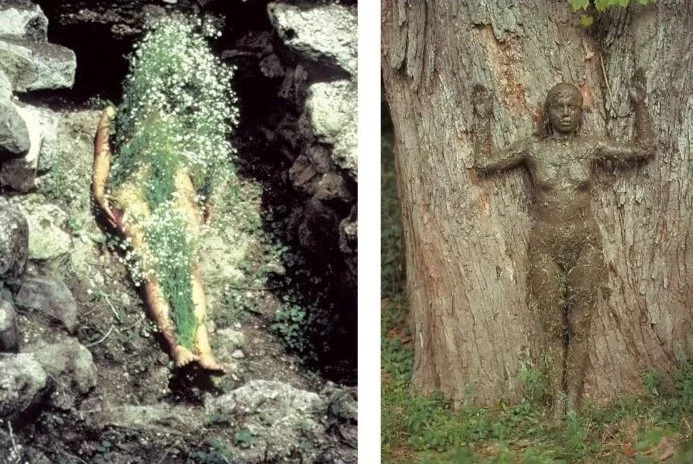
Silueta Series, Ana Mendieta
Returning to Malta, I attempted to create my own Silueta. In one photograph, my son unexpectedly entered the frame. Rather than disrupt the image, it captured something essential: the tension of early motherhood — attempting to reclaim one’s body and space, yet not fully able to do so.
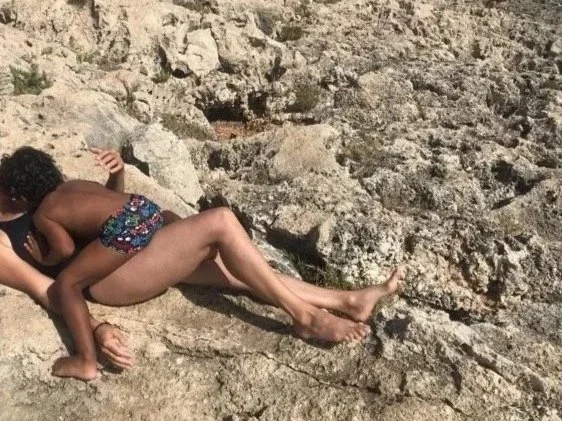
Photo-bomb portrait, Nina with her son Sami
I was also inspired by Laura Aguilar, whose nude self-portraits in the landscape position her body as both sculptural form and photographic subject. Aguilar’s presence in the American Southwest reclaims land for a queer woman of Mexican descent. She once said, “My photography has always provided me with an opportunity to open myself up and see the world around me. And most of all, photography makes me look within.”
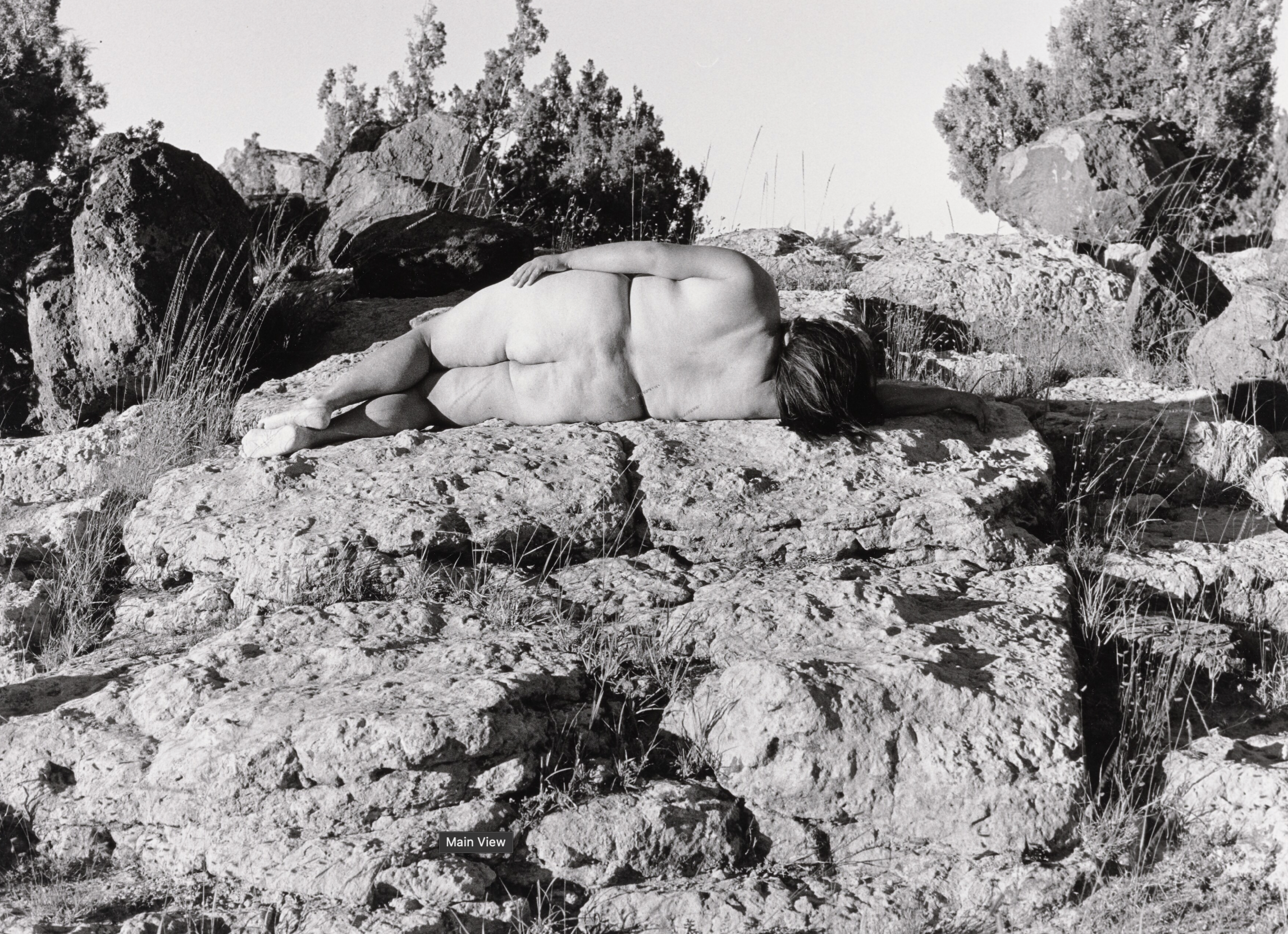
Laura Aguilar, ‘Nature Self-Portrait’
Following this lineage, I began creating self-portraits in the Maltese landscape, imagining myself as a rock — still, grounded, belonging. Motherhood demands a particular kind of stillness: the holding of multiple energies, the containment of chaos. In these images, I practice that stillness.
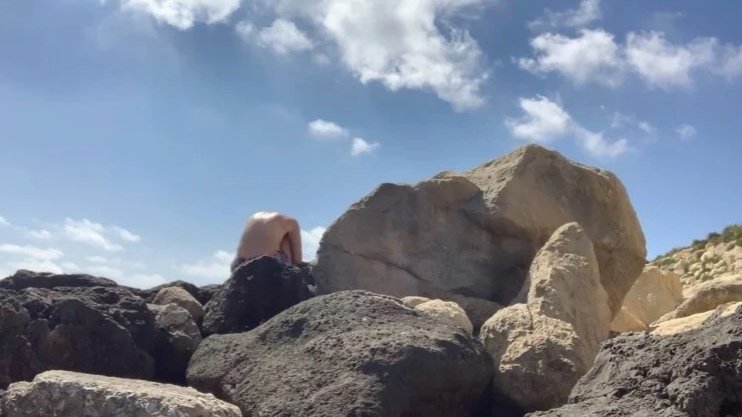
Self Portrait as a Rock
Alongside the photographs, I began making Rock-Body sculptures. Mother Rock (Self-Portrait as a Rock) resembles at once a pregnant torso, a stone, and a hip bone. It echoes ideas of ancient knowledge, solidity, endurance.
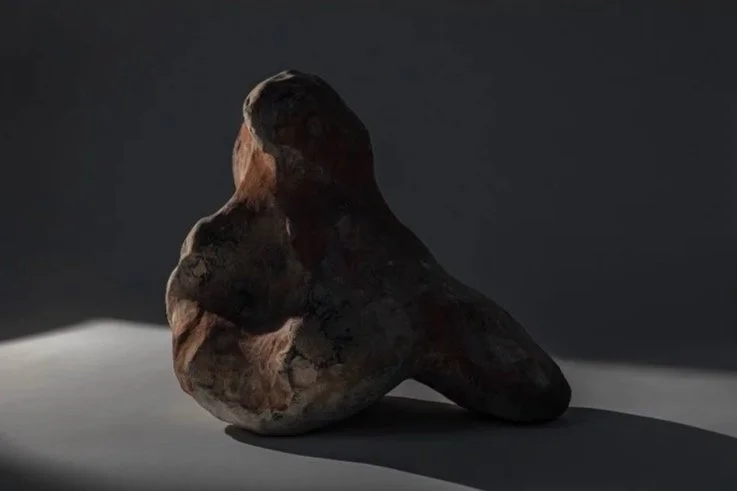
Mother Rock - Self Portrait as a Rock
In other works, I imagine myself as a geological layer — a small sediment in deep time. These gestures position the body not as spectacle, but as matter — enduring, weathered, part of a continuum.
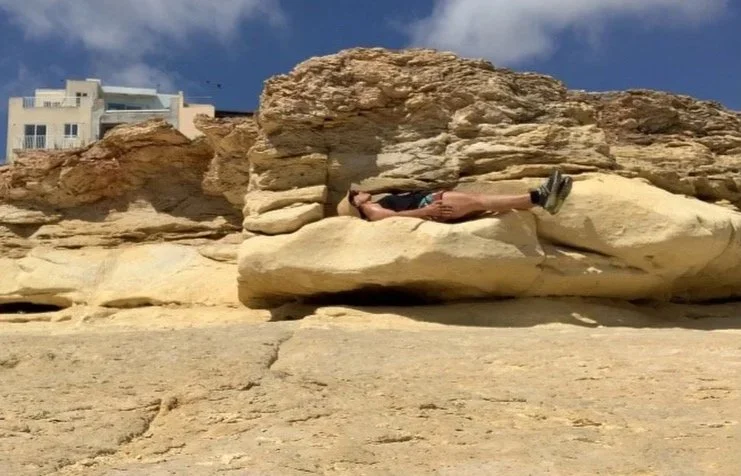
Self Portrait with the Rocks
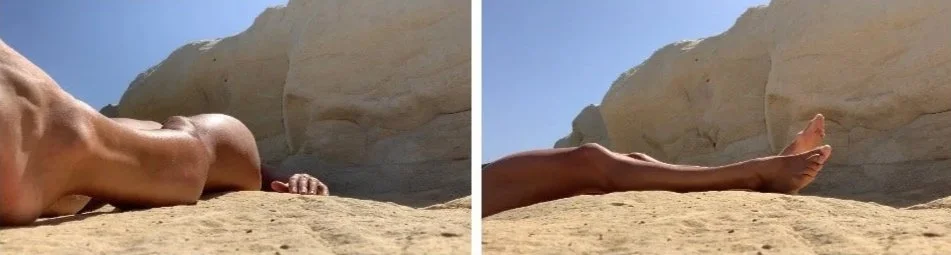
Self Portrait with the Rocks
More recently, I have been experimenting with pride in my body.
It has created life. It has endured injury. It has changed. And now, I am beginning to appreciate its wisdom — to feel a quiet pride in its history and resilience.