No Other Mother Land: A conversation with Ann Dingli
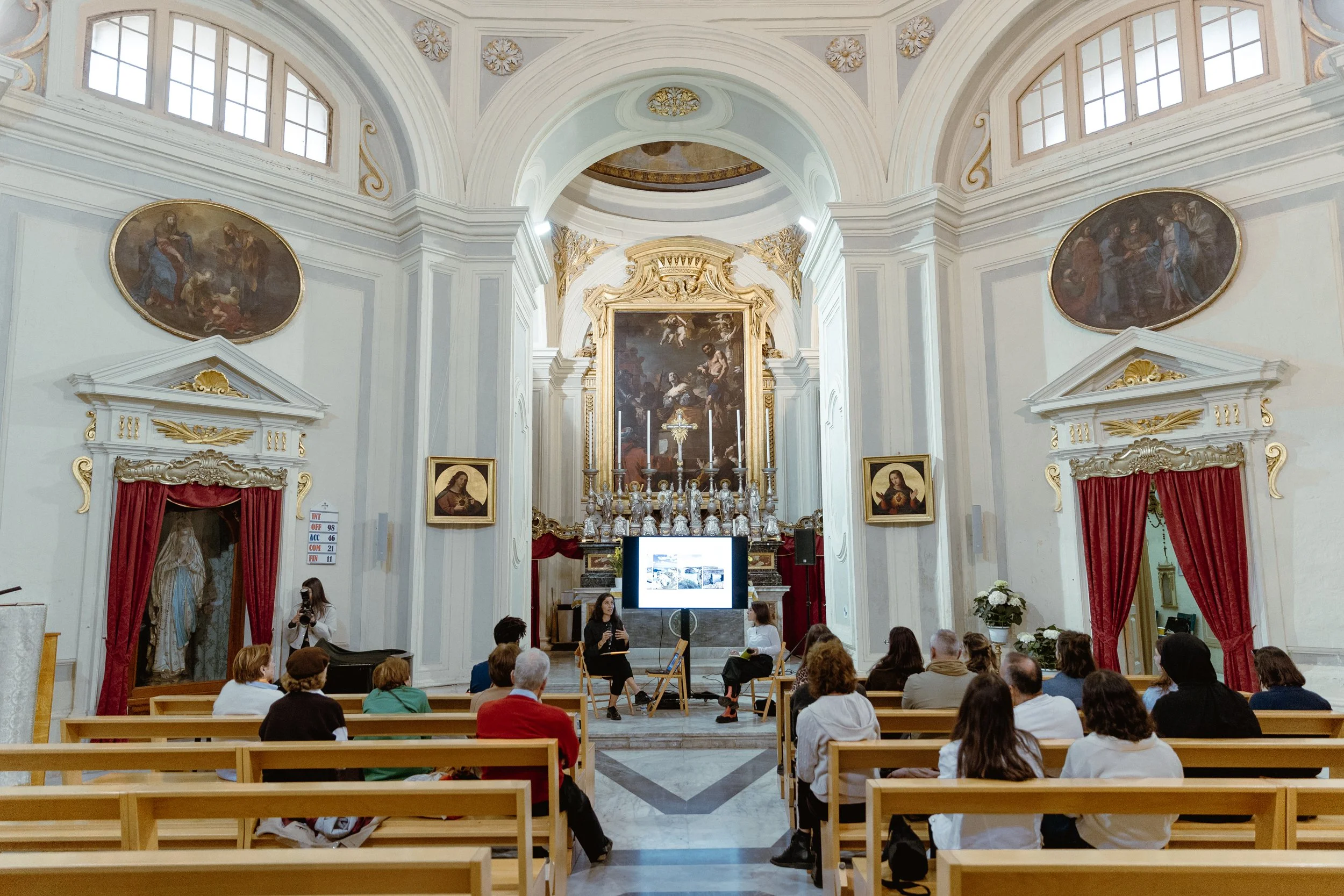
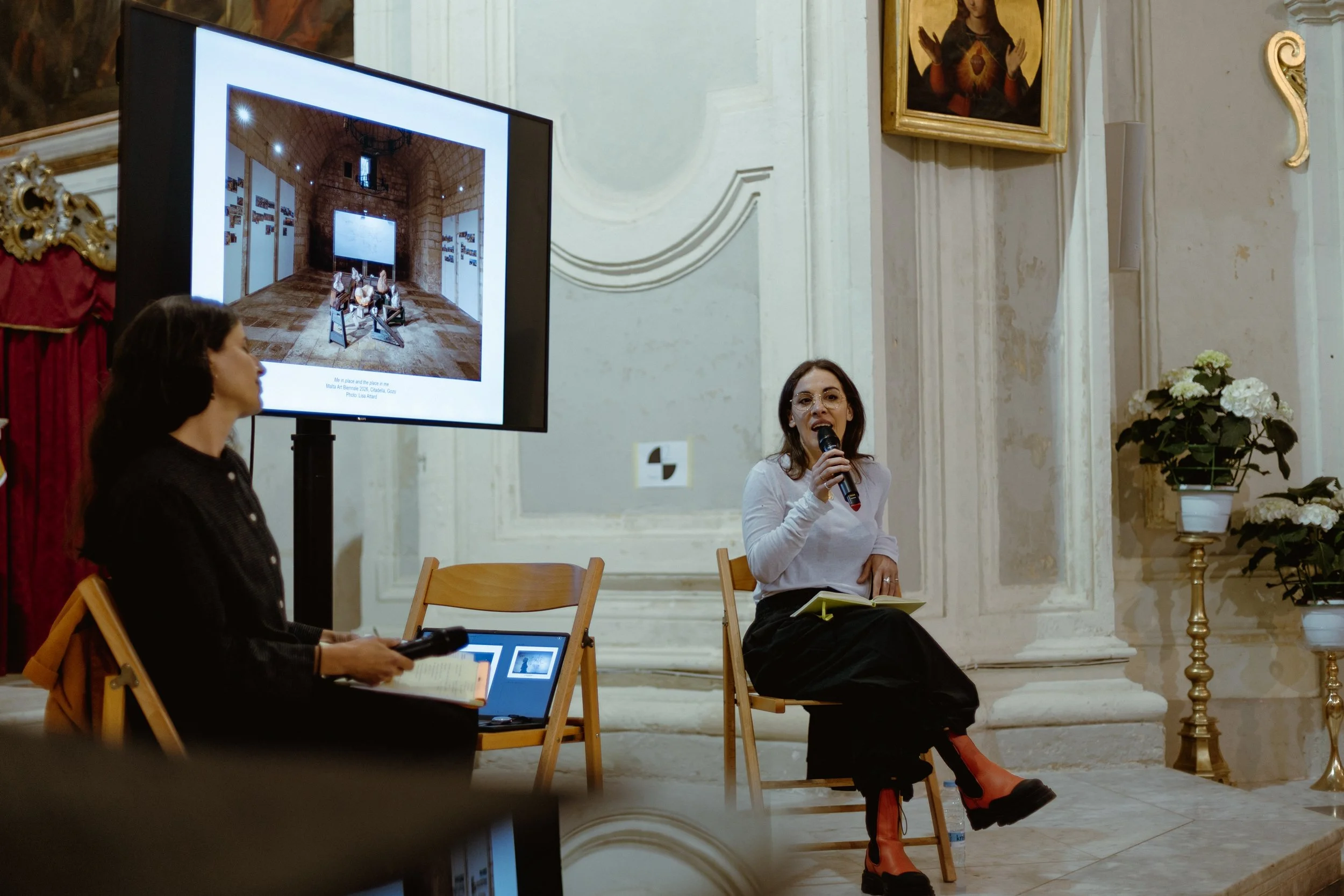
As part of the Malta Art Biennale 2026, Nina Gerada was interviewed by journalist and writer Ann Dingli at St.Catherine of Italy’s Church, Valletta.
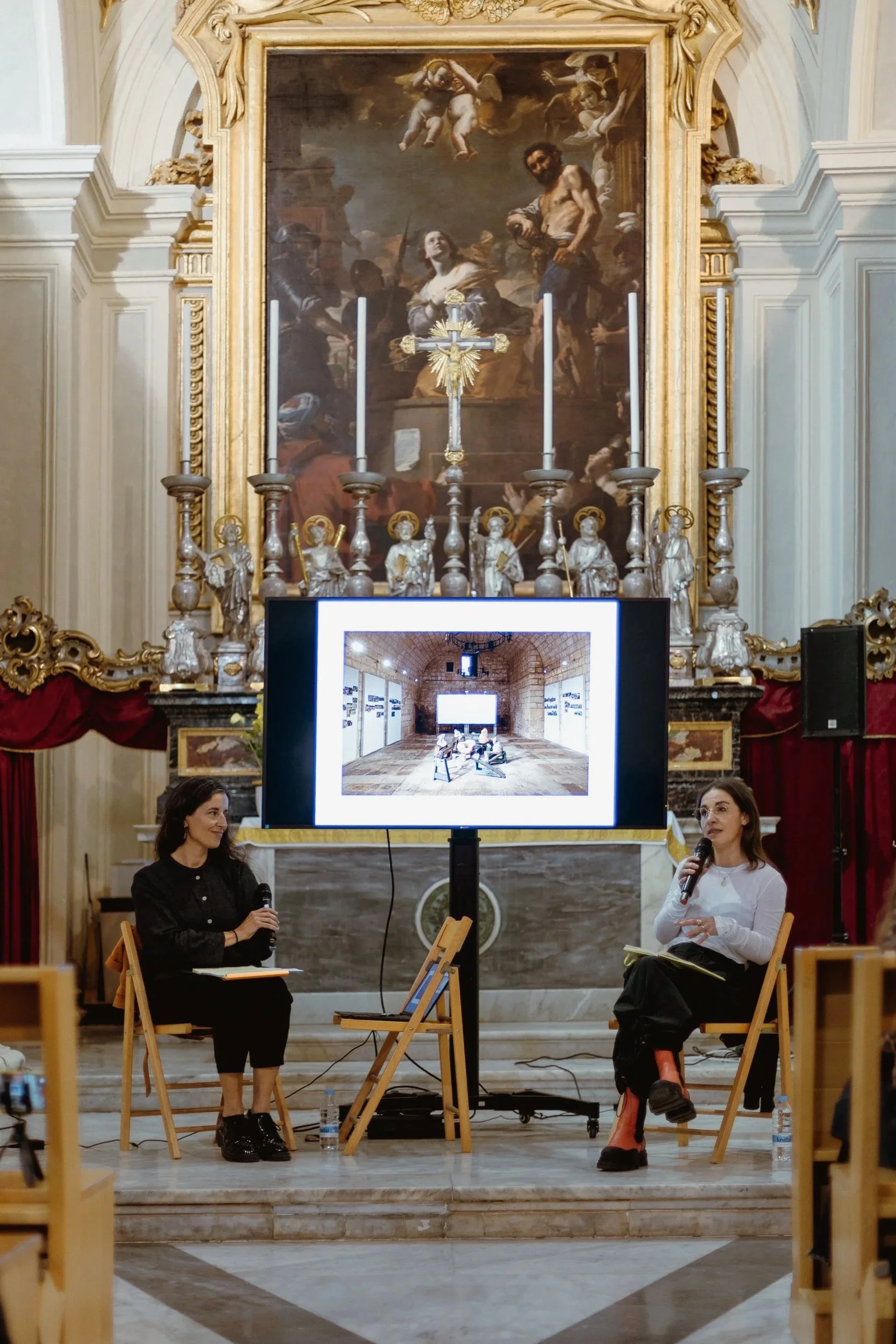
Unless otherwise stated, photography by Lisa Attard.
Ann Dingli: Thank you so much for joining us. Today's talk is titled No Other Mother Land, which, aside from the lovely alliteration, perfectly captures the themes we'll be exploring: our connection to home, and how that relationship changes as we leave, return, and move through different places.
We'll be looking at a selection of Nina's work for the Malta Art Biennale, now in its second edition, curated by Rosa Martinez and her team. Nina's installation in Gozo is titled ‘Me in Place and the Place in Me’, a line from Seamus Heaney's poem A Herbal. It speaks beautifully about the power place, landscape, and the people of our homeland have over us. Geography gives us something that, in Heaney's words, "maps and atlases can't"
Your Biennale installation is located in the Citadel in Gozo, occupying one of its larger, more secluded spaces. It brings together sculpture, photography, and drawing. I thought we'd begin by asking you to talk us through how you arrived at these works, and how place became such a central theme in your practice.
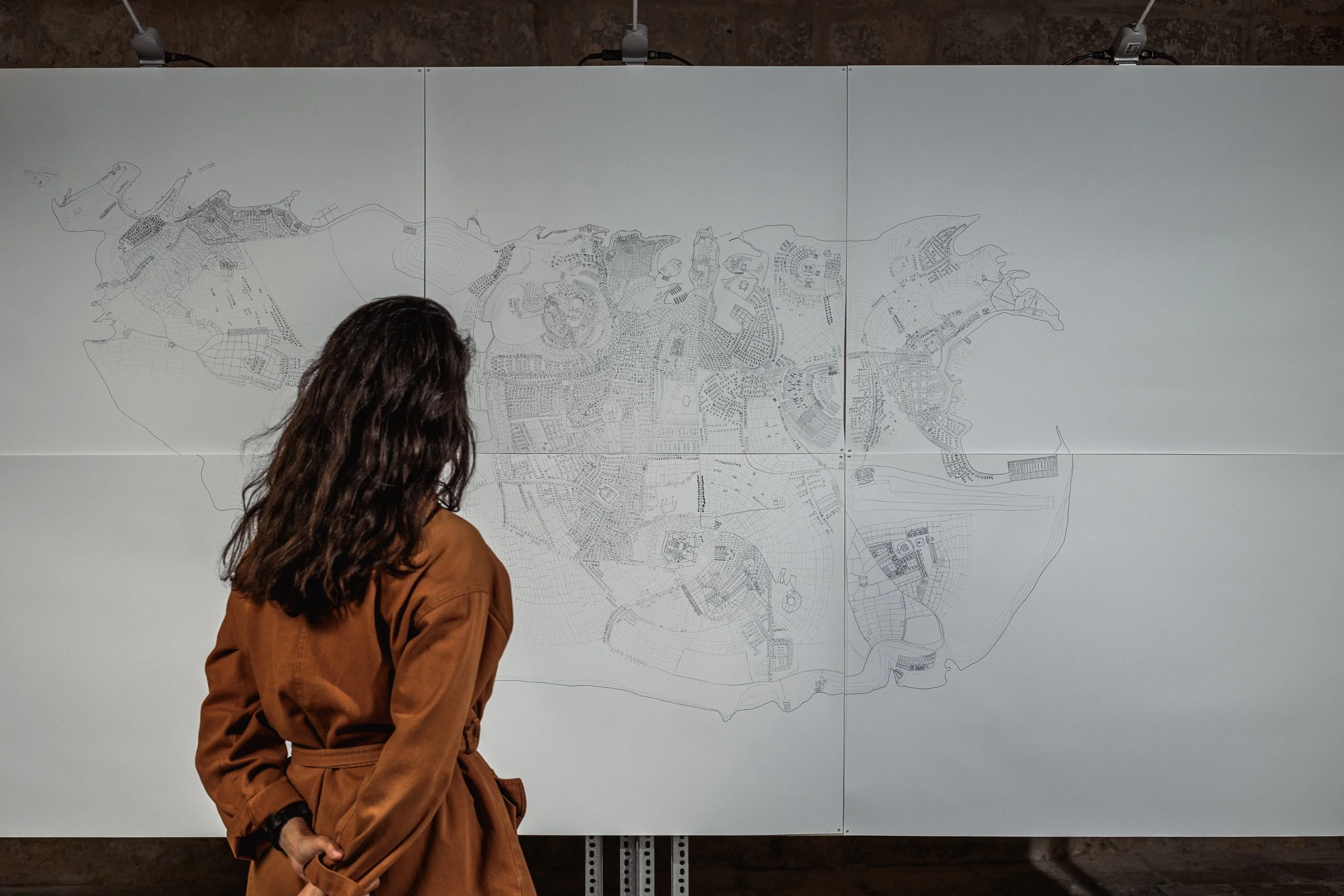
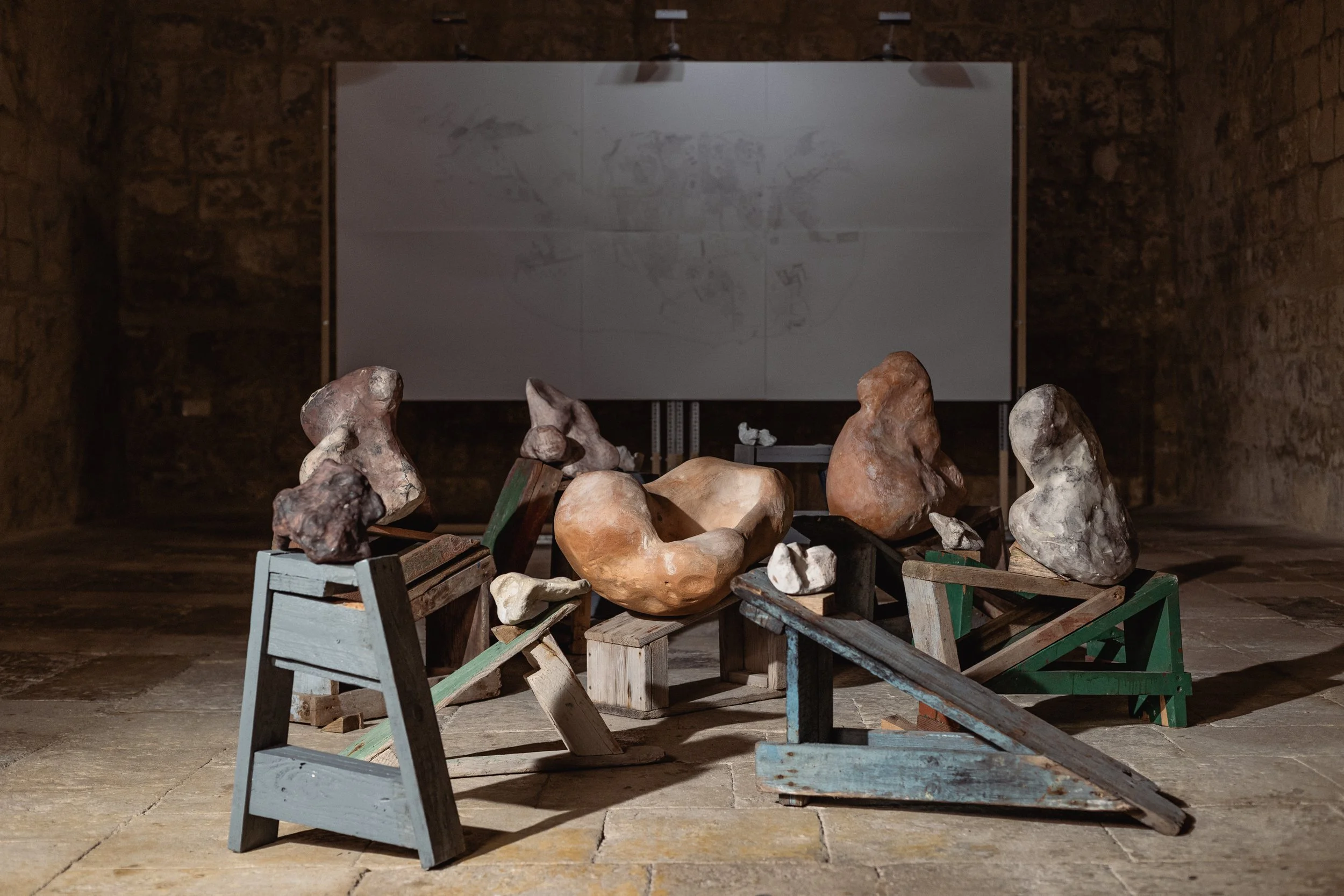
Nina Gerada: Thank you, Ann. The Biennale installation brings together four different projects, curated within the space at the Citadella, I appreciate that some people may not have been yet, so I'll start by walking you through them. At the back of the room there's a large hand-drawn map, drawn entirely from memory. It's a piece that holds memories, nostalgia, belonging, forgetting, leaving, and loss—all those experiences that come with migration. Some parts are deeply personal, while others feel like shared, collective memories.
Later I brought the map back to Malta and used it to start conversations with people. I made copies and invited people to draw their own version of Malta over mine. With my grandparents it became especially interesting because I asked them to correct Valletta, where they'd grown up. They kept stumbling over the street names because they'd lived through Italian, English, and Maltese names, constantly switching between languages as they tried to remember them. It became this beautiful exercise in collective memory.
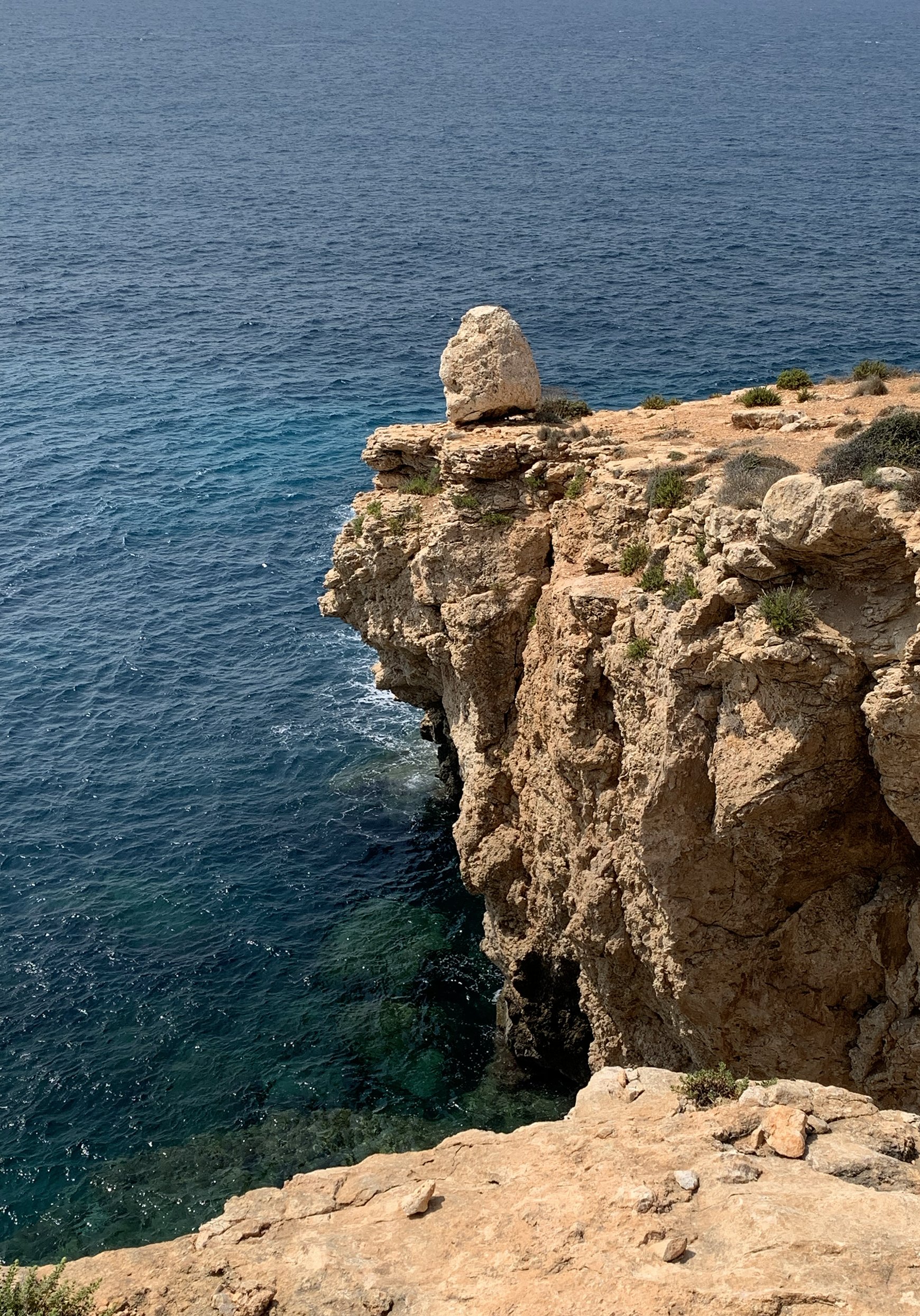
I need to start with my artist residency at the Malta Society of Arts. At the beginning of the residency I was told, "You can do anything. There's no pressure to produce. If you had no expectations of yourself, what would you do?" My immediate intuition was that I wanted to walk the coastline of all the islands. So I did. The photographs in the installation document that journey.
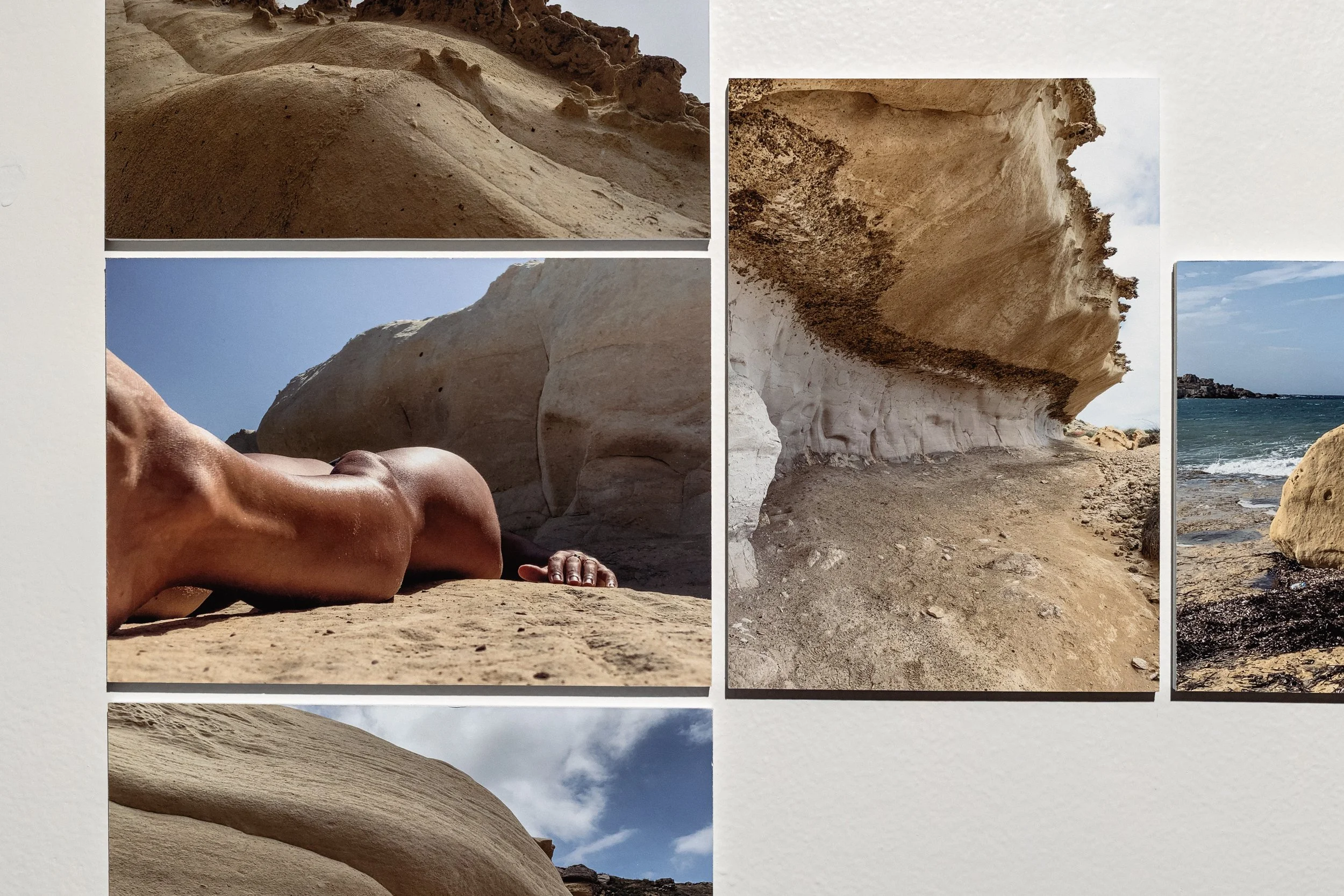
The wonderful thing about doing this before I knew it would become Biennale work was that I felt completely free. I was photographing out of curiosity rather than with a finished outcome in mind. I was drawn to sculptural forms, materiality, scale, weathered rocks, textures, and surfaces. Alongside the walks, I interviewed geologists and natural history biologists to better understand the islands themselves. The photographs capture many of the places we all know and feel attached to, while exploring relationships between rocks, erosion, scale, and geological time.
In the exhibition they're arranged in a dreamlike sequence rather than a geographical one. It's more associative, much like memory itself, where one image naturally leads to another. As Ann mentioned, I'd been away from Malta for over twenty years. I left when I was nineteen and had only recently returned when I began this residency. Walking the entire coastline felt like a way of taking it all in—to fully experience coming home after so long away. When we moved back, we thought we'd probably stay for only a year or two, so there was also this urge to collect: memories, inspiration, thoughts, images—just to absorb everything around me before leaving again.
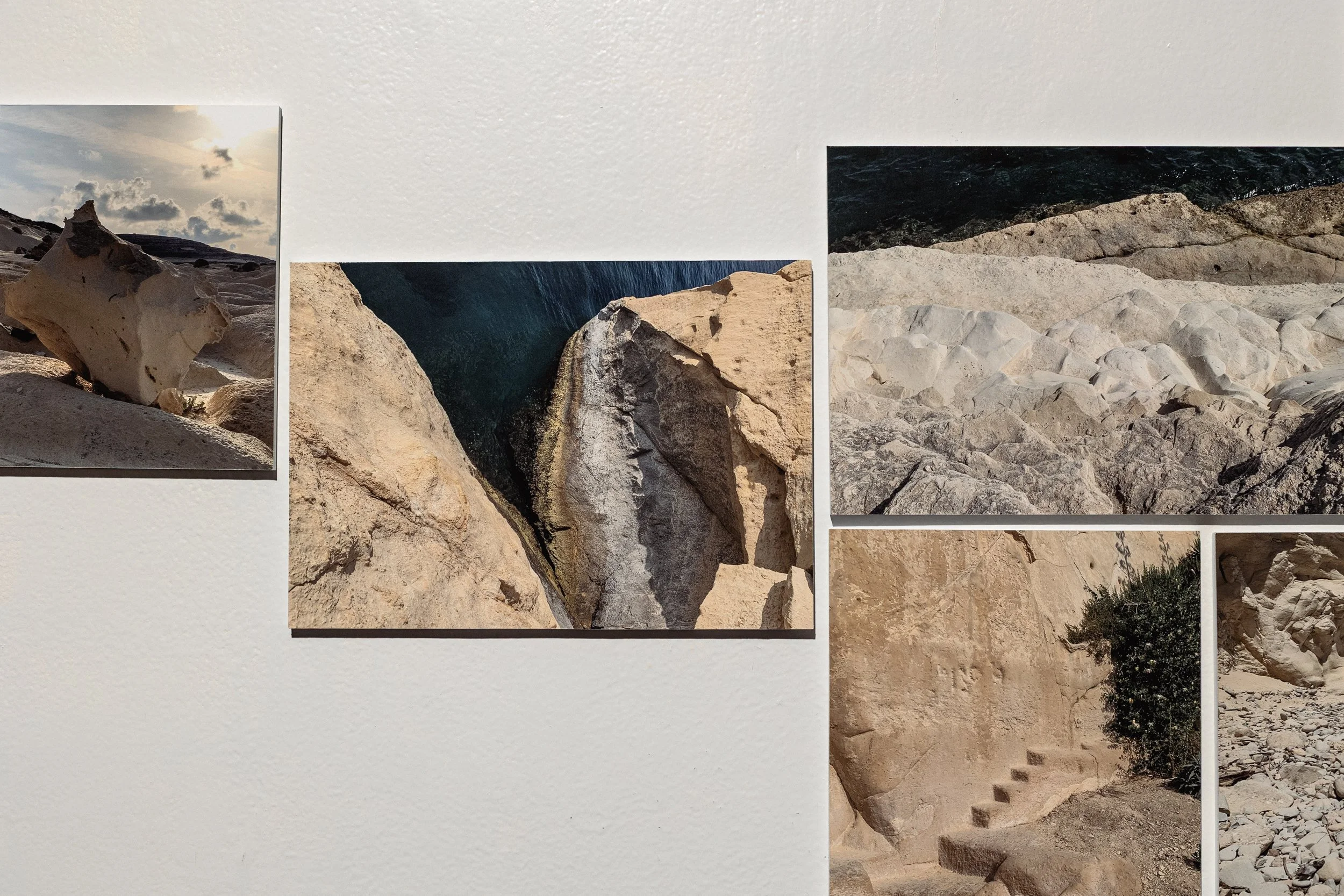
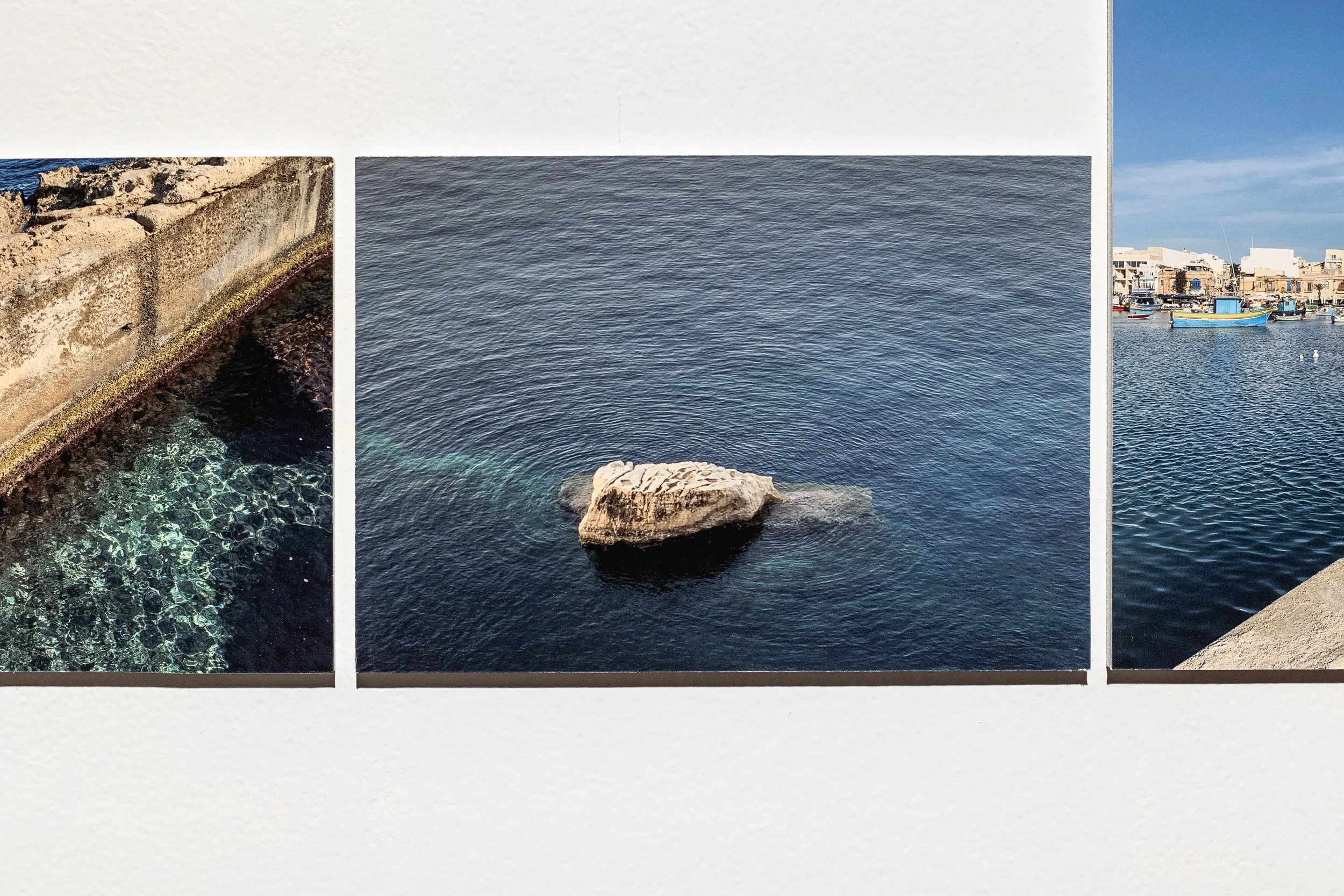
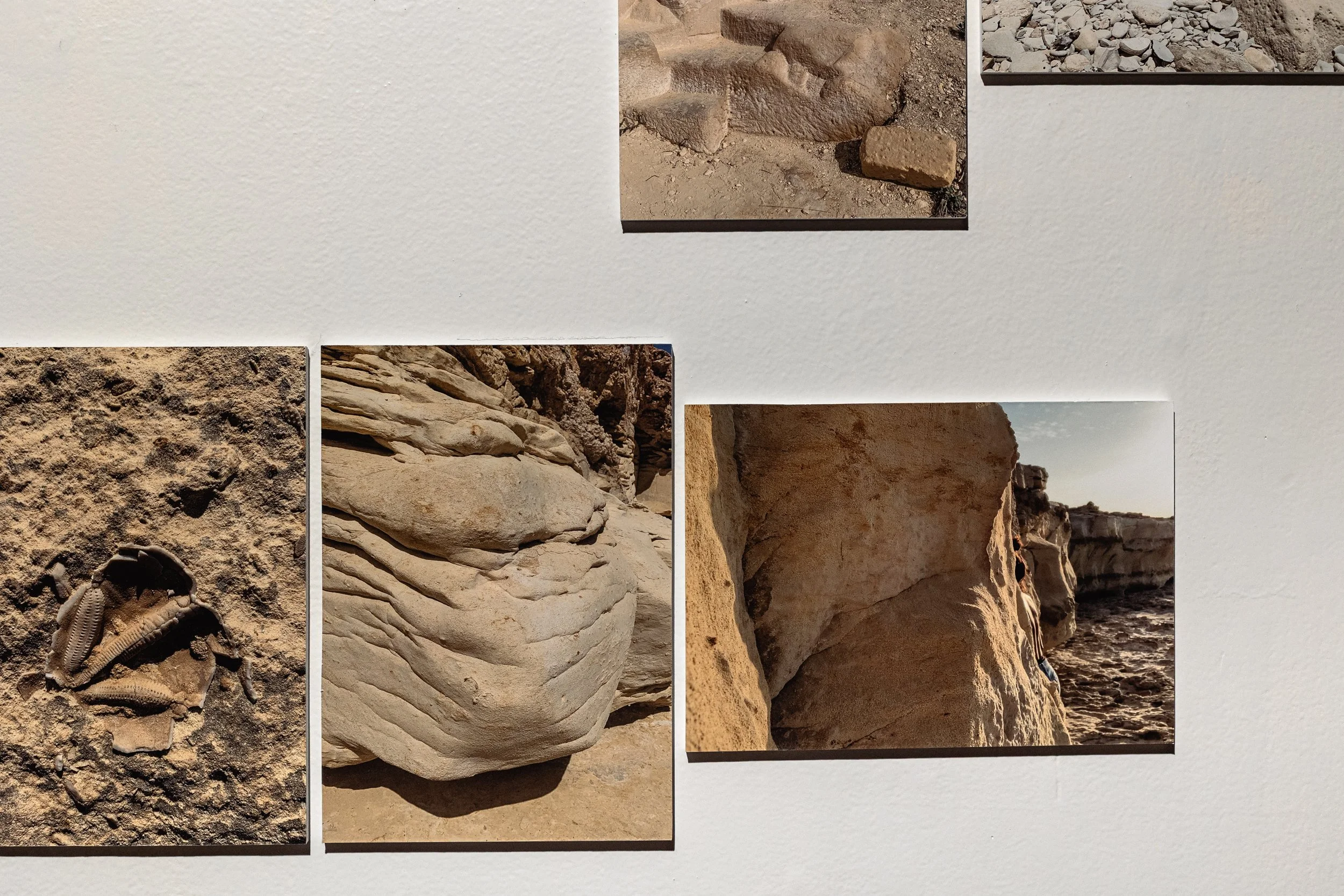
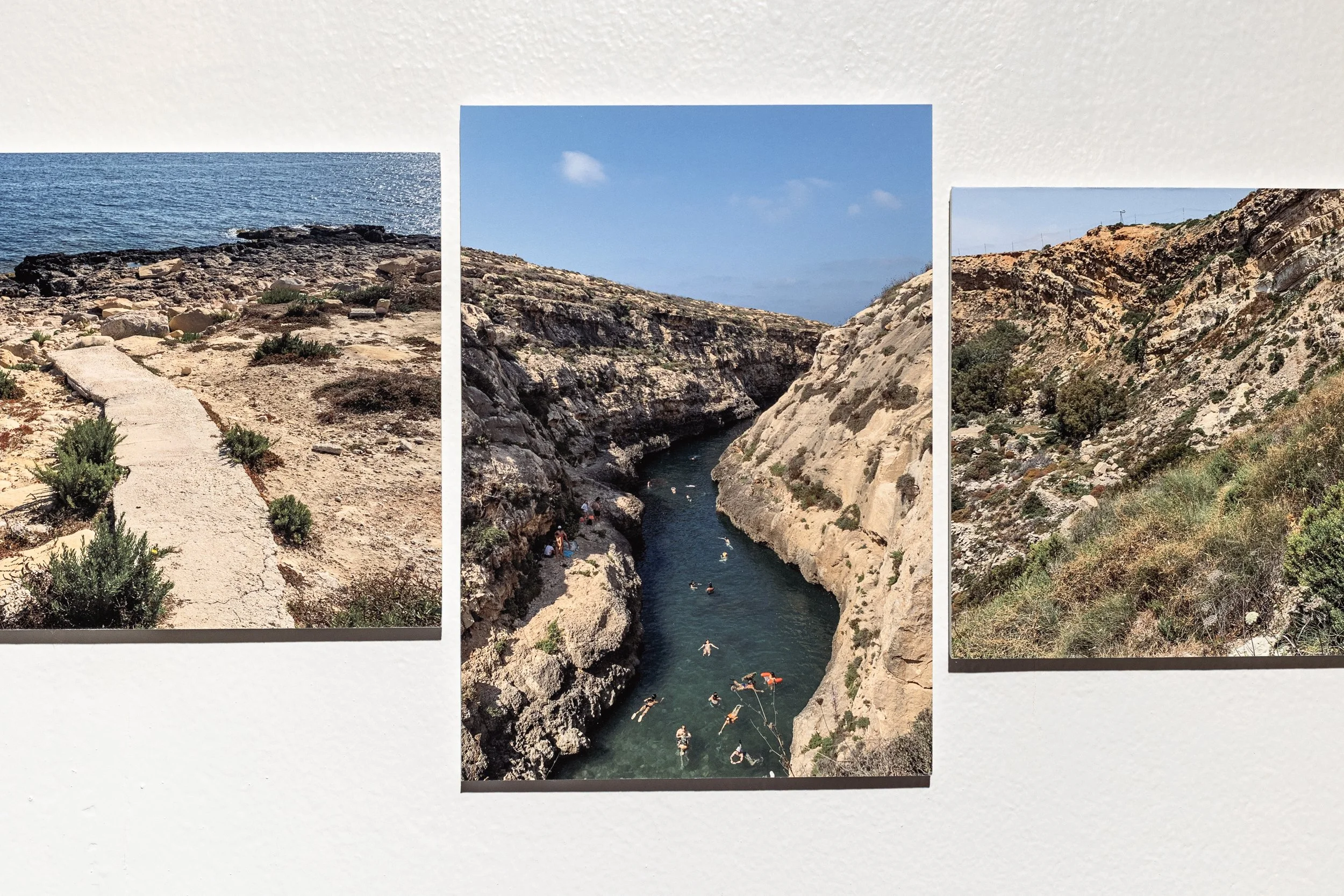
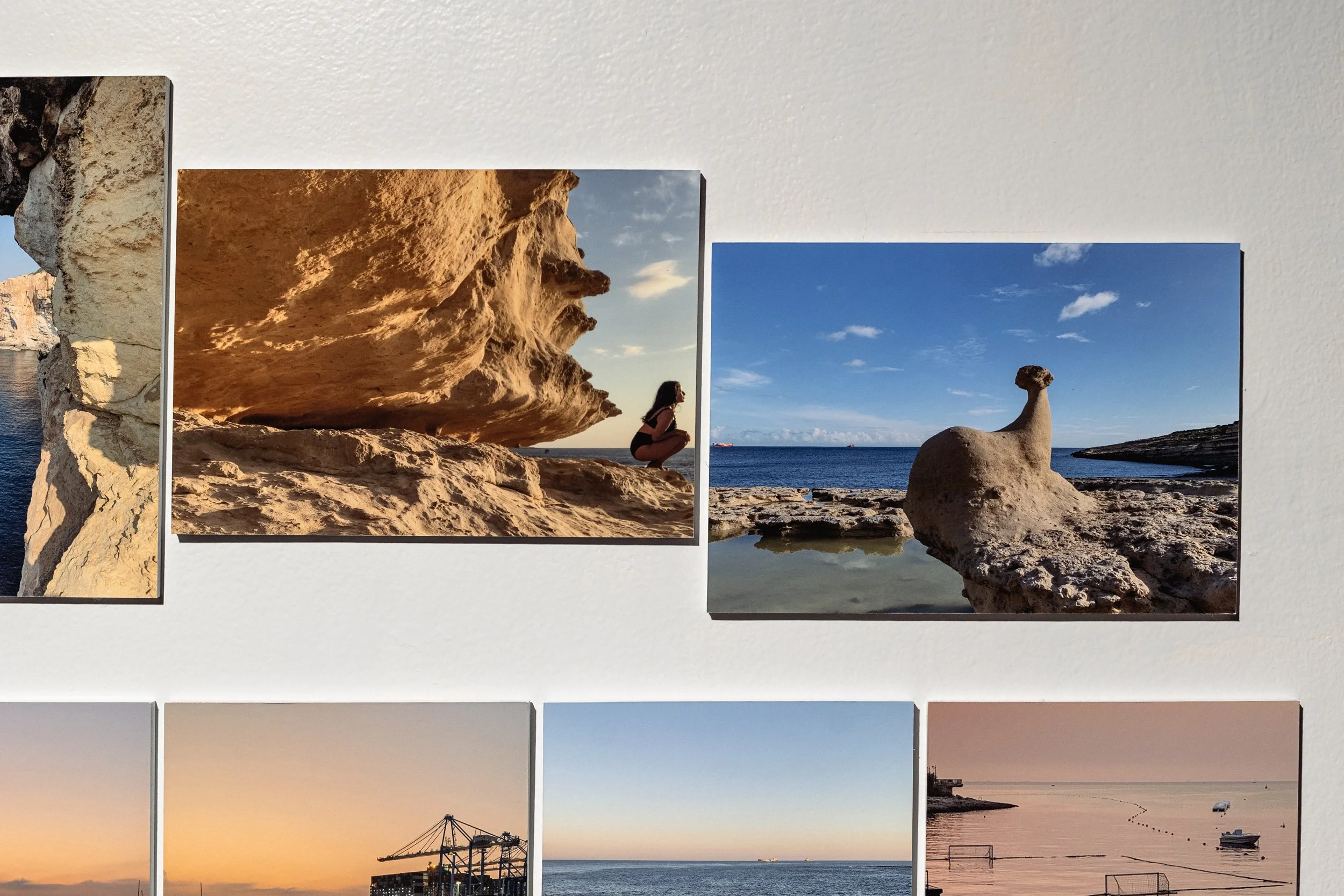
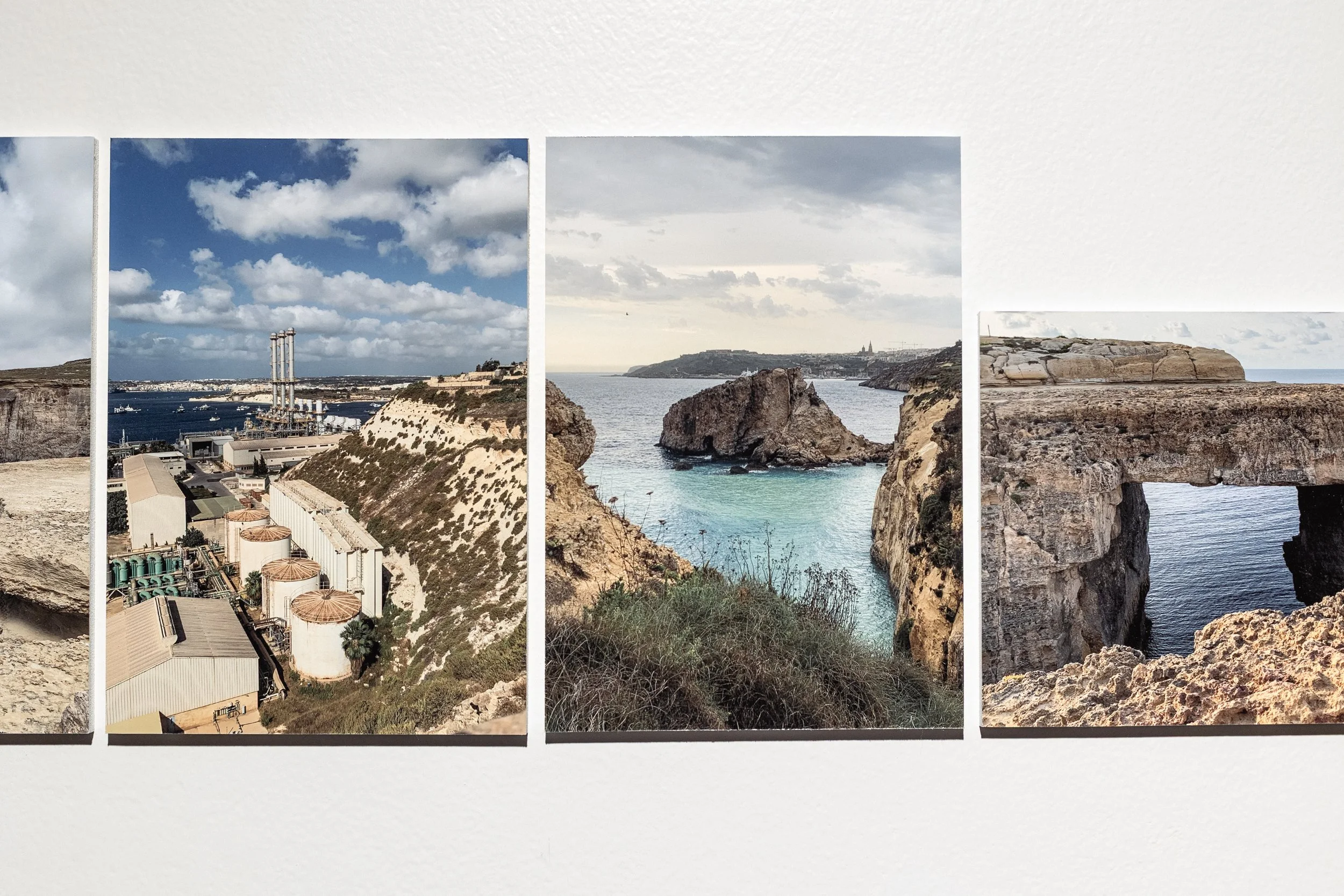
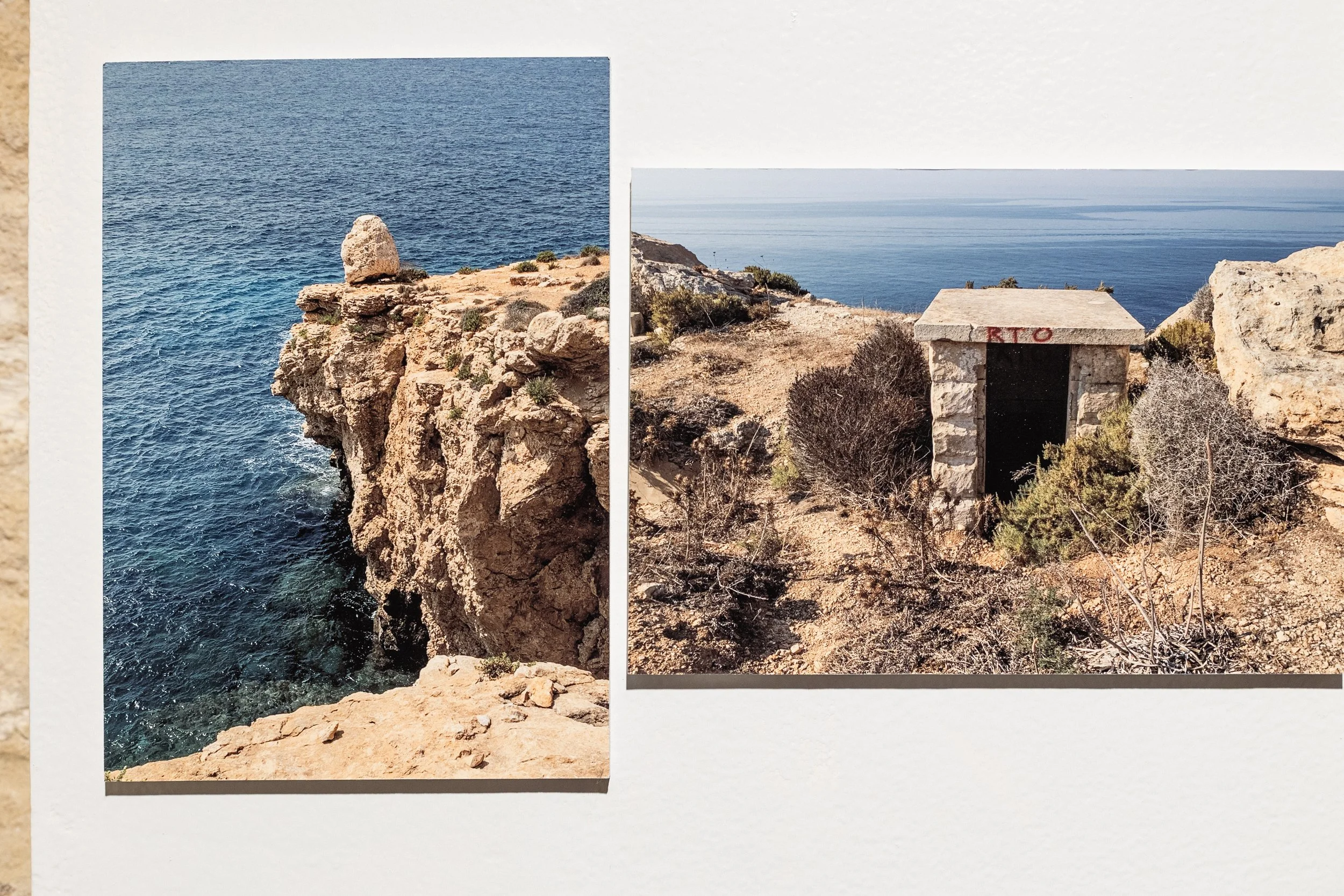
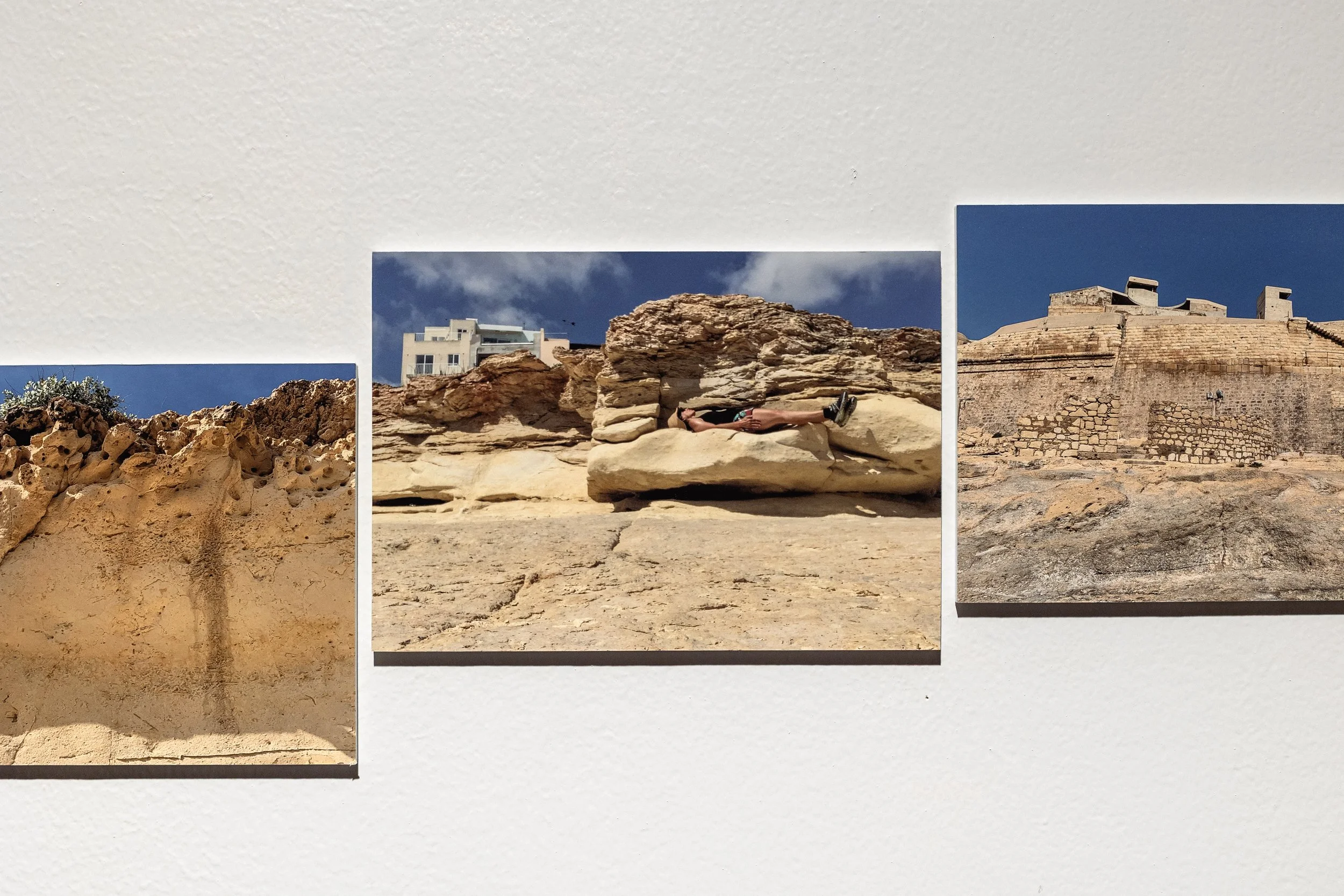
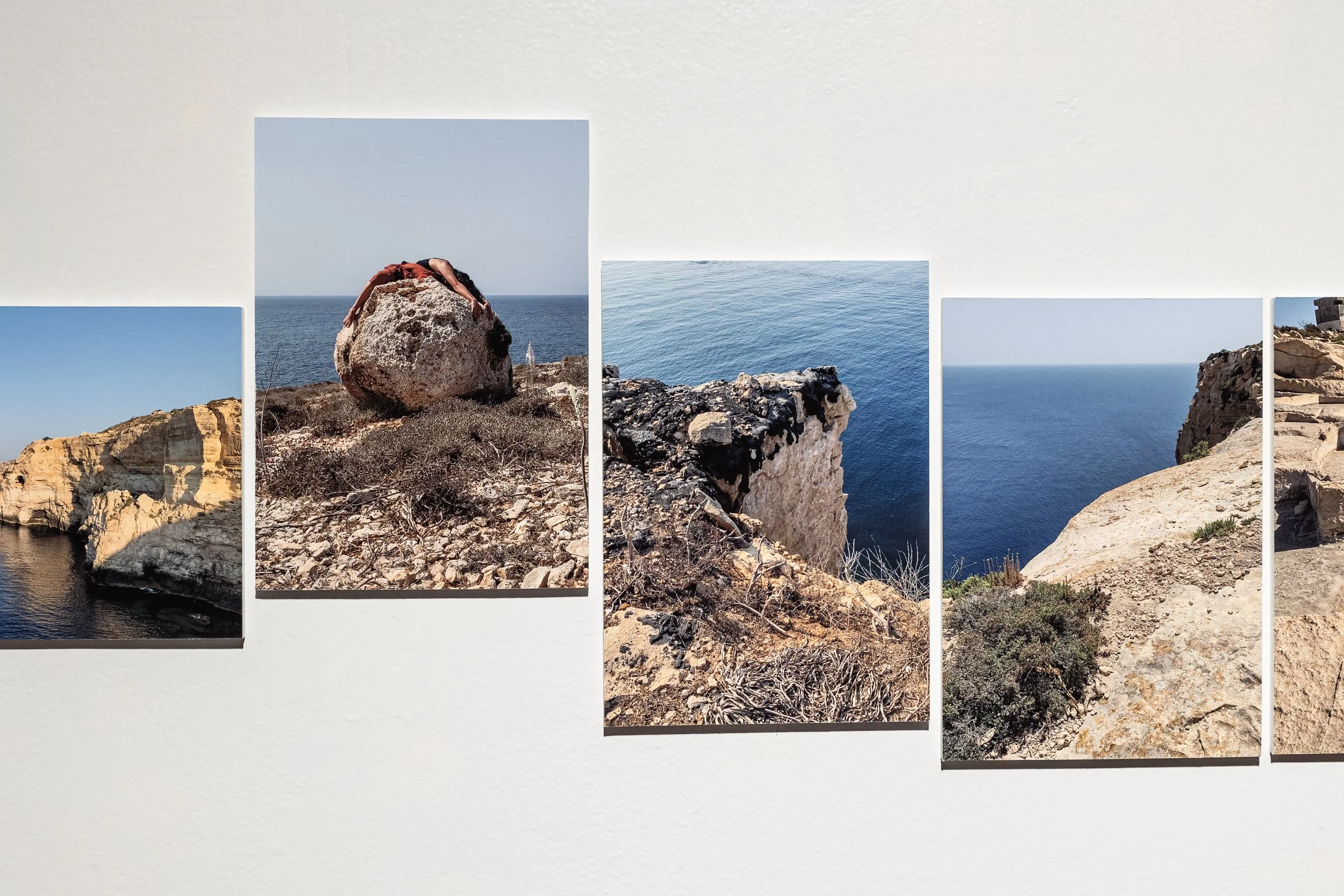
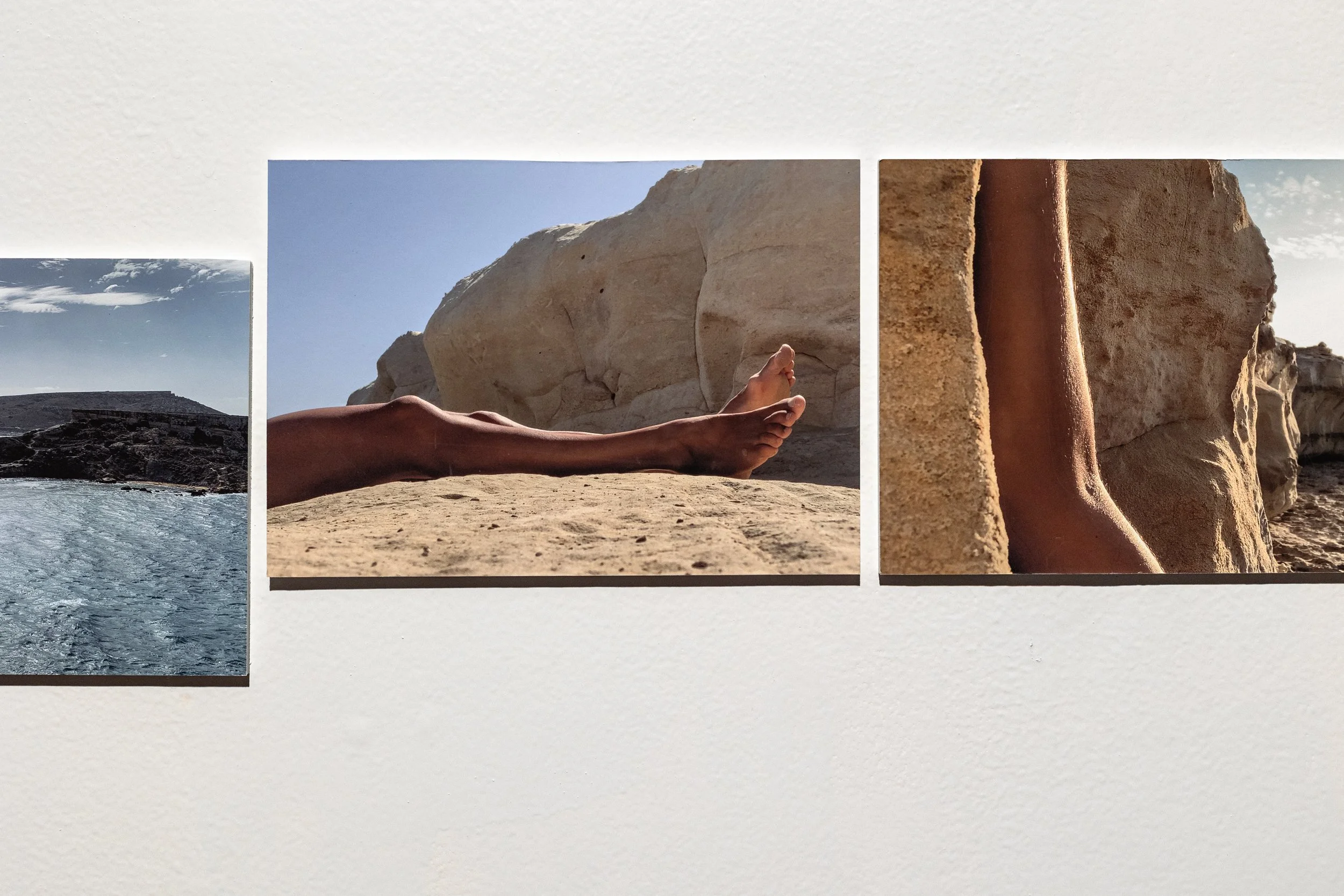
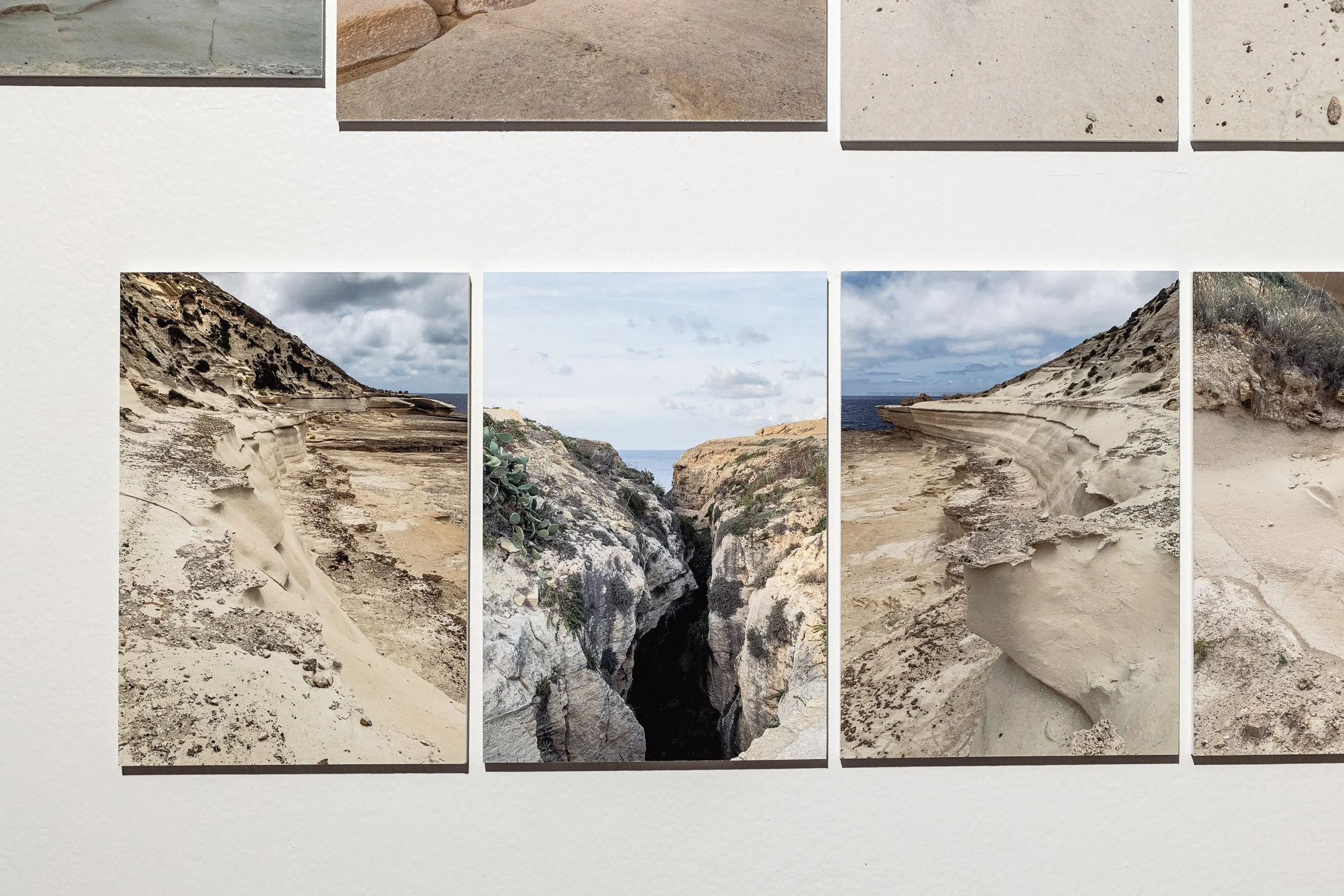
I'm very conscious that Malta is often represented in one of two extremes: either as the perfect tourist postcard or as a landscape of cranes and concrete. I think we've almost become numb to both versions. But the reality contains all of it—the beauty, the industry, the ad hoc architecture, and the ways people occupy the landscape, and I have tried to show that.
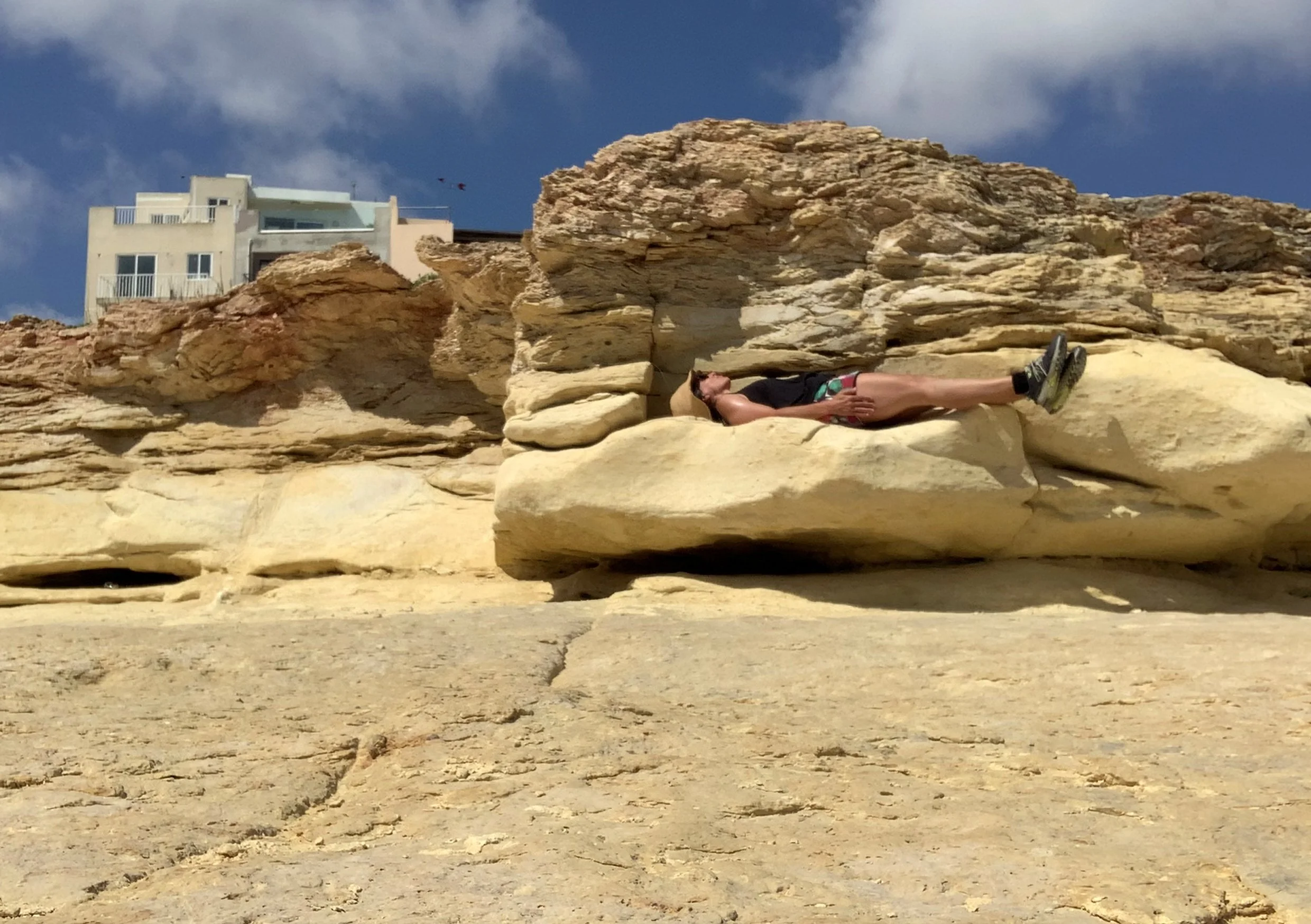
At the same time, I became interested in finding ways of placing my own body within that landscape, so I started experimenting with photographic self-portraiture, something I hadn't really explored before. It grew out of asking myself what I actually missed while living abroad - the limestone, the smell of the sea, the wind, the dust, the salt, the heat, the light, the shadows. It wasn't just visual—it’s something deeply embodied. I've been trying to find ways to express that connection between body and landscape. That's where the title of the work comes from. There's a line in Heaney's poem that really stayed with me: "I had my existence, I was there, me in place, and the place in me... where can it be found again, an elsewhere world beyond maps and atlases?" I think it captures that interconnectedness so beautifully.
Being a woman also meant thinking carefully about how to represent my own body. How do I place myself in an image without becoming objectified? How do I communicate presence, emotion, or humour without falling into expectations around beauty? I wanted the photographs to carry something playful as well—a childlike delight in climbing over rocks, something many of us remember from childhood—while also speaking about geological time and our relationship to the landscape.
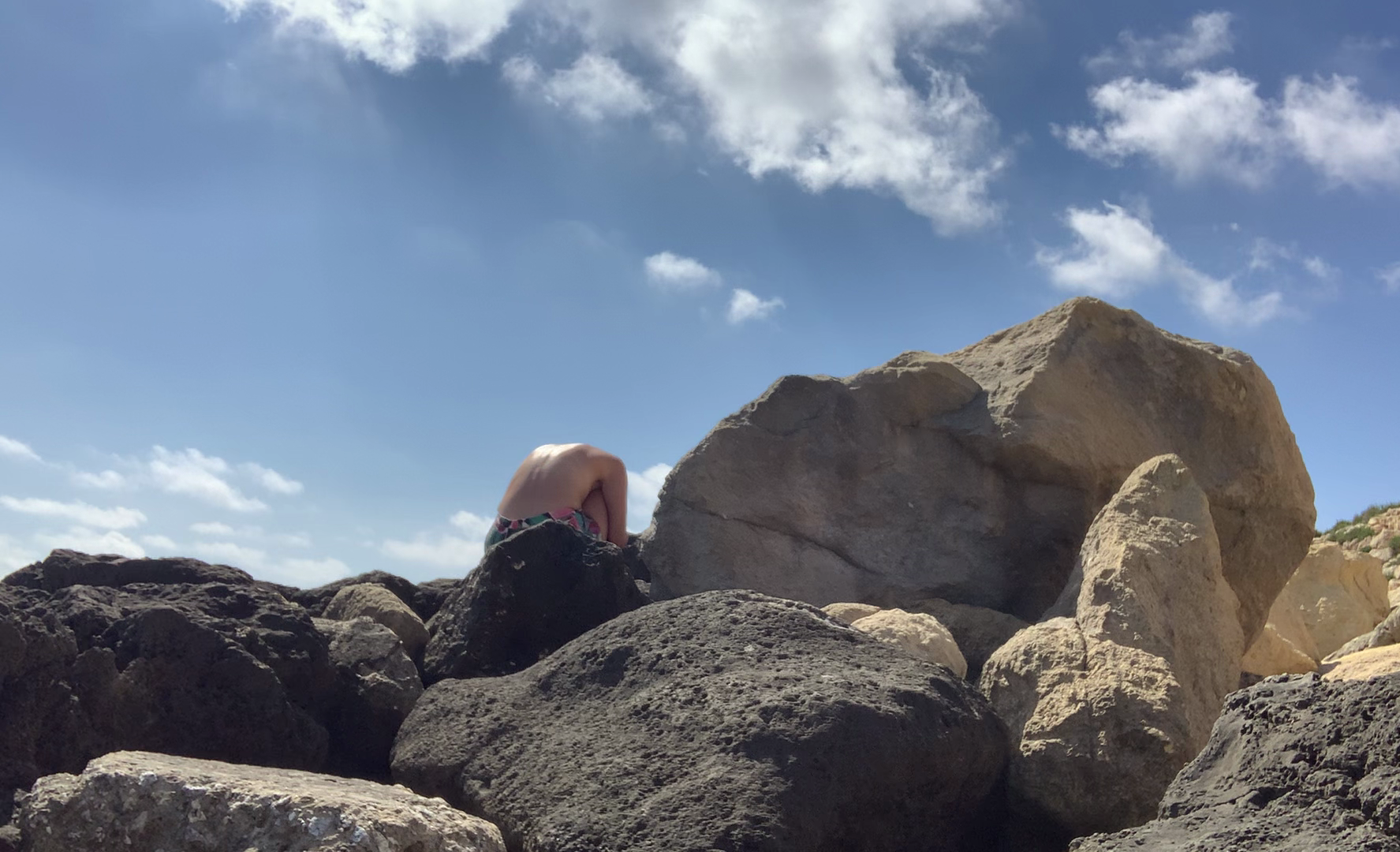
Self Portrait with the Rocks, 2025. Nina Gerada.
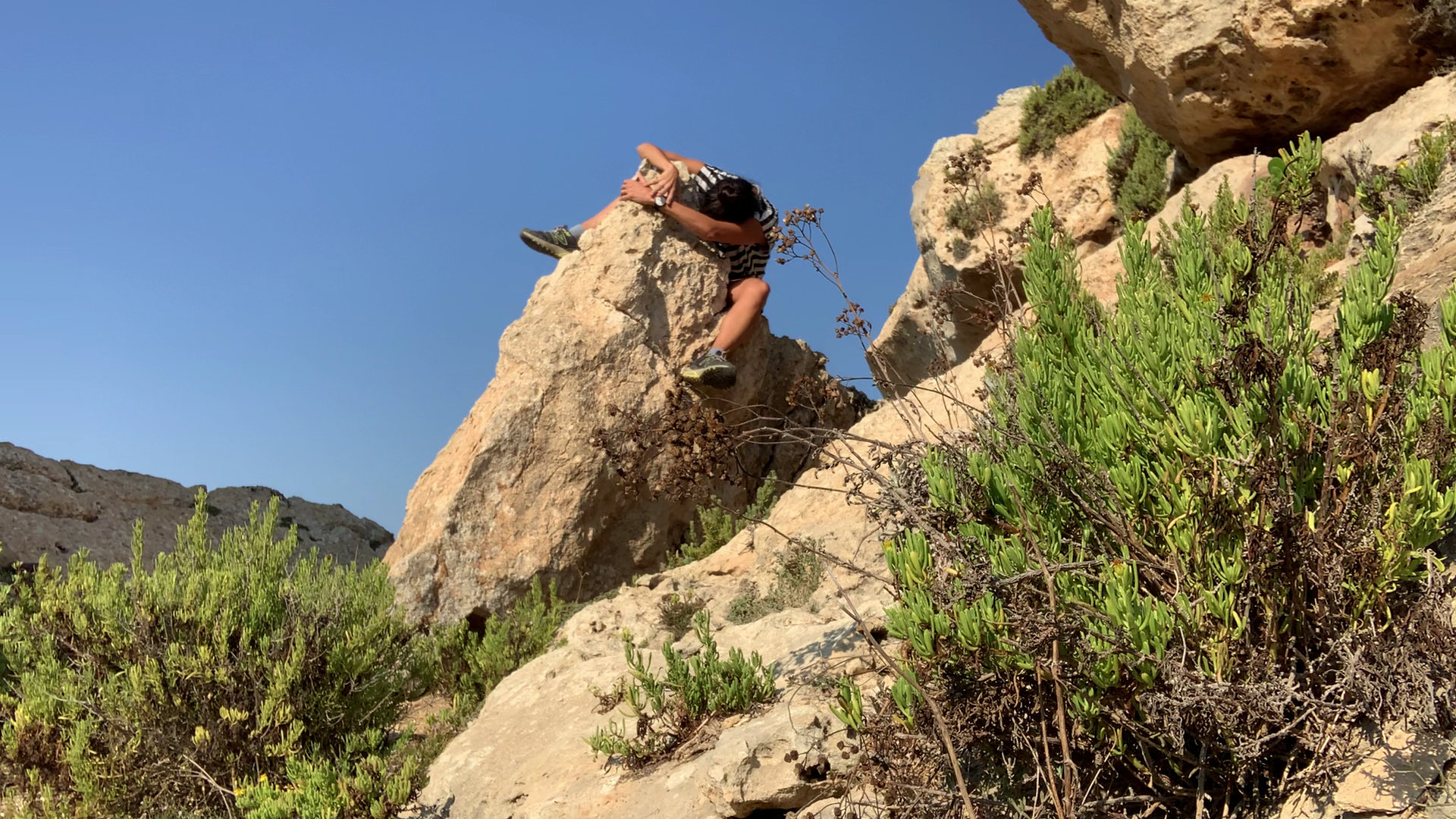
Self Portrait with the Rocks, 2025. Nina Gerada.
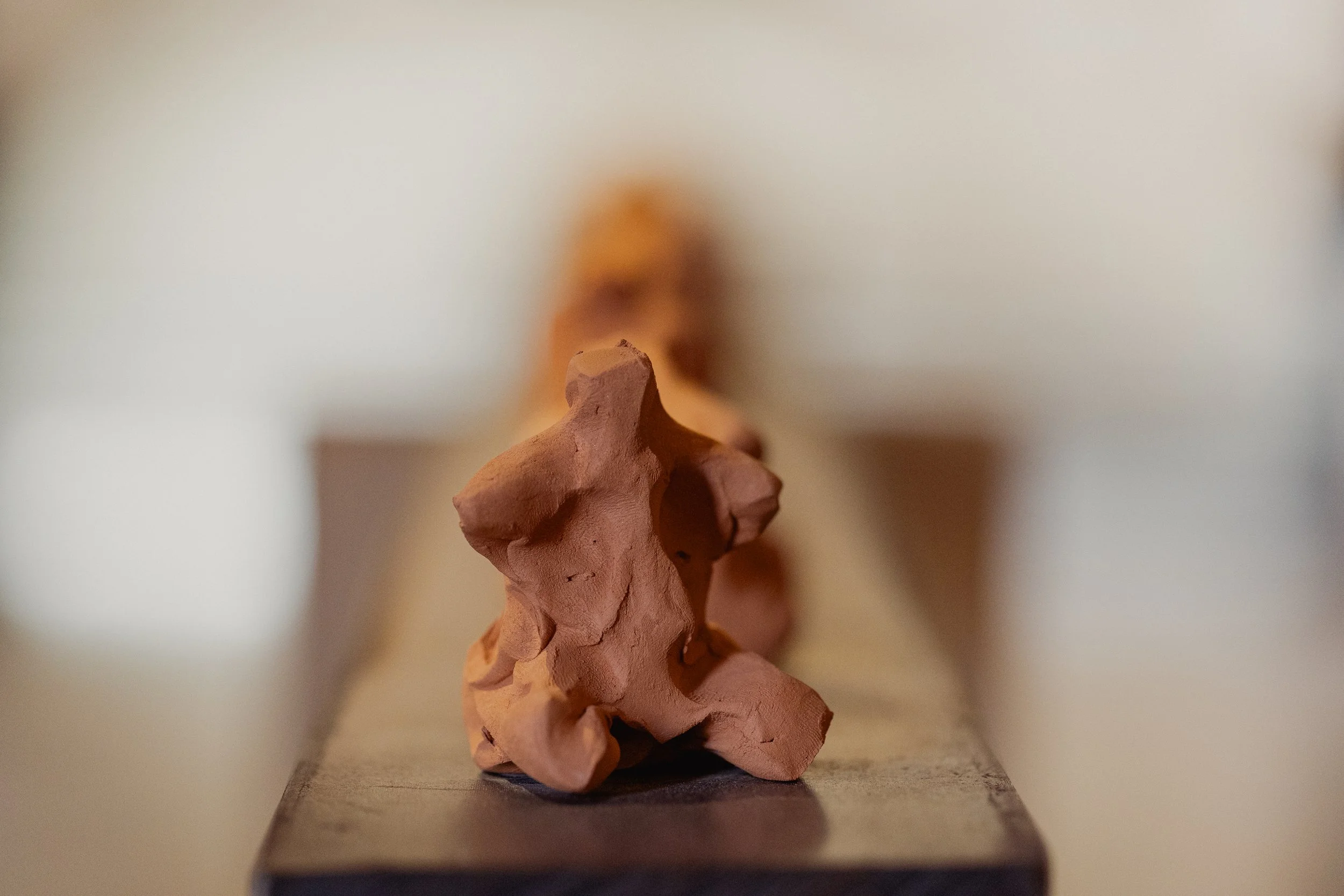
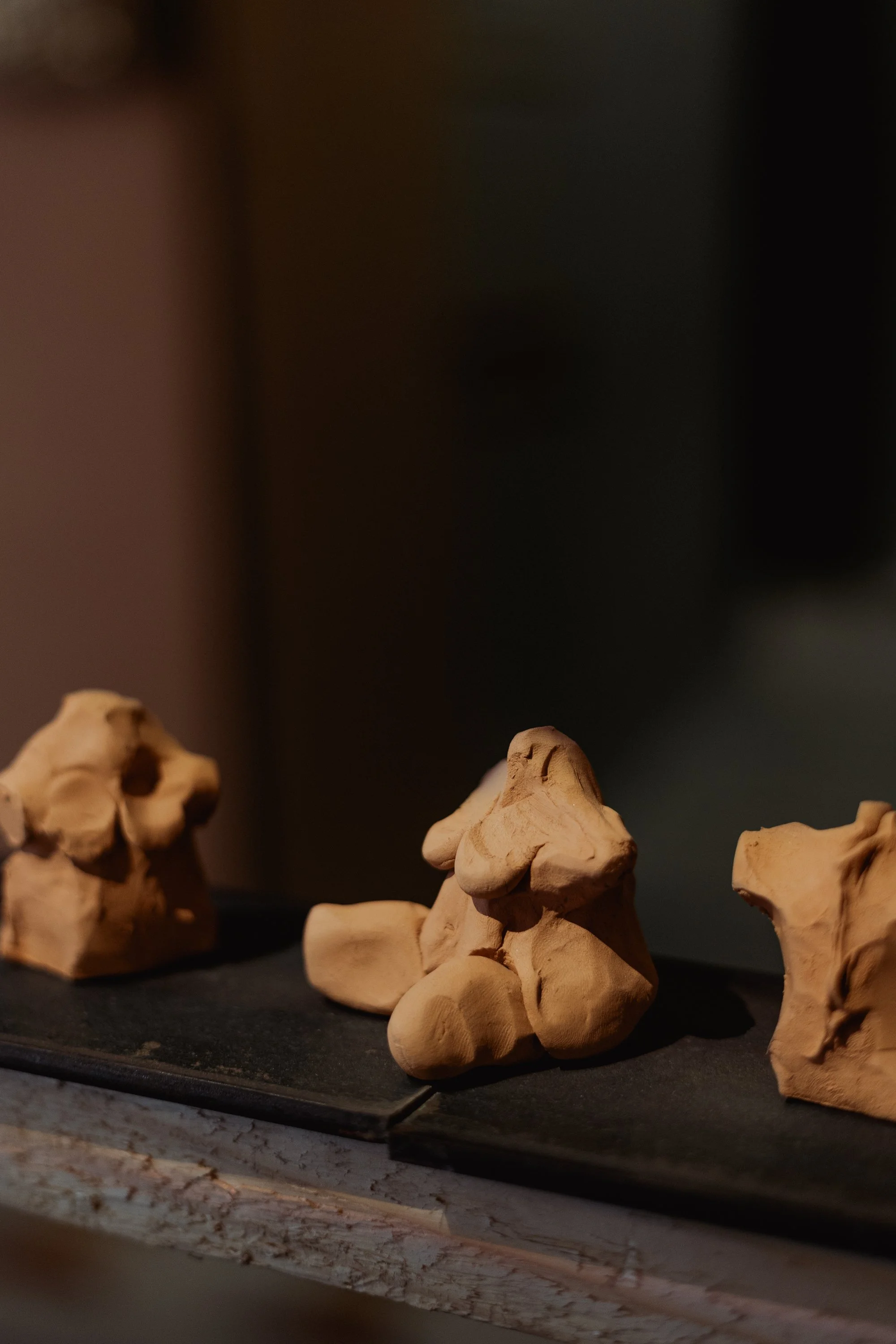
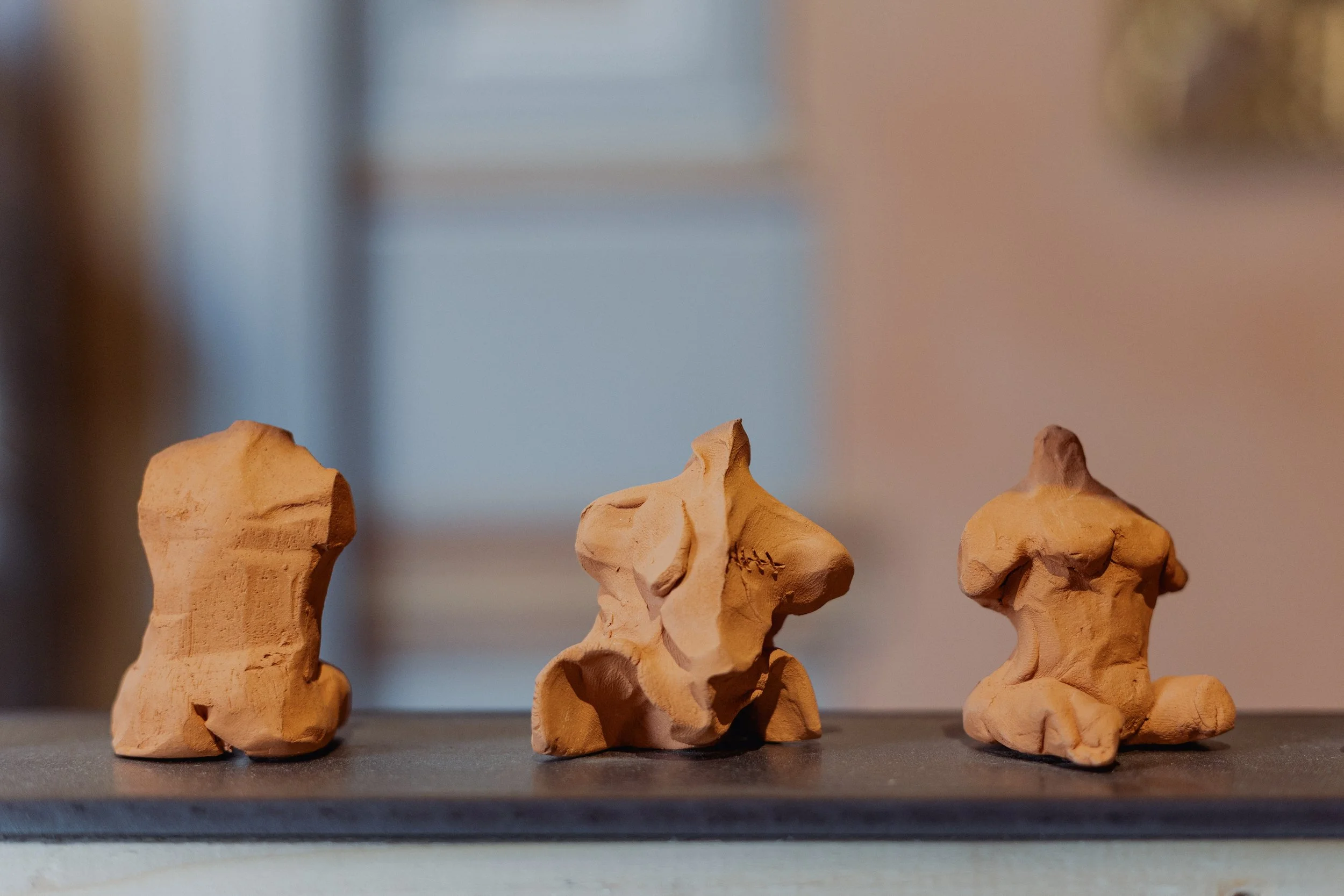
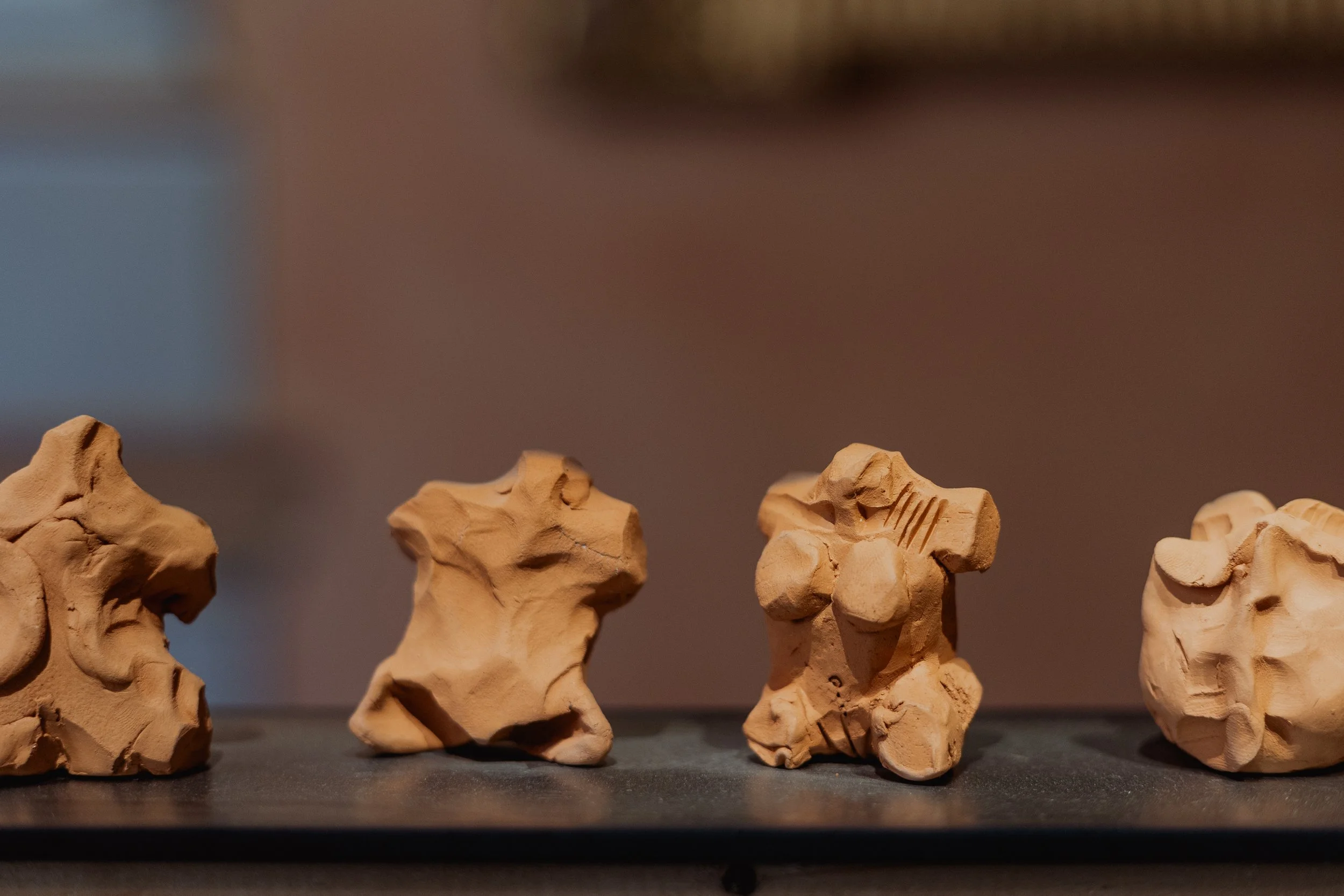
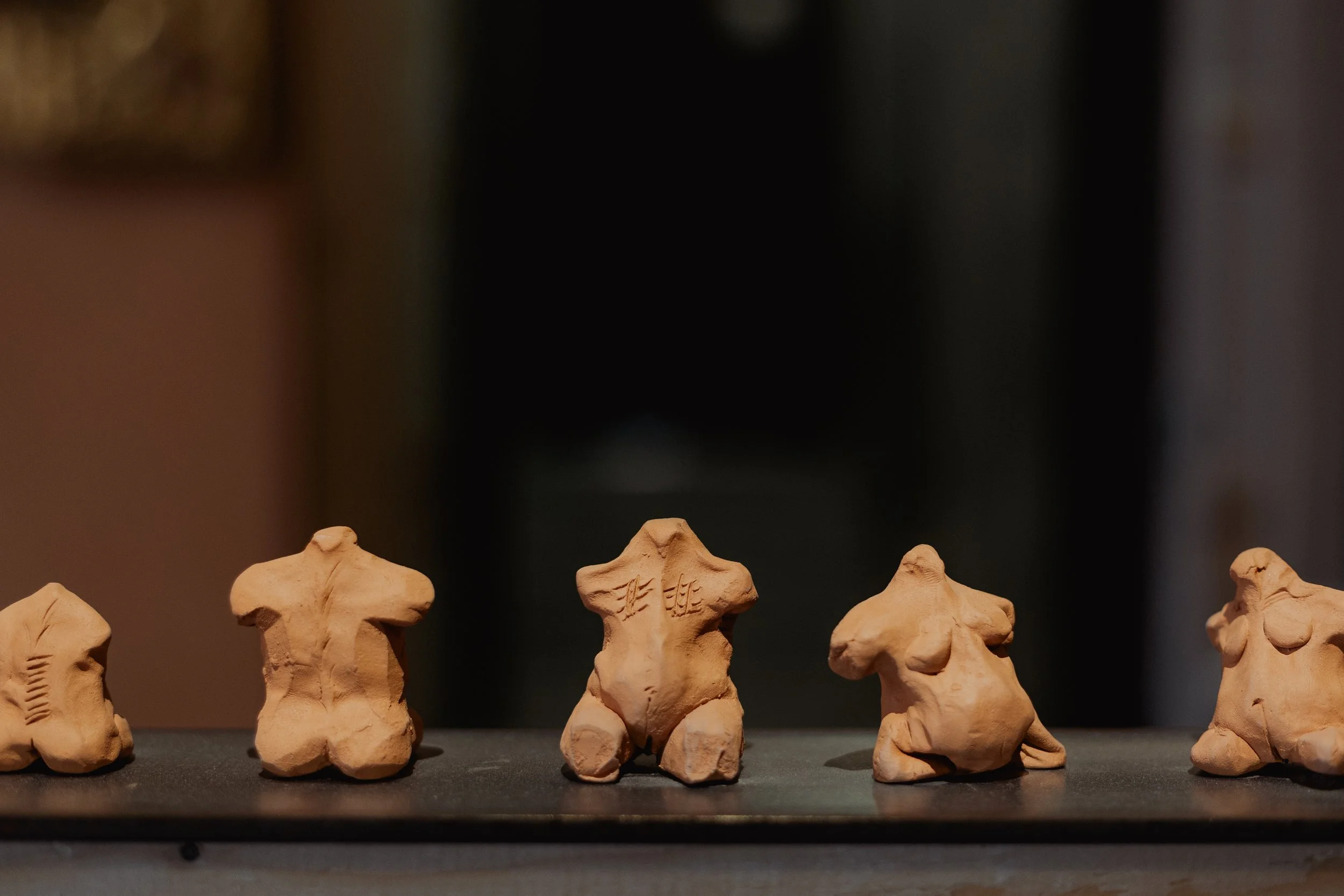
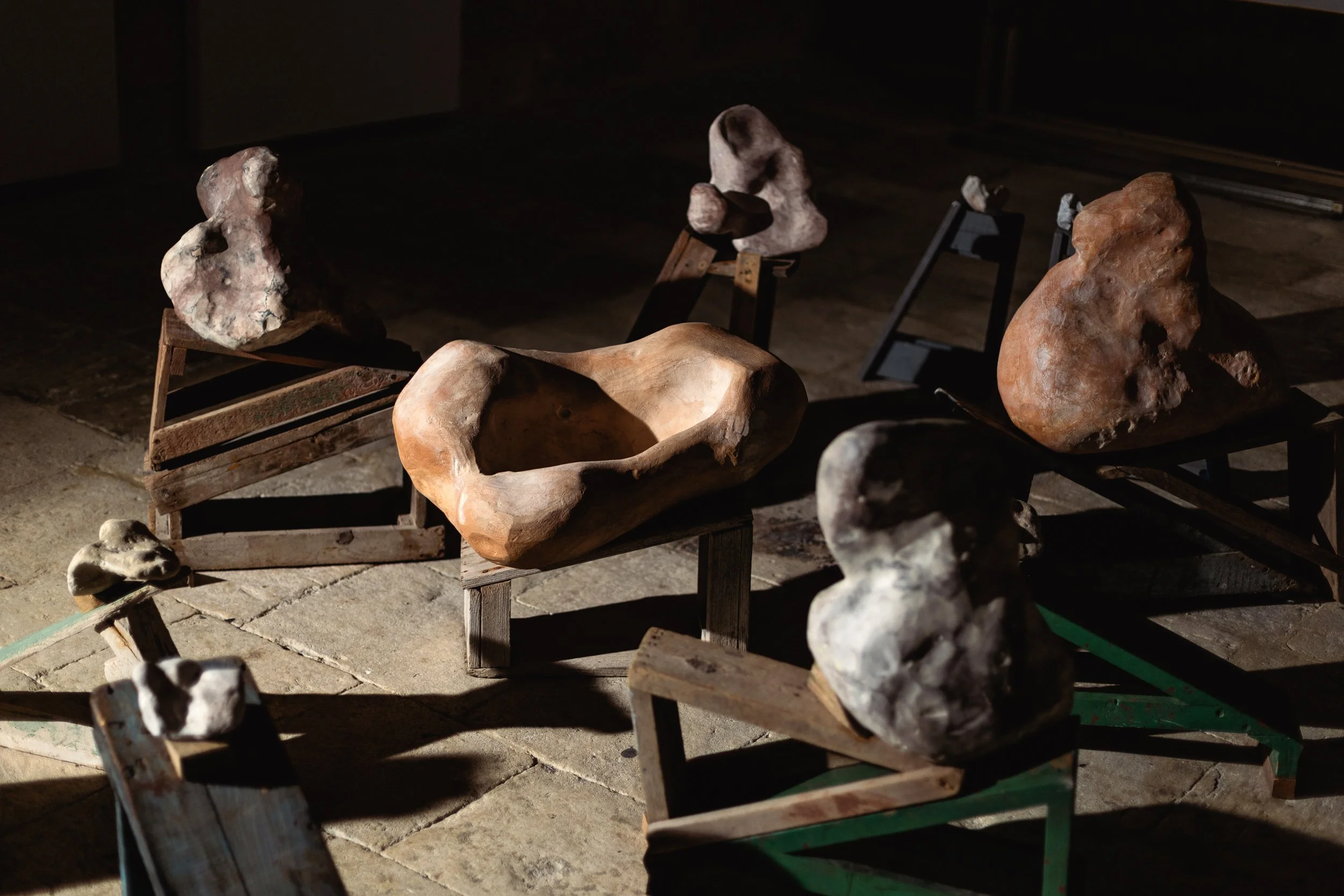
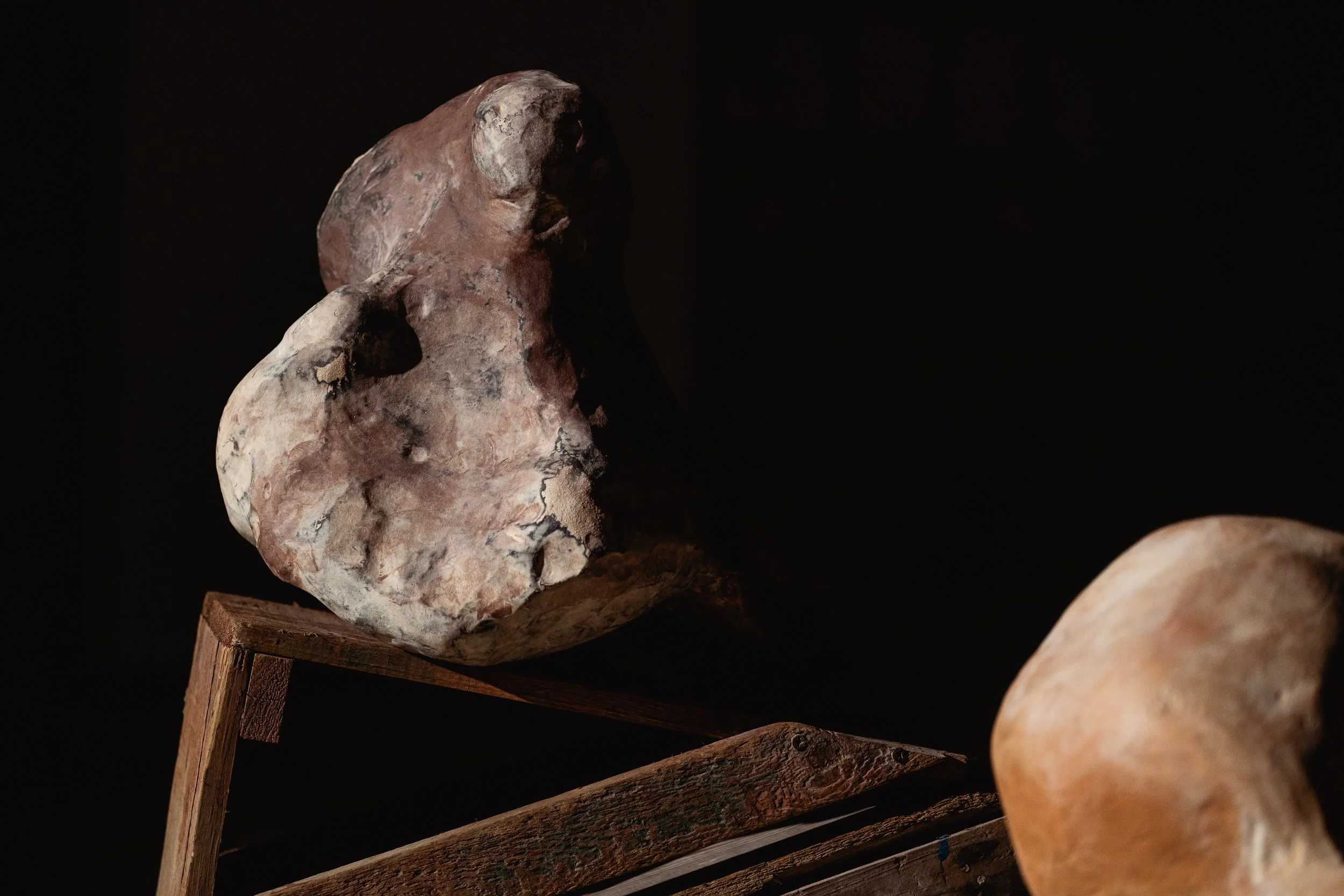
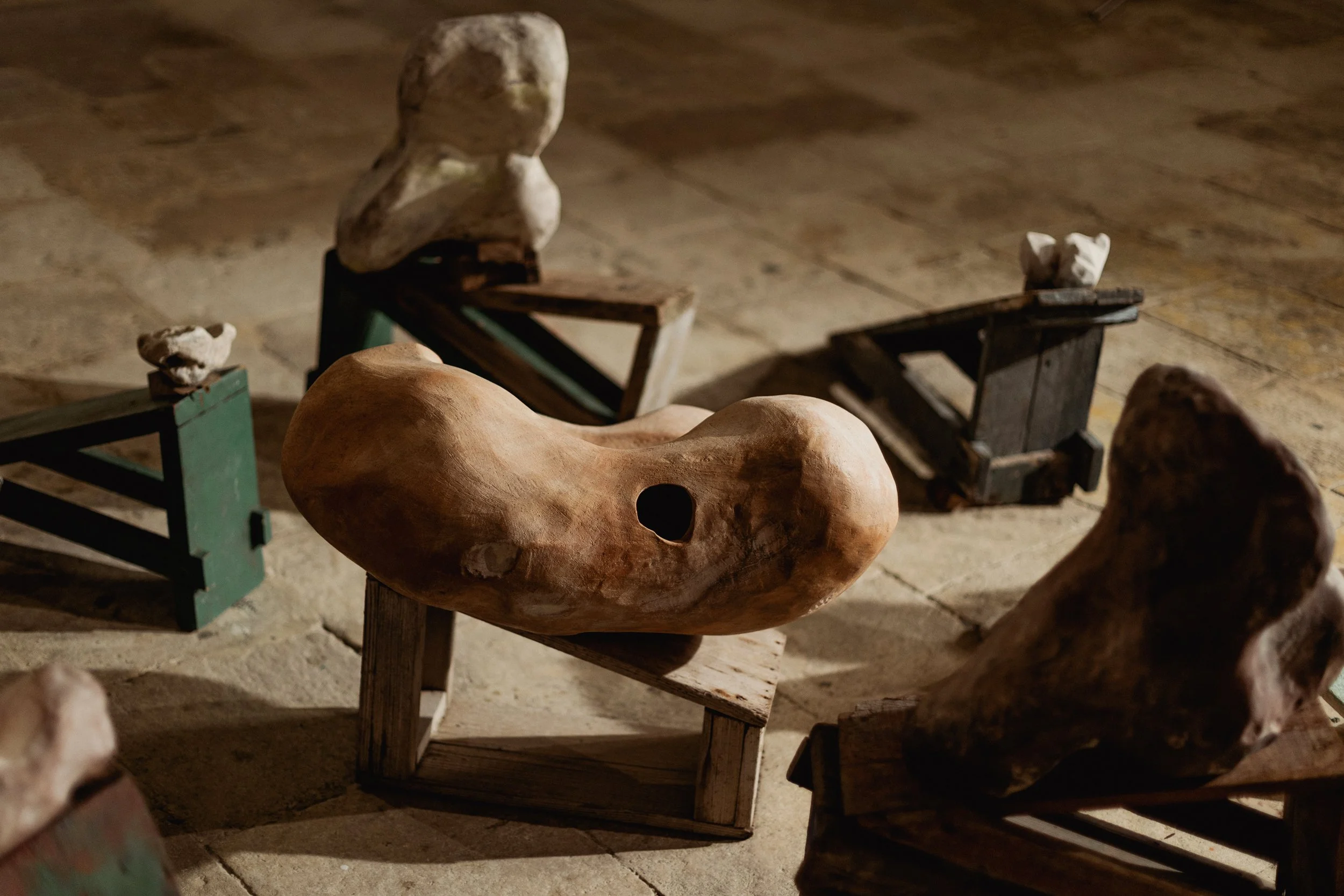
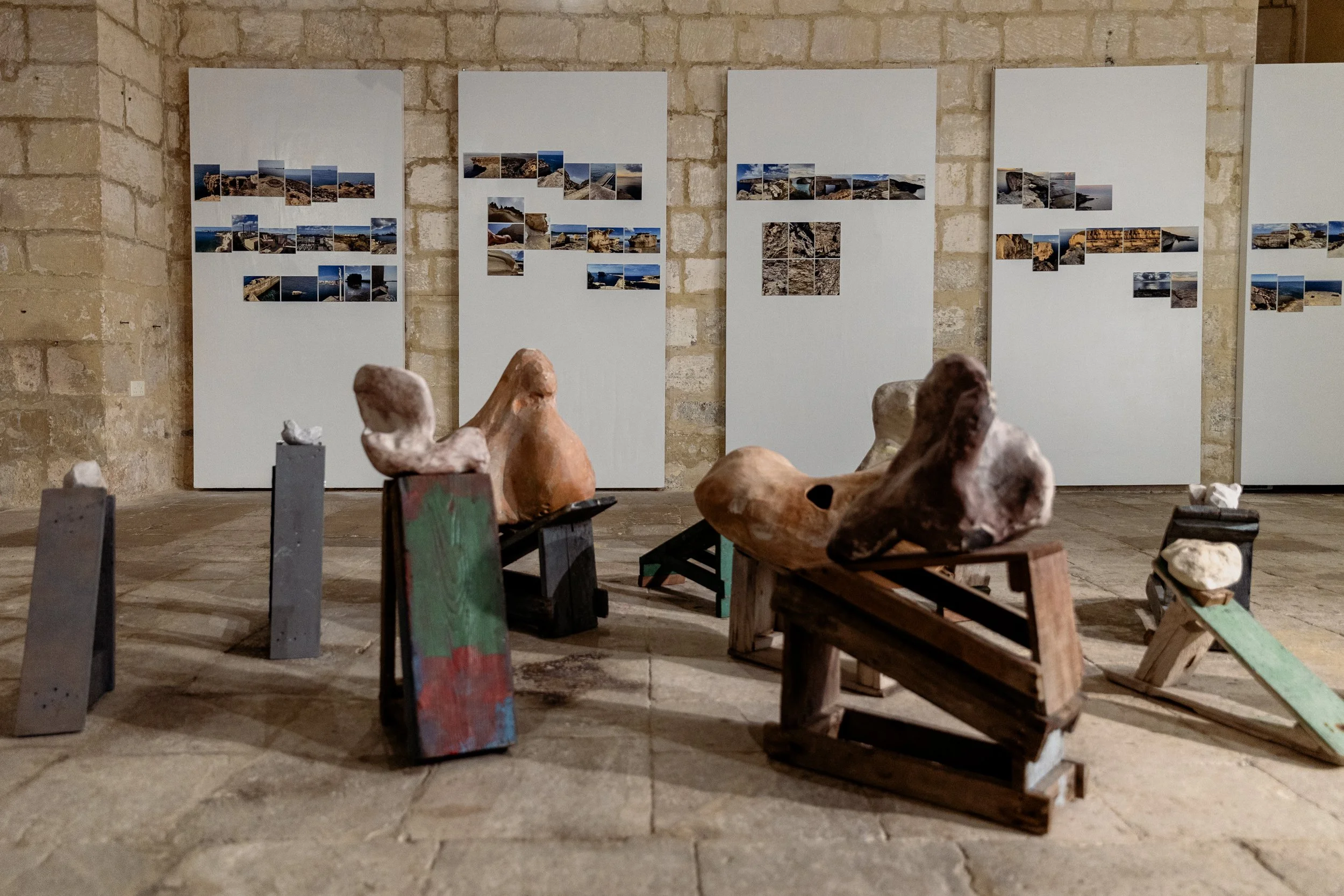
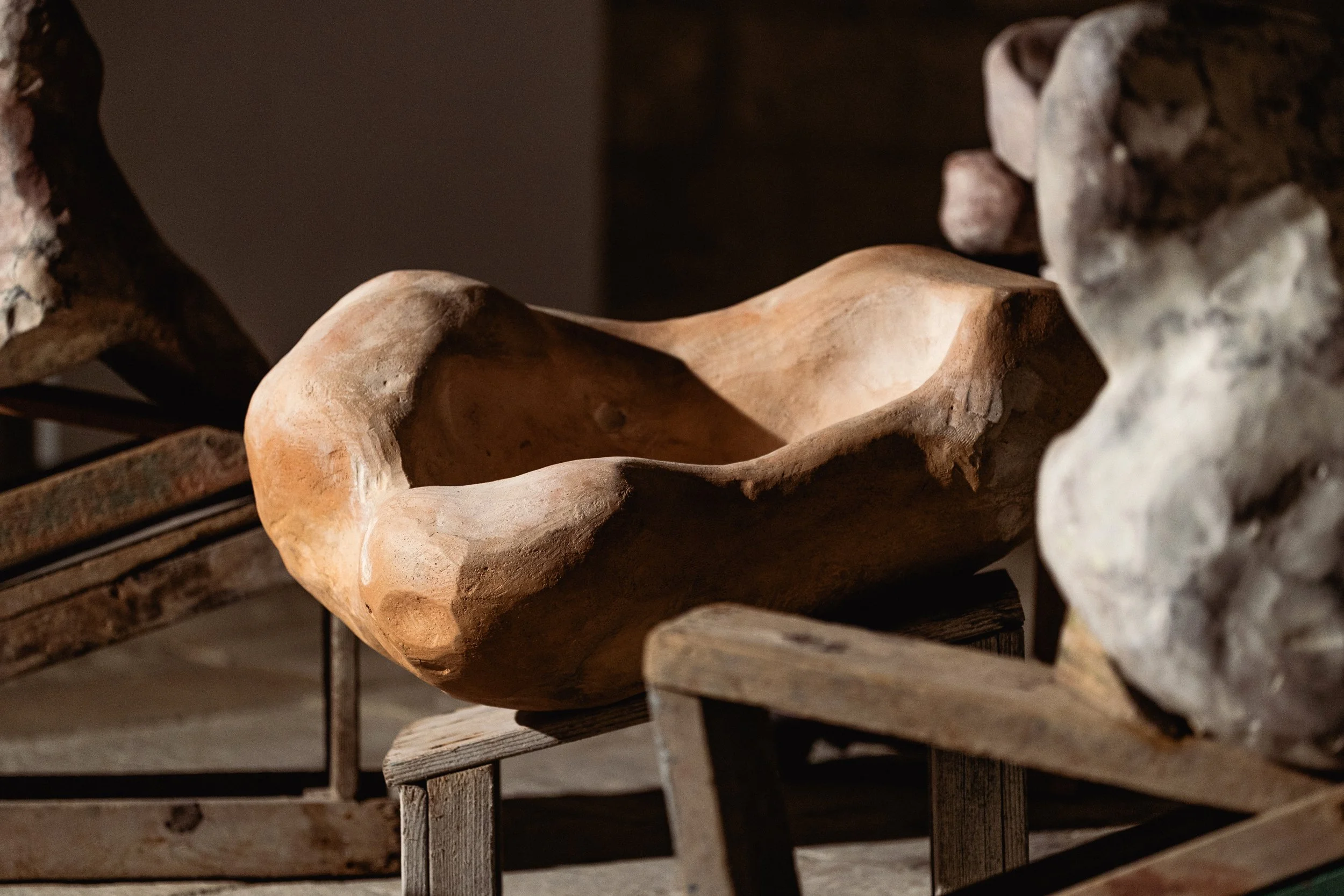
At the centre of the room are the sculptures, which continue this exploration of the relationship between body and rock. They really grew out of my earlier Goddess project for the 2024 Biennale, where I was thinking about the female body. From there I became interested in bodies as landscapes, and in the idea that ageing might be understood as a kind of weathering, just like stone. One day I found a rock on a beach that looked uncannily like a pregnant torso. I completely fell in love with it—as we often do with beautiful rocks—and eventually recreated it on a much larger scale, keeping both its geological and bodily qualities.
At the time, motherhood was calling me to be more grounded. The image of a sea-weathered rock felt like something I could relate to: solid, but constantly changing. These sculptures are a continuation of the Goddess project—They're inspired by ancient goddess figures, rocks, bones, and the natural formations I encounter while walking.
For the installation I placed them on traditional wooden supports known as posti—which I associate with "my place or places" in Maltese and Italian, a coincidence I really love. They're the simple wooden stands used to hold boats while they're repaired. Usually handmade from leftover timber, they're functional and often overlooked, yet they quietly support something much larger. As a mother, I find that metaphor especially meaningful: Doing an essential job while remaining almost invisible.
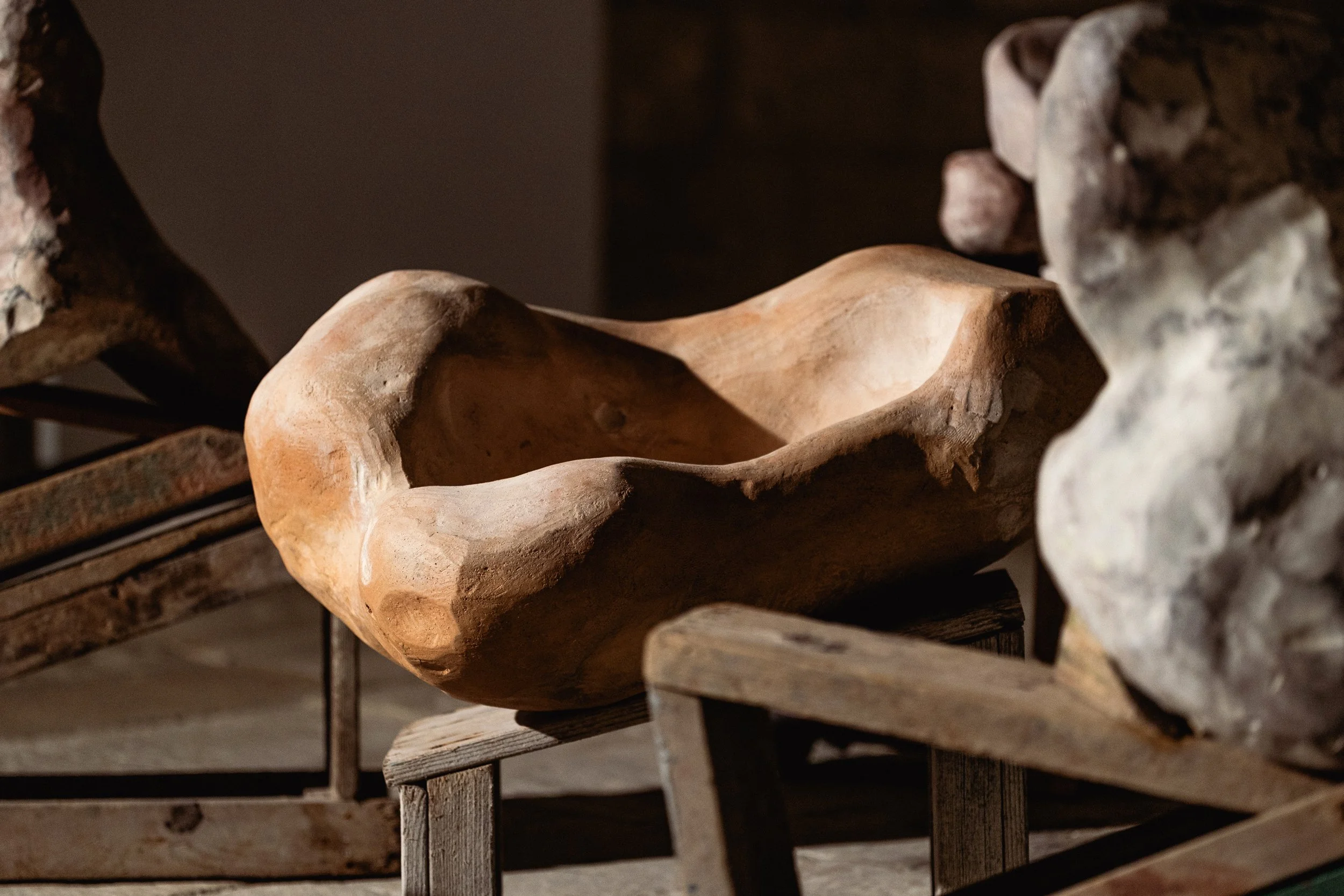
Thinking back to the Malta Society of Arts residency, I realised much of my work there was research. Alongside the walks I was collecting objects, making experiments, and testing ideas. It still feels like work that's in the middle of becoming something. What keeps connecting all these projects is an interest in embodied knowledge—things made by hand, craft traditions, knowledge passed down through doing rather than explaining. That's present in the walking, the self-portraits, the objects that belonged to my grandmothers, the bones I collected, and the sculptures themselves.
I'll quickly talk about the Goddess project to give a bit of context. For that project, I made around 170 female torsos inspired by the tiny terracotta Goddess figurines in the Archaeology Museum. They also began as self-portraits. I kept making my own body over and over, thinking about being a child, a teenager, and moving through all the different stages of womanhood. I'd just had my first child, so I was very aware of the metamorphosis of the female body. I wanted to reflect on that and understand it through making.
When the sculptures were installed in the Grand Master's Palace, seeing them all lined up together created a new meaning. They became about generations of women, but also about female presence and power within a space so strongly associated with male power. It was also during this project that the female form started to morph into rock-like forms. That's really where that connection first began.
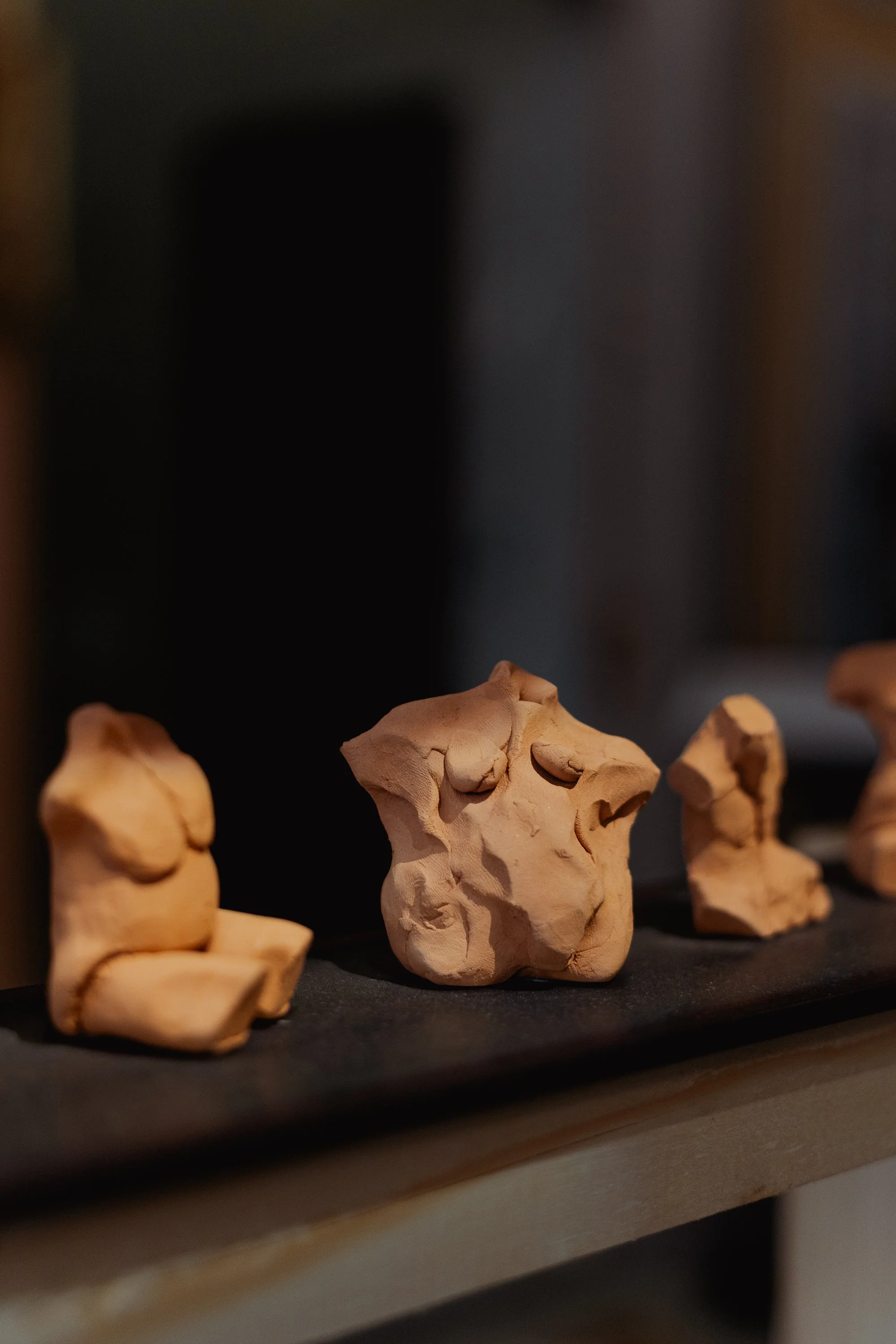
Your work has so many intersecting themes, and they all seem to lead back to one another. I'd like to start with walking because it's probably the aspect that resonates most with my own work. I've been interested in walking as a methodology for a long time. I write about the built environment and urban development, so my focus tends to be on human intervention, whereas your work unfolds within the natural landscape.
The first time I really thought about walking as a way of understanding place was through the Situationists, the group active in Paris during the 1950s. Their walking was a kind of dissenting act. They were famously fond of drinking—but putting that aside—they believed that if you surrendered yourself to the city on foot, the geography of the place would begin to shape your psychology. That's where the term psychogeography comes from: the psychology of how a place affects you as you move through it. Their ambition was to expose the hidden powers embedded within the built environment and, in doing so, reclaim the city for the people. We're not talking about exactly the same thing here, but there is still something powerful about walking. It has to do with time, with slowness, and with the way moving on foot allows you to reclaim a place simply by paying attention to it. Walking becomes both a way of shifting power and a deeply reflective tool for understanding yourself and your relationship to a landscape.
The other thread is mapping. I'd love us to spend a moment on this beautiful map you drew entirely from memory. I've worked with many artists who use mapping to tell histories—or to tell alternative histories. Malta, as a place shaped by successive rulers, has a long history of being represented through maps. Once again, power comes into the picture because maps are never neutral.
I'll never forget the three historic maps that used to hang at the entrance to the National Collection on South Street. They all depicted the Grand Harbour, but through their perspective they also made a statement about the economic, political and cultural importance of the capital. Historical maps always do this—they reveal who holds power.
So when you redraw a map from memory, you're also reclaiming it. You're creating a map that's shaped by your own lived experience rather than by whoever originally documented the place. I'd love you to talk a little more about that process, and also about setting out to walk the coastline. How far did you get? What did it feel like to experience the islands through such a slow and vulnerable act? If you begin with a map made from memory and then set out walking, is it still the map—or has it become entirely your own?
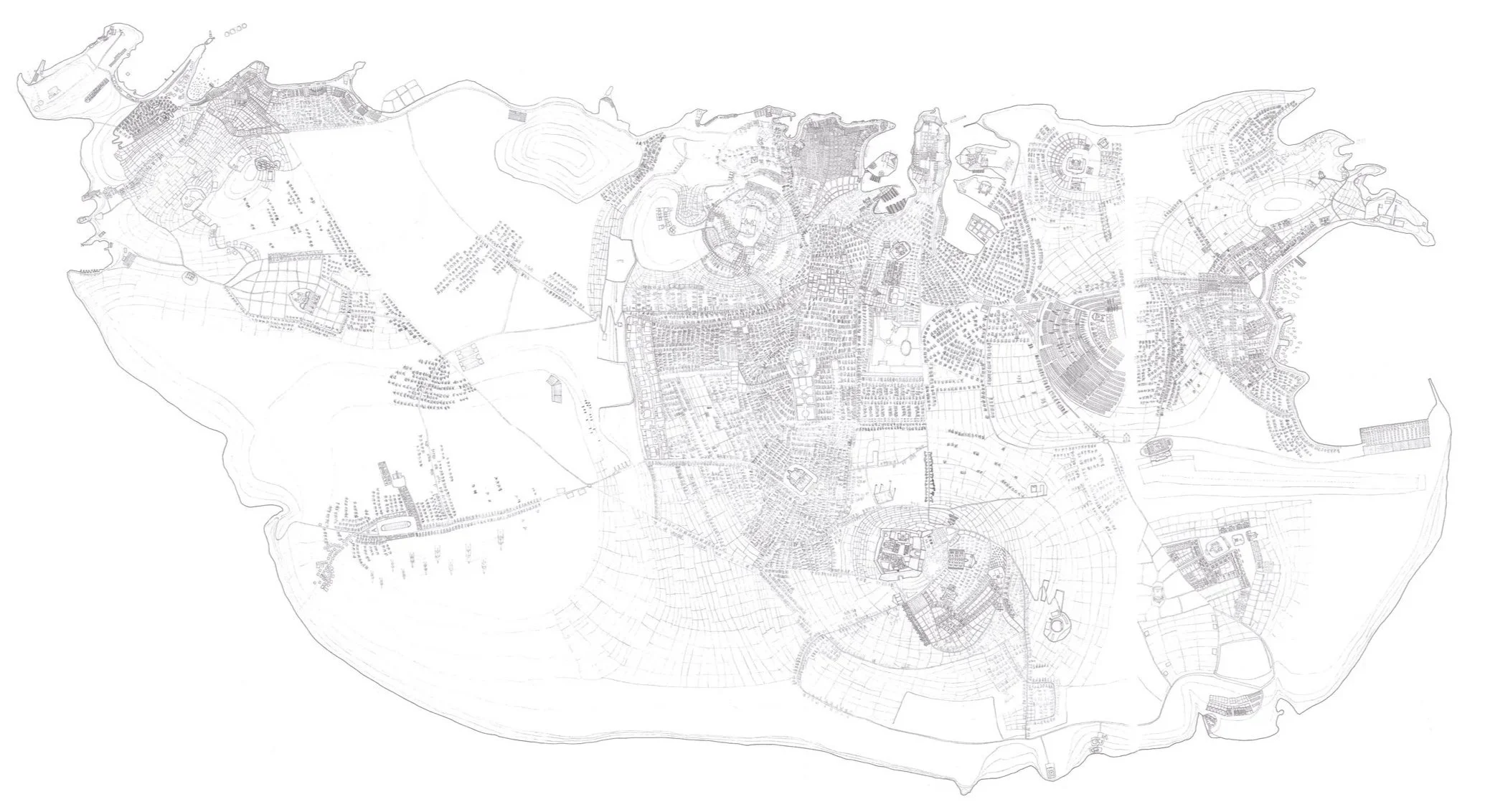
Memory Map of Malta, 2009. Nina Gerada.
When I first drew the map, I only ever showed it in London to people who didn't know Malta. It slowly dawned on me that exhibiting it in Malta would be a completely different experience because, in many ways, it's a self-portrait.
Back then I used to tell British audiences, "If you were Maltese, you'd probably be able to tell my social class just by looking at this map. You could probably guess what my first language is." It gives away all these things about me. It's incredibly personal. But that's also why I wanted other people to draw over it. I wanted it to become a collective map rather than just my own. Given Malta's colonial history, I felt there was something important about reclaiming the act of mapping ourselves instead of accepting inherited representations. Mapping always carries questions of power.
One thing I've always found fascinating is that many early maps of Malta are effectively upside down because they were drawn by people arriving from mainland Europe. They approached the islands from the north, so that's how they oriented them. On those maps, the Grand Harbour dominates everything, while the rest of Malta is often reduced to little more than an outline because that's where political and military power was concentrated.
When you draw a place from memory, you discover what truly matters because those are the things you remember. In that sense, memory itself becomes propositional. Speaking as a designer and architect, it starts to tell you what might be worth protecting or preserving. A really obvious example is navigation. Traditionally, you could orient yourself across Malta simply by looking for the parish churches. That was certainly true when I drew this map in 2009. Today, in the area where I grew up, you can no longer see the church from a distance because of surrounding development. I never imagined that would change so quickly. The map has unintentionally become a kind of time capsule. It preserves things that have disappeared. It shows what existed then, and by comparison, what has since been lost.
You mentioned walking and mapping, and throughout my architectural education I found myself constantly returning to these two modes of investigation. It just seems to be how I'm wired. Walking and mapping have remained central to how I understand places. Later I trained as an urban designer and worked in central London. Much of that work involved understanding neighbourhoods by walking them. Walking allows your eyes and your body to absorb details that are impossible to notice from a distance. We documented places through sketches, maps and photography. It was what we'd call a bottom-up approach to design, rather than the top-down perspective where decisions are made from far away.
I still believe deeply in that process. Every place has its own subtle character—its materials, the way it's used, its state of repair, the grain of the buildings, the atmosphere. We all sense these things instinctively, but the challenge is finding ways to record them. I think that's incredibly important.
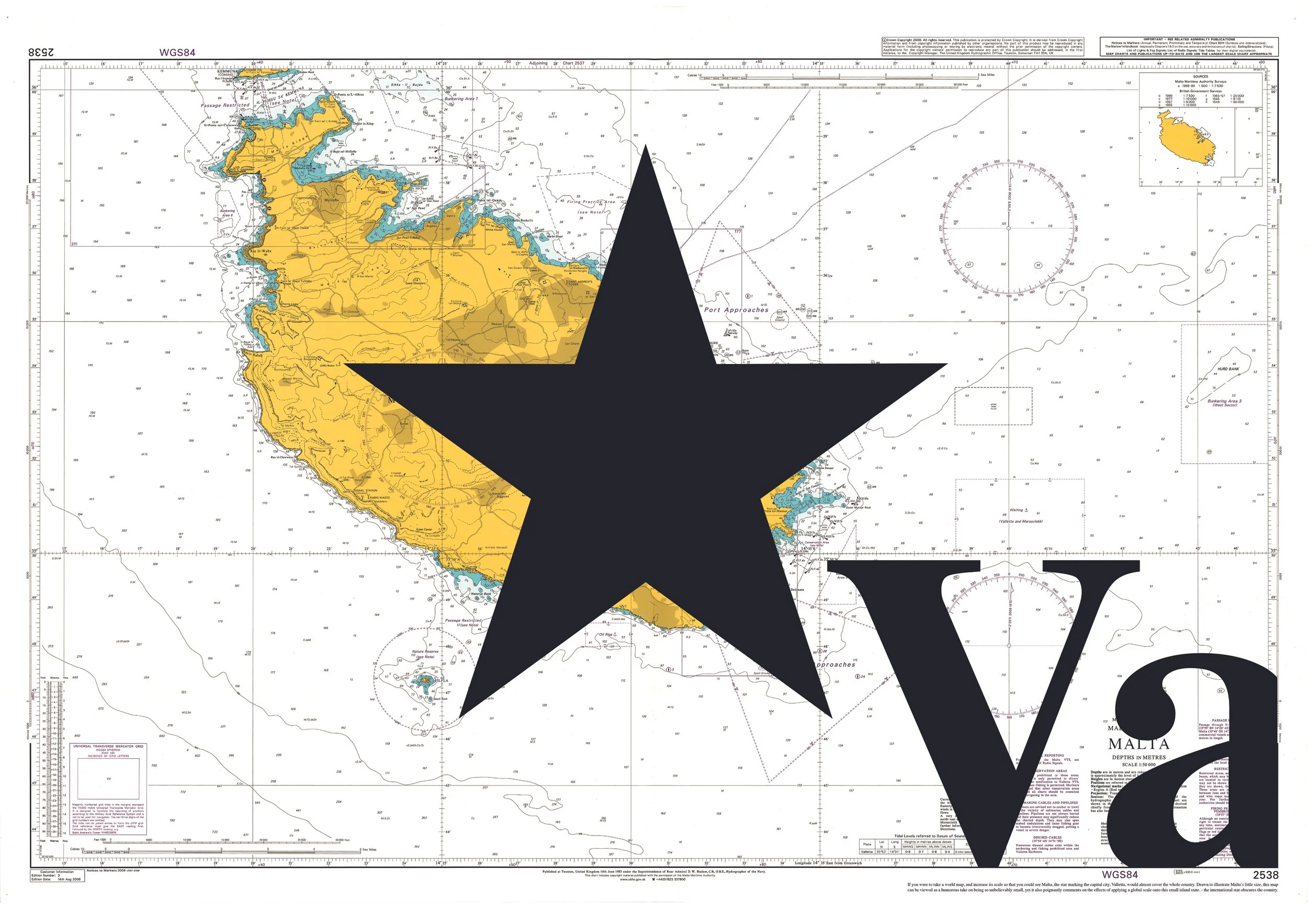
I'll jump to the second map because it's connected. It actually began as a long-running joke between Jon and me. Whenever you come from somewhere as small and obscure as Malta and live abroad, people constantly ask, "Where is Malta?" or "What even is Malta?" You end up trying to explain your whole country in a single sentence. I used to joke that if you look at a world map, the star marking Valletta is actually bigger than the country itself.
So I made a collage by taking a nautical chart and placing this huge star over Valletta. It started as an intuitive visual joke about scale, but it gradually became something more meaningful. It speaks to what happens when you apply international models to somewhere as small as Malta.
Malta needs to be understood on its own terms. It's one of the few countries you can genuinely hold in your memory. I've been thinking about power and mapping for a long time. Walking allows us to read a landscape in a deeply sensory, embodied way. It's the opposite of imposing an abstract, international model from above, which often reflects colonial or capitalist ways of thinking.
I spent time walking and mapping Odesa, Ukraine, and through my research I came across a group called My Odessa Club. We were studying the historic city centre, with its grand Parisian-style architecture and how during the Soviet period, many of those buildings were divided into communal apartments, the streets were renamed, the language changed, and new high-rise districts appeared around the city. After the Soviet Union collapsed, many people no longer recognised the places they once knew. This group responded in a beautifully simple way: they walked together. It became a way of reclaiming a city that had changed so dramatically. It's a bit of a tangent,…
I don't think it's a tangent at all. It's actually very relevant because walking isn't only about reclaiming a place—it's also about confronting what has been lost. There is probably no more honest way of experiencing geography than on foot. When you walk, the landscape can't lie to you. The pace is slow enough that you notice things you simply couldn't from a car or even on a bicycle. We were talking earlier about scale, and there are aspects of a place that only reveal themselves when you're moving through it with your body. That also connects to something you mentioned earlier about walking as a woman, which is a very different experience from walking as a man. I'd like to come back to that later.
To stay with walking and mapping for a moment, though, what interests me is the profound sense of anachronism that comes from returning to a place you've already mapped in your memory. You carry that internal map with you, but as you walk, you begin to realise what's no longer there. You mentioned no longer being able to navigate by the village church. The old map is defunct, it has been superseded. Walking forces you to face that truth, and you realize that time has made a lie out of your memory. That is a very difficult thing to contend with, and it brings you right back to this idea of protectiveness, what do you want to save, what can you save of your homeland.
Let's move away from walking for a moment and turn to the three-dimensional work: the sculptures and the found objects. Correct me if I'm wrong, but this feels like the first time you've really worked with found objects, apart from stones. What you said earlier about discovering a rock that resembled a pregnant torso really stayed with me. As so many of us struggle with the pace of urbanisation and development, we sometimes forget another image of Malta—not just as a place under pressure, but as the mother, the maternal touchstone. A landscape that has given birth to our memories and our sense of belonging.
I'd love you to talk a little about the objects you've collected and how they translate into the gesture of making your art.
It's interesting that you mentioned protectiveness. When I lived in London I was incredibly light on my feet. I think I moved house ten times in ten years and owned very little. But on returning to Malta after twenty years away, I suddenly couldn't stop collecting things. I found it incredibly difficult to let anything go. It was a really unexpected change in myself, and I think it's completely connected to coming home.
The year we moved back, my mum was clearing out my grandmother's house after she had passed away. So I was experiencing two kinds of loss at the same time: losing that older generation and all the objects they had accumulated, while also witnessing how quickly the island itself was changing.
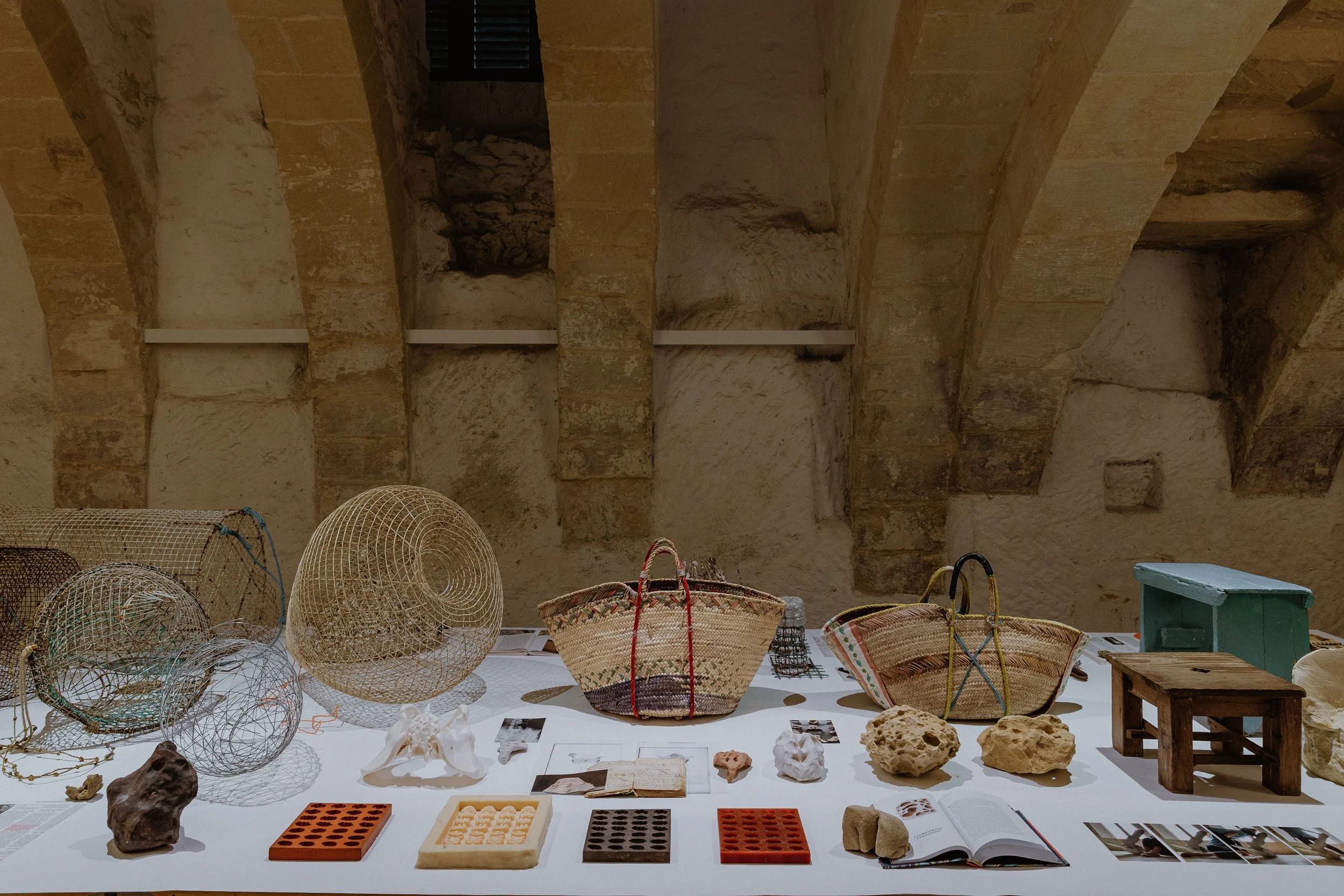
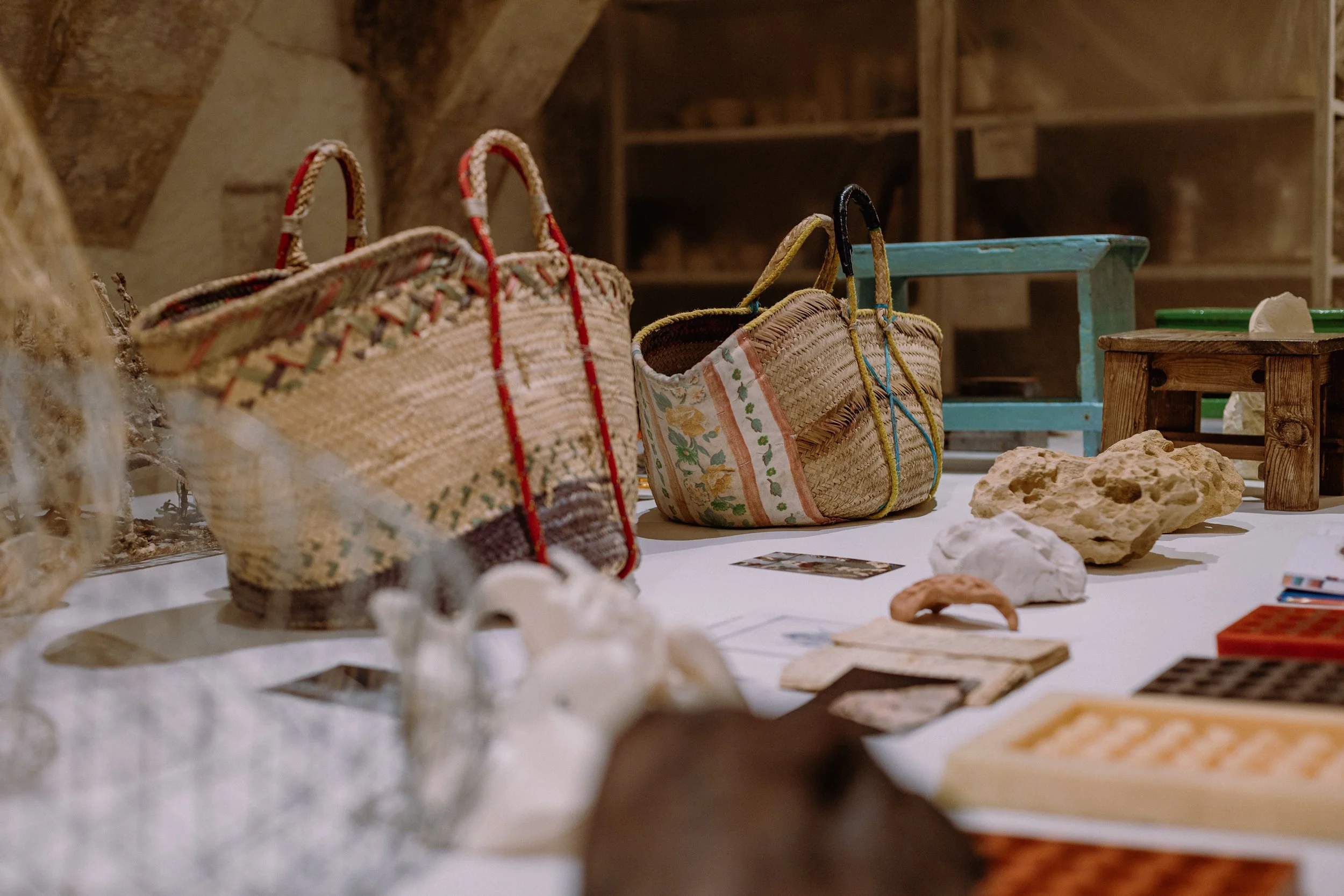
I found myself hoarding things, and the Malta Society of Arts residency became the perfect excuse to collect them and call it art. I'd never thought of myself as someone attached to material objects, but suddenly I became deeply protective of them. That attachment is obviously connected to loss. Malta currently feels a little like sand slipping through your fingers. Things are changing so quickly. I don't want to become someone who's simply nostalgic, but I also wasn't ready to let go of so much. Maybe that's part of leaving and then returning. You come back with a heightened awareness of change, and collecting becomes a way of buffering that experience.
You asked specifically about the posti—the wooden boat supports—and how they relate to the sculptures. I first started working with clay simply because it was accessible. Living in London, I didn't have a proper studio and couldn't afford expensive materials. Clay was immediate, familiar, and I'd worked with it since childhood. But I'd always been curious about other materials. When Jon and I worked as production designers on Simshar, we spent a lot of time documenting fishing boats and working with fishing communities. My father—although it isn't his profession—is a sailor and fisherman, and he grew up in Birżebbuġa. I spent much of my childhood around boats, boatyards and all this maritime paraphernalia. I've always loved these objects. I can't explain it much beyond that—I simply find them incredibly beautiful. Living abroad, though, there was never any possibility of collecting them. Where would I even keep them? The residency finally gave me both the space and the excuse. My team and I started gathering found objects.
The posti represent a very particular form of Maltese craftsmanship—that improvised, make-do-and-mend approach that was so common among earlier generations of fishermen and hobbyists. I also started to see them as symbols of invisible labor and support. I was thinking about being parents—holding up this boat before it goes off to sea, or supporting a child. It represents a support system that is largely invisible. If you take that concept further: what is supporting all of us? What are the invisible support systems holding our society up? Are they healthy, extractive?...
While I was collecting these objects during the residency, I started making self-portraits with them as a quick way of testing ideas. There were two strands of self-portraiture. One explored my relationship with rocks and the landscape. The other used my body to investigate the found objects themselves. With the posti, for example, I balanced my own body directly on top of them, allowing these wooden structures to support my weight. Eventually my body disappeared from the work and was replaced by the heavy stone sculptures instead.
This idea of support is incredibly resonant, and it brings me back to something you mentioned earlier: nostalgia. The word comes up so often whenever people try to protect what they feel is fundamental to their identity—which, especially here, is so often the land itself. When people advocate for conservation, the response is often, "Stop being so nostalgic. You have to let things go." It's an easy way of dismissing what is actually a very real and legitimate urgency to care for a place.
But I don't actually think it's about nostalgia. What you described feels much more like an attempt to regain some sense of control. I think many of us experience this as we grow older. Objects begin to carry more meaning than they once did. You feel a need to protect them—or, as we've been saying, to hold onto them. Everything comes full circle.
I'd like to tie this back to the Biennale's curatorial theme this year: Clean | Clear | Cut.
The title immediately evokes Malta's geology—stone and water. You can almost hear the sound of stone being cut. But it also suggests something broader: breaking away from inherited systems of thinking, letting go of old assumptions, and finding new ways of seeing. With that in mind, I'd like to return to where we began: the idea of leaving home.
I think many people recognise that impulse. At some point in life—whether it's a physical departure or an emotional one—you want to make a clean break from where you come from. Maybe your homeland has hurt you. Maybe it's youthful restlessness. Maybe you're simply curious about the world. Whatever the reason, many of us reach a point where we desperately want to leave. And then, sometimes, you arrive somewhere else and discover that it never quite becomes home. Even if you build a life there, there's still a feeling of being slightly outside it. You experience moments of alienation or rejection, and realise that some part of yourself is still searching for the place you came from.
So I'd like to bring everything together by asking how your residency at the Malta Society of Arts, your wider practice, and your work for this year's Biennale have shaped your own understanding of belonging.
What is this thing we call belonging?
A lot of things came together that eventually led me back. To be honest, I don't think I ever consciously planned to leave permanently. I spent twenty-two years asking myself, "Should we move back?" But becoming a mother changed something. I realised my children might never know these rocks, this sea, this landscape, or all the sensory experiences that had shaped me. Around the same time, Brexit and COVID made life in London feel increasingly difficult.
In the end, belonging stopped being only about me. It became about my sons as well. That's really where the title No Other Mother Land comes from. I don't have another motherland—and neither do my sons. This place belongs to all of us. I wanted them to grow up knowing that Malta is their motherland, not simply their mother's land. The title also came from conversations I was having with people back home. So many seemed to have given up on Malta. They would say, "It's ruined. Forget it. Don’t come back" But I kept thinking, I don't have another motherland to take my children to. This is the place. Whatever happens, this is home.
That realisation pulled me back, and it gives me enormous joy that my children now feel that connection.
But belonging itself... is it fixed? I don't think it is.
I think belonging is constantly shifting. It's probably less about a physical country than about people, relationships and community. We carry parts of belonging with us wherever we go. It's a really fluid thing. I guess you can sometimes feel like you don't fully belong regardless where you are. Personally, I don't know if I will ever belong to just one single place anymore. I now accept that I am a bit of an amphibian, moving between worlds, and I don't really mind. But I am a part of this homeland. It's a complex thing to make sense of.
It makes sense. It is complex. From our talk tonight, I am genuinely ruminating over that exact same question. Where do I belong? What does it mean to belong? One thing that strikes me is that belonging can emerge through the shared desire to protect a place. When we recognise together that we're powerless to stop every change—whether it's driven by human intervention or simply by time itself—that shared helplessness can become a form of community.
Time will always change places. We can't prevent that. But facing those changes together, caring about the same landscape, and trying to protect what we can—that, perhaps, is one of the deepest forms of belonging.